Aquarium Filtration: Certified Contaminant Removal & Minerals
By Nkechi Okafor • 12th Apr
Proper aquarium water filtration requires the same precision and evidence-based approach you would apply to any water-quality decision. Whether you're establishing a new tank or troubleshooting persistent cloudiness, taste changes, or scale buildup on equipment, understanding what contaminants your filtration system actually removes (and verifying that removal through measurable data) separates guesswork from reliable protection. This FAQ explores how to match certified filtration stages to your specific water chemistry, interpret performance claims, and build a multi-barrier setup that preserves both water clarity and the mineral balance your fish require.
Why Does Aquarium Water Filtration Require Testing First?
Many aquarists begin with a single filter recommendation or a generic setup, then observe problems months later: persistent algae, film on glass, equipment corrosion, or unexplained fish stress. The root cause is usually incomplete baseline data. Your source water (whether municipal tap, well, or collected rainwater) carries dissolved minerals, chlorine residuals, particulates, and sometimes metals or organic compounds that a one-size filter cannot address alone.
Test first, then treat. For help reading your utility's Consumer Confidence Report, see our CCR interpretation guide. Before selecting a filter, obtain a water report from your municipal supplier (ask for the Consumer Confidence Report or annual water quality summary) or commission a lab test if you're using well water or collected sources. A basic panel should include pH, hardness (calcium and magnesium), chlorine/chloramine residuals, turbidity, iron, and any local contaminants flagged in your region. Armed with those numbers, you can match certified filter media and stages to the hazards present.
This approach mirrors boil-water protocols: during a municipal notice after flooding, neighbors often panic and buy any filter advertised as "safe." A better path is to verify the advisory details, measure turbidity and chlorine residuals in your own supply, and then select certified barriers (gravity or sediment filters for outages, activated carbon for taste and odor, UV when power returns) in the correct sequence.
What Do Certifications Mean for Aquarium Filter Media?
Aquarium filter certifications differ from drinking-water standards (such as NSF/ANSI 53), but the principle is identical: independent third-party testing confirms that a medium removes a stated contaminant to a defined percentage at a rated flow and capacity. For fish tank water filter requirements, the most relevant standards include:
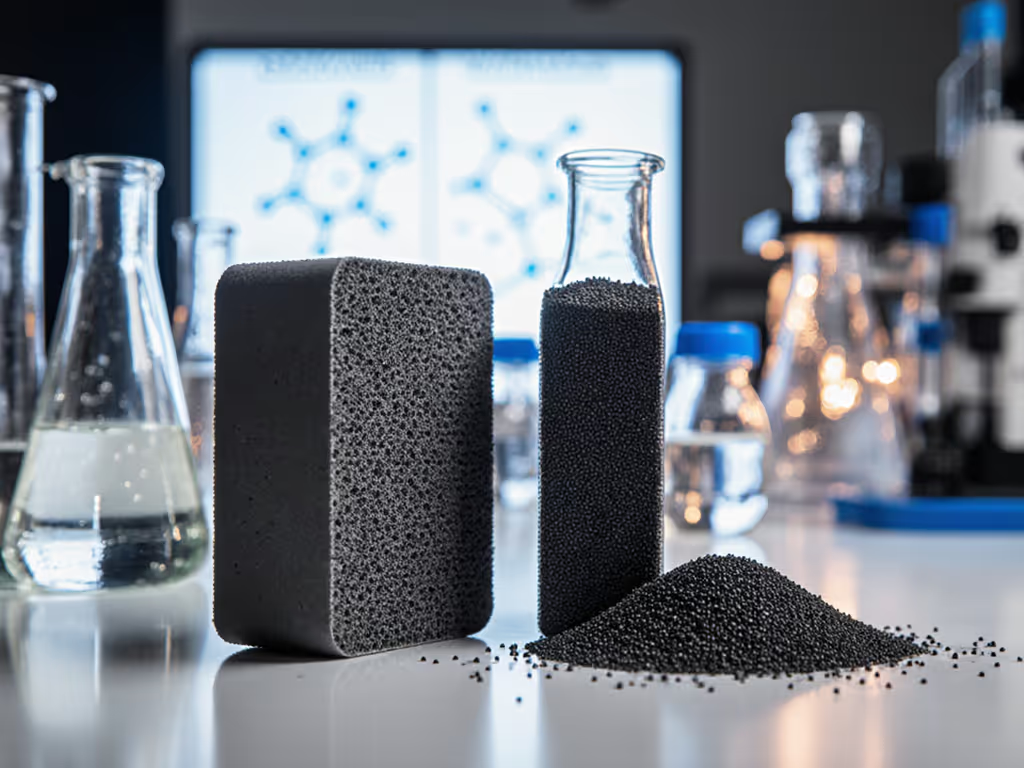
- Ammonia oxidation and nitrification capacity: Measured by surface area and biofilm colonization. Coarser media (sponges, lava, ceramic rings) support larger bacterial colonies; denser media (activated carbon, fine foam) excel at mechanical trapping but demand more frequent rinsing.
- Mechanical filtration stages: Rated by micron size (e.g., 100 µm, 50 µm, 20 µm). Lower micron ratings trap finer particles and reduce cloudiness but increase flow resistance and maintenance frequency.
- Chemical adsorption performance: Activated carbon and specialized resins remove dissolved chlorine, chloramine, phenols, and some heavy metals, but only at rated contact time and saturation limits. Specifications should include gallons-per-hour (GPH) flow rate and liters of capacity before replacement.
When evaluating a filter, look for the manufacturer's published capacity in liters or gallons, the flow rate in liters per hour (L/h), and any third-party certification or lab test summary. A canister filter typically offers higher media volume and customizable stages compared to hang-on-back or internal filters, allowing you to layer mechanical, biological, and chemical removal in a single system.
How Do Mineral-Preserved Water Chemistry and Filtration Balance?
Aquarium water chemistry requires careful balance: your fish and plants depend on dissolved minerals (calcium, magnesium, potassium) for osmoregulation and growth, yet excessive hardness or specific contaminants (iron, copper, aluminum from corrosion) cause cloudiness, algae blooms, and equipment damage.
Activated carbon removes chlorine and some dissolved organics but does not soften water or remove minerals. In cities that use chloramine, catalytic carbon media performs better than standard carbon for breaking chloramine bonds. Its role is taste and odor improvement plus early-life biofilm support. If your tap water is very hard (above 250 ppm hardness), has excessive chloramine residuals, or is iron-stained, a staged approach works best:
- Pre-filter stage: Sediment or mechanical filter (100 to 50 µm) captures particles and turbidity before they clog downstream media.
- Chemical stage: Activated carbon removes chlorine and chloramine, allowing beneficial bacteria to colonize rapidly.
- Biological stage: Sponge, lava, or ceramic media provides surface area for nitrifying bacteria; this stage matures over 4 to 6 weeks and should not be fully replaced during maintenance.
If tap water is iron-rich or stains equipment, adding a specialized iron-removal cartridge or chelating resin upstream of carbon can extend carbon life and reduce fouling. Test your water after the filter runs for 24 hours; you should see stable pH, measurable chlorine residual of zero, and clarity without cloudiness.
What Are Common Filter Media Choices and Their Trade-Offs?
Each medium addresses different contaminants and has documented strengths and trade-offs:
Mechanical (Foam, Sponge, Floss)
- Traps suspended solids and particulates.
- Washable and reusable; low lifetime cost.
- Requires frequent rinsing (weekly to biweekly) to avoid flow blockage and anaerobic zones.
- Not suitable as a sole filter; must be paired with biological or chemical stages.
Biological (Ceramic Rings, Lava Rock, Sponge)
- Supports ammonia-oxidizing and nitrite-oxidizing bacterial biofilm; reduces toxic nitrogen compounds in closed systems.
- Performance depends on surface area and maturation time (typically 4 to 6 weeks after setup).
- Does not remove dissolved minerals or chlorine; must follow chemical pre-treatment.
Chemical (Activated Carbon, Resins)
- Removes chlorine, chloramine, phenols, and some metals; improves taste and odor.
- Capacity is finite; saturation occurs after stated gallons or liters and cannot be restored by rinsing.
- Must be replaced per manufacturer guidance (typically every 3 to 6 months for aquariums with heavy tap-water use).
- Effectiveness declines with flow rate; exceeding GPH rating reduces contact time and removal efficiency.
Specialized Media (Iron Removers, Phosphate Binders)
- Designed for specific contaminants identified in your water test (iron, excess phosphate, copper).
- Cost-effective only if laboratory data confirms the presence of that contaminant; generic use adds expense without benefit.
How Should I Sequence Filtration Stages and Measure Performance?
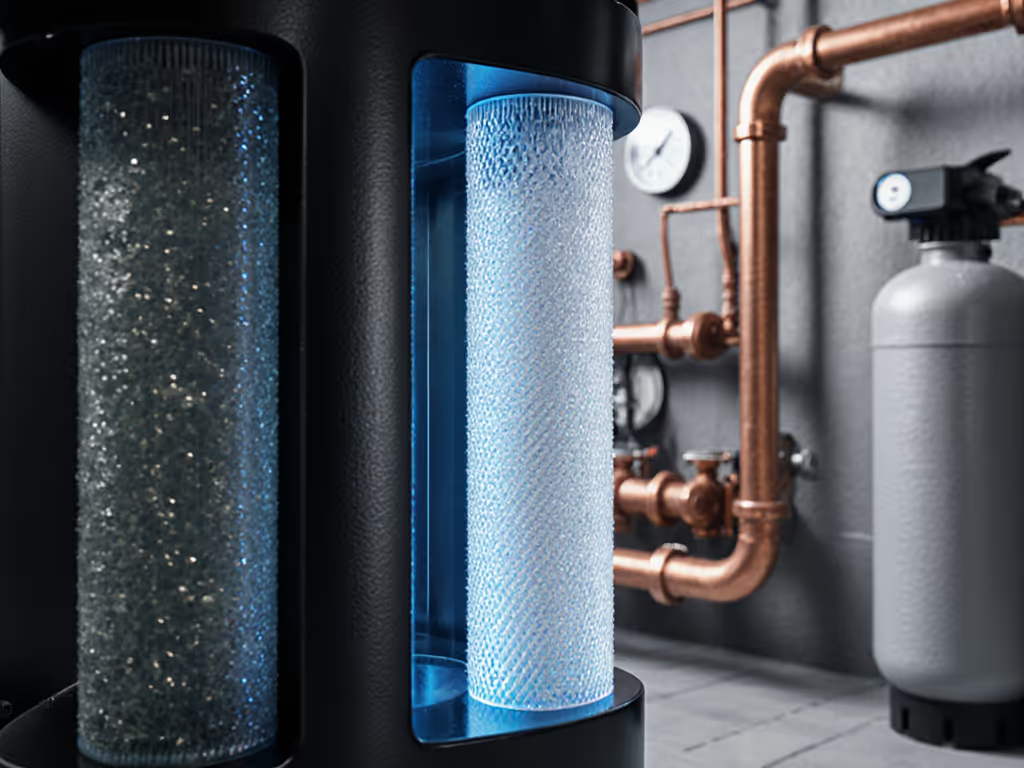
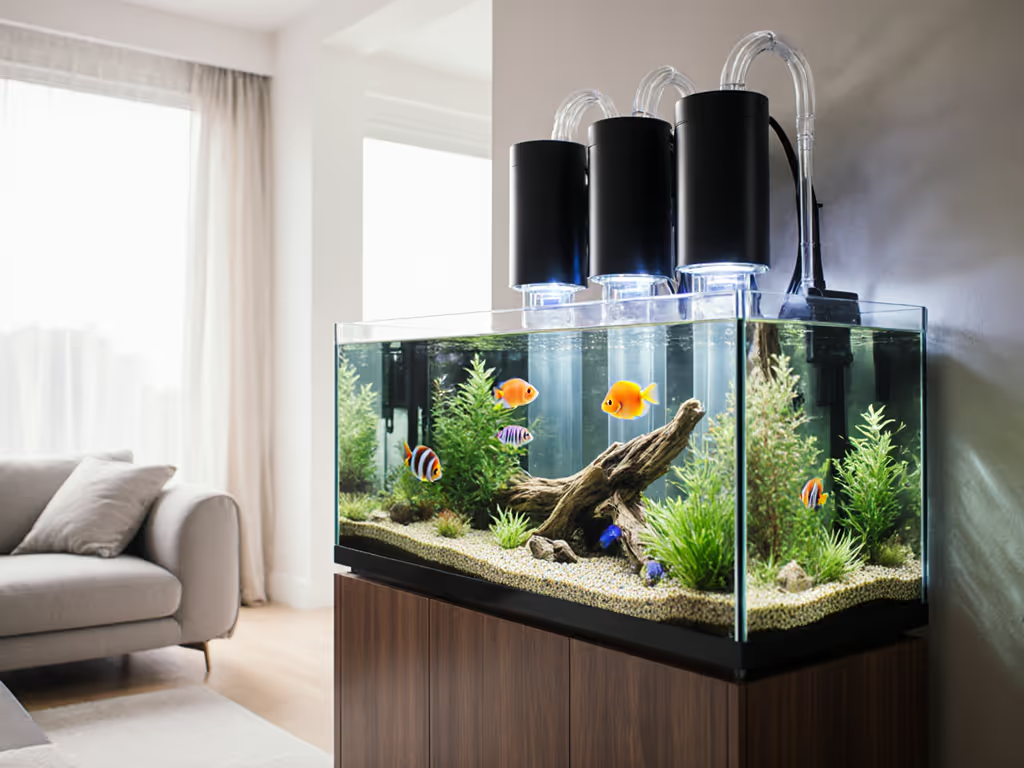
Media layering matters because upstream stages protect downstream media, extending lifespan and maintaining flow. A typical sequence in a canister filter is:
- First chamber: Mechanical pre-filter (foam or floss) removes large particles.
- Middle chamber(s): Specialized media (iron remover, if needed, then activated carbon) removes dissolved contaminants.
- Final chamber: Biological media (sponge, ceramic) houses bacteria and provides polish before return to the tank.
After the filter is running, measure performance at days 1, 7, 14, and monthly intervals using a basic aquarium test kit:
- Chlorine/chloramine residual: Should drop to zero within 24 hours if carbon is functioning; if residual persists, carbon is saturated and requires replacement.
- Turbidity (visual clarity): Should improve after mechanical stage operates. Use a clarity standard (e.g., read printed text through a glass of tank water) as a simple benchmark.
- pH stability: Should remain within 0.2 units of baseline after 48 hours, indicating biological buffering is active.
- Ammonia/nitrite levels: Should trend toward zero over 2 to 4 weeks as biofilm matures; stalled reduction suggests insufficient biological media surface area or flow rate issues.
Document these measurements in a simple log. If any parameter does not improve on schedule, backtrack to the likely cause: mechanical pre-filter clogging (reduce flow or rinse pre-filter), carbon saturation (replace cartridge), or insufficient biological surface (add media or reduce bioload).
When Is a Single Filter Insufficient?
A common source of disappointment is expecting a single filter to address all contaminants. If your baseline water test reveals multiple hazards (turbidity plus chloramine plus iron, for example), a single canister filter with standard media may struggle to achieve stable performance across all parameters.
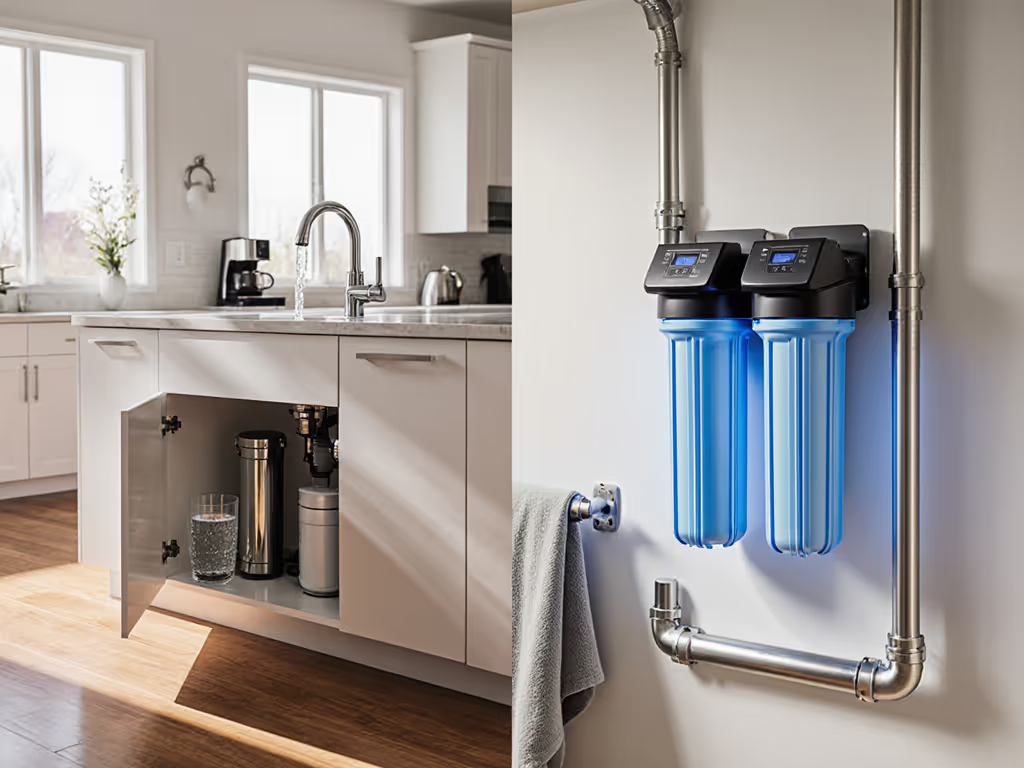
Consider a multi-barrier setup when:
- Tap water contains multiple contaminants: Use a sediment pre-filter upstream of the main tank, or add a cartridge stage in-line before the tank inlet.
- Biofouling or odor recurs despite regular media rinsing: Add a secondary carbon stage or increase contact time by reducing flow rate.
- pH or mineral balance shifts unexpectedly: Test for undissolved calcium deposits (hardness), copper from corroding fittings, or phosphate buildup; add targeted media accordingly.
- Aquarium is heavily stocked or fed heavily: Bioload exceeds current biological media capacity; upgrade to a larger canister filter or add a secondary sponge filter for passive biological support.
What Are Practical Steps to Avoid Common Mistakes?
Mistake 1: Replacing biological media too frequently. Biofilms take weeks to establish. Rinsing biological media in old tank water (not tap water, which kills bacteria with chlorine) during maintenance preserves the biofilm. Full replacement is only necessary if media is damaged or tank is being reset.
Mistake 2: Ignoring flow-rate limits on activated carbon. Carbon effectiveness depends on contact time. See how carbon block vs GAC media differ in removal efficiency and flow. Running a filter at double its rated GPH halves contact time and may reduce contaminant removal to 50% or less. Check your filter's published GPH and cross-reference any after-market cartridges you install to ensure flow-rate compatibility.
Mistake 3: Using the same filter indefinitely without testing. Even if a filter looks clean, its chemical media (carbon) becomes saturated invisibly. Chlorine residuals may be zero only because you're not testing; if you added new plants or fish, nitrate spikes might indicate stalled biofilms. Test at 6-week intervals minimum to catch drift early.
Mistake 4: Assuming mineral content doesn't matter. Mineral-preserved water is not about adding minerals; it means understanding your baseline mineral content and filtering selectively. Over-softening water (removing all hardness) can stress fish and reduce bacterial buffering. Under-treatment (ignoring excess calcium, which causes scale) damages heaters and pumps. Know your hardness number, and choose media that targets contaminants, not all minerals.
Key Takeaways: Test First, Then Layer Intent
Aquarium water filtration works best when grounded in specific data: obtain a water report, identify which contaminants matter for your setup, and match certified filter stages to those hazards. Biological media support fish and plants; mechanical media prevent fouling; chemical media (carbon) remove chlorine and odor; each plays a distinct role and demands an appropriate maintenance rhythm.
A boil-water notice after flooding, or a sudden cloudiness in a mature tank, prompts many aquarists to panic-buy a filter based on ads or forum chatter. A steadier path is to measure first: turbidity, pH, chlorine residual, ammonia. Then stage certified barriers (sediment pre-filter, carbon, biological media) in logical sequence, test weekly for the first month, and adjust if data don't match expectations. This approach builds confidence and resilience, turning uncertainty into a system you understand and can troubleshoot with evidence in hand.
For further exploration, request a municipal water quality report from your local utility, or if using well water, contact a certified lab for a comprehensive analysis panel. Cross-reference any filter's published capacity, flow rate, and third-party certifications before purchase, and maintain a simple test log over the first 8 weeks to confirm your setup is delivering the performance it claims. Not sure which label matters? Start with our NSF 42 vs 53 guide to match certifications to contaminants.
Related Articles