NSF 42 vs 53: Which Water Filter Certification You Need
By Diego Alvarez • 10th Oct
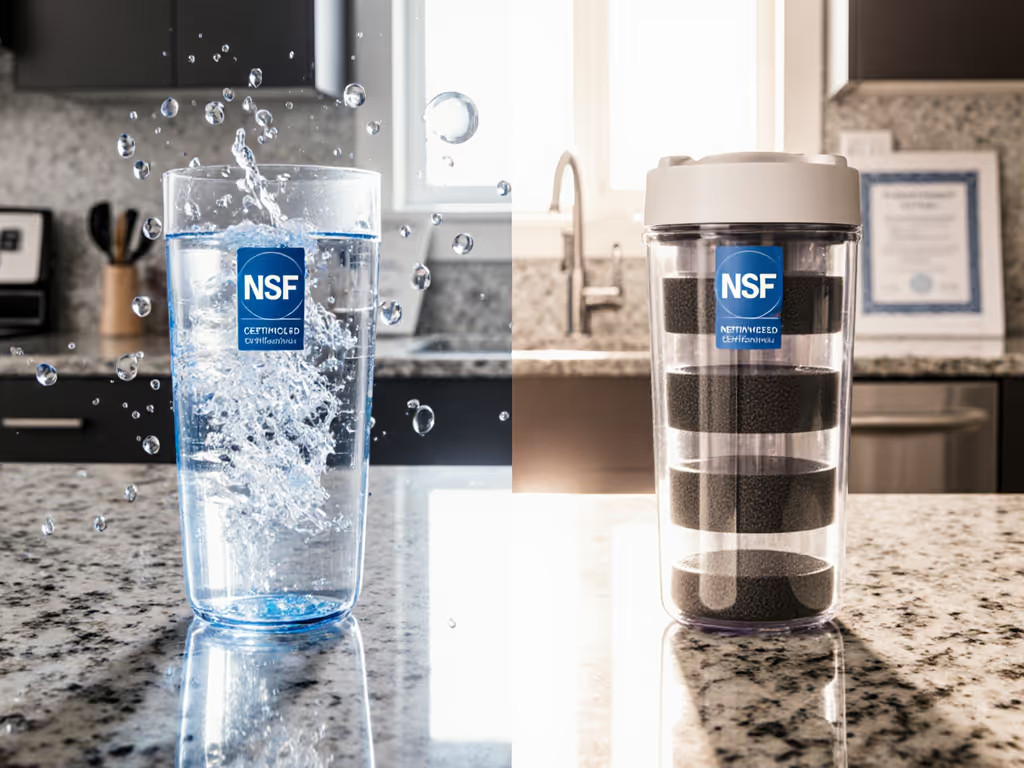
If you're trying to decipher NSF certification comparison labels while shopping for a water filter, you're not alone. That alphabet soup of standards - NSF 42, 53, 58, 401 - isn't just industry jargon. It's the difference between thinking you're protected and actually having clean water. I've lost count of how many homeowners in Flint, Newark, or wildfire-affected West Coast communities told me their "certified" fridge filter fixed taste... but didn't stop lead or PFAS. Your water filter isn't protection theater, it's your family's daily shield. And if it's hard to maintain, it will not protect you. Let's cut through the noise with a practical, step-by-step guide based on what really matters in your tap water.
Why "Certified" Isn't Enough - And What Truly Matters
I learned this the hard way after my wrist injury made cartridge swaps unbearable. Turns out, certification verification is useless if you can't maintain the system. A filter might be NSF-certified for lead reduction, but if changing it requires a contortionist act under your sink, it'll sit neglected until it fails. That's why I evaluate every filter through two lenses:
- What contaminants does it actually remove? (Covered by specific NSF standards)
- Can you live with it long-term? (Flow, install ease, maintenance friction)
Let's tackle the first question, knowing which standard covers your specific risks, before you waste money on a filter that's perfect for chlorine but useless for lead.
Step 1: Identify Your Contaminants (Don't Guess!)
This is your critical preflight step. To make sense of your utility's report, use our CCR interpretation guide. Throwing money at an "NSF-certified" filter without knowing your water profile is like buying rain gear for a desert hike. Do this first:
- For city water: Grab your annual Consumer Confidence Report (CCR) from your utility website. Search "[Your City] CCR [current year]."
- For well water: Get a certified lab test (check EPA-listed labs). Skip this, and you're flying blind.
Safety cautions noted: Never rely on taste/smell alone. Lead and PFAS are odorless and tasteless. A recent industry report confirmed 30% of homeowners with "fine-tasting" water had lead levels above EPA action limits.
Common Threats by Region:
- Northeast/Midwest: Aging pipes = lead, copper
- PFAS Hotspots (MI, OH, NC, NJ): AFFF firefighting foam runoff
- West Coast: Wildfire ash (turbidity, VOCs), agricultural runoff
- Hard Water Belts (AZ, TX, SoCal): Scale isn't just annoying, it traps contaminants in pipes
Step 2: Match Contaminants to Certifications (The 42 vs 53 Breakdown)
Here's where most buyers get tripped up. NSF 42 vs 53 isn't about "better" or "worse" - it's about which contaminants the filter targets. Think of these like prescription labels:
NSF/ANSI 42: Your Aesthetic Guardian
- What it covers: Taste, odor, color (not health risks)
- Certified reductions: Chlorine, chloramine, iron, manganese, zinc, TDS (for aesthetics)
- Where you'll see it: Fridge filters, basic pitchers, faucet attachments
- Reality check: Most pitcher filters stop here. They'll fix chlorinated "pool water" taste but leave lead untouched. A fact confirmed by independent analysis: Over 65% of counterfeit fridge filters claim NSF 42 but omit critical health standards.
NSF/ANSI 53: Your Health Protector
- What it covers: Health-impacting contaminants
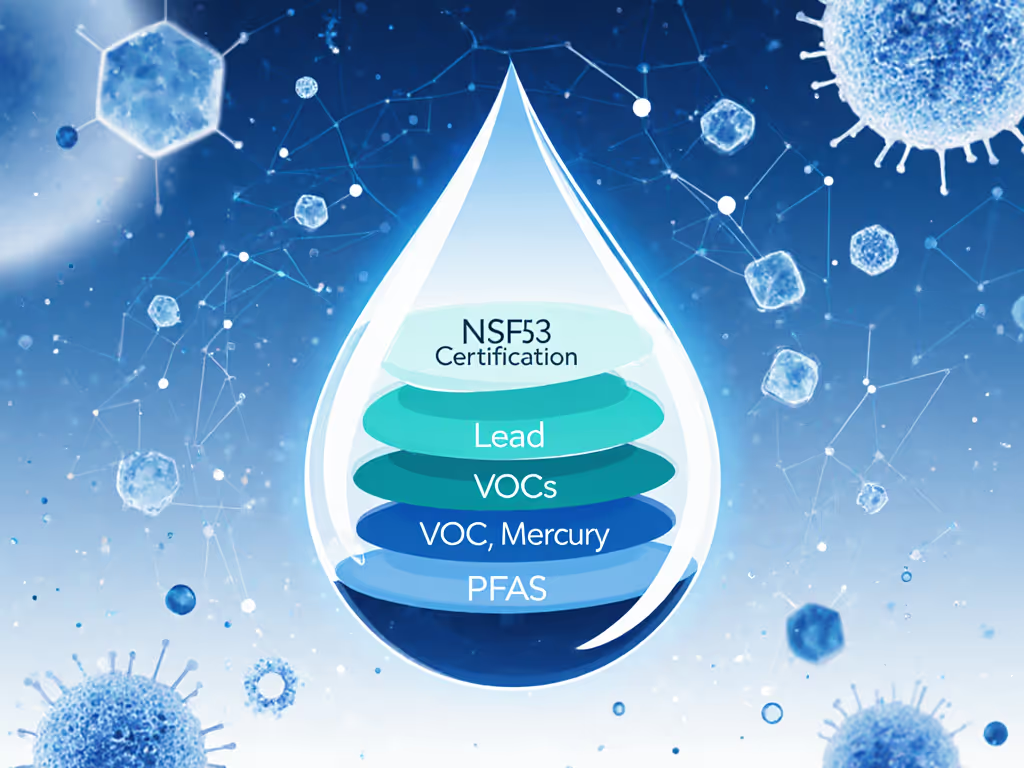
- Certified reductions: Lead, mercury, VOCs (like benzene), PFAS (added in 2020), Cryptosporidium, asbestos
- Where you'll see it: Under-sink systems, advanced pitchers, some whole-house filters
- Critical detail: Certification is contaminant-specific. A filter "NSF 53 certified" might only cover lead, not PFAS! Always check the scope: "NSF 53 for lead and VOCs" vs "NSF 53 for cysts only".
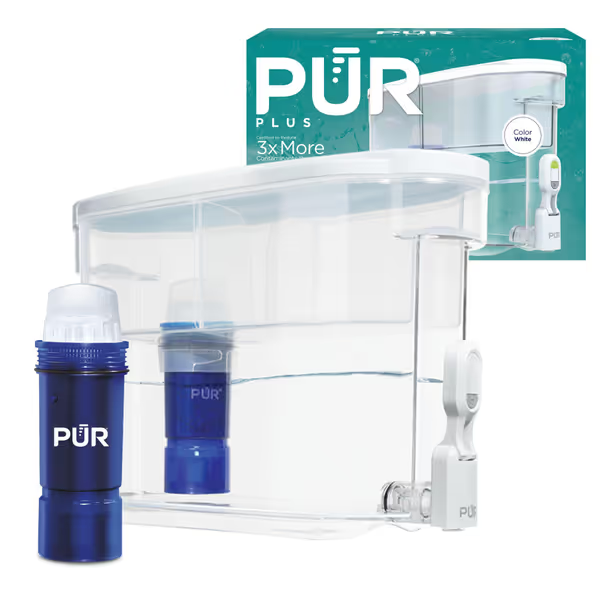
PUR PLUS 30-Cup Water Filter Dispenser
Reduces lead and microplastics for cleaner, great-tasting water.
$32.99
Filter Capacity40 gallons/2 months
Filter Capacity40 gallons/2 months
Pros
WQA certified to reduce Lead & microplastics.
Large 30-cup capacity, fits fridge.
Cons
Mixed feedback on durability and functionality.
Customers find the water filter dispenser easy to use, particularly praising the spout and installation process. The water tastes good and customers consider it well worth the price. However, the product receives mixed feedback about its quality and functionality, with some saying it works well while others report it stops working after a day or two. Moreover, the filter speed is slow, and customers report durability issues with the spigot/handle breaking. Additionally, there are concerns about leakage and poor value for money due to expensive filter replacements.
Customers find the water filter dispenser easy to use, particularly praising the spout and installation process. The water tastes good and customers consider it well worth the price. However, the product receives mixed feedback about its quality and functionality, with some saying it works well while others report it stops working after a day or two. Moreover, the filter speed is slow, and customers report durability issues with the spigot/handle breaking. Additionally, there are concerns about leakage and poor value for money due to expensive filter replacements.
Step 3: Verify the Certification (Don't Trust the Box!)
I've seen filters bragging "NSF Certified!" on packaging while hiding the fine print: "Meets NSF 42 for chlorine reduction only." Contaminant-specific certifications mean nothing if they don't cover your threat. Follow this verification checklist:
- Find the official certification number: Look for "NSF/EPA Reg. No. [number]" on the product itself or packaging.
- Search the NSF public database: Enter the number, and it will show exactly which contaminants it reduces.
- Check capacity and flow rate: A filter certified for lead at 0.5 GPM might choke at 1.0 GPM. Match this to your faucet's flow!
- Confirm replacement schedule: NSF 53 filters for lead typically last 3-6 months. If it claims "1 year," demand proof.
Real-world example: During Flint's crisis, many families used fridge filters (NSF 42) expecting lead protection. But unless the filter specified "NSF 53 for lead reduction," it did nothing. Verification isn't pedantry, it's prevention.
Step 4: Prioritize Usability - Or Risk Filter Neglect
Let's talk about the elephant in the room: water quality standards mean squat if you skip maintenance. After my wrist injury, I realized even certified filters fail when installations fight the user. Ask these practical questions:
- Flow rate: Does it drop below 1.0 GPM (gallons per minute) when filtering lead? Your morning coffee shouldn't take 5 minutes.
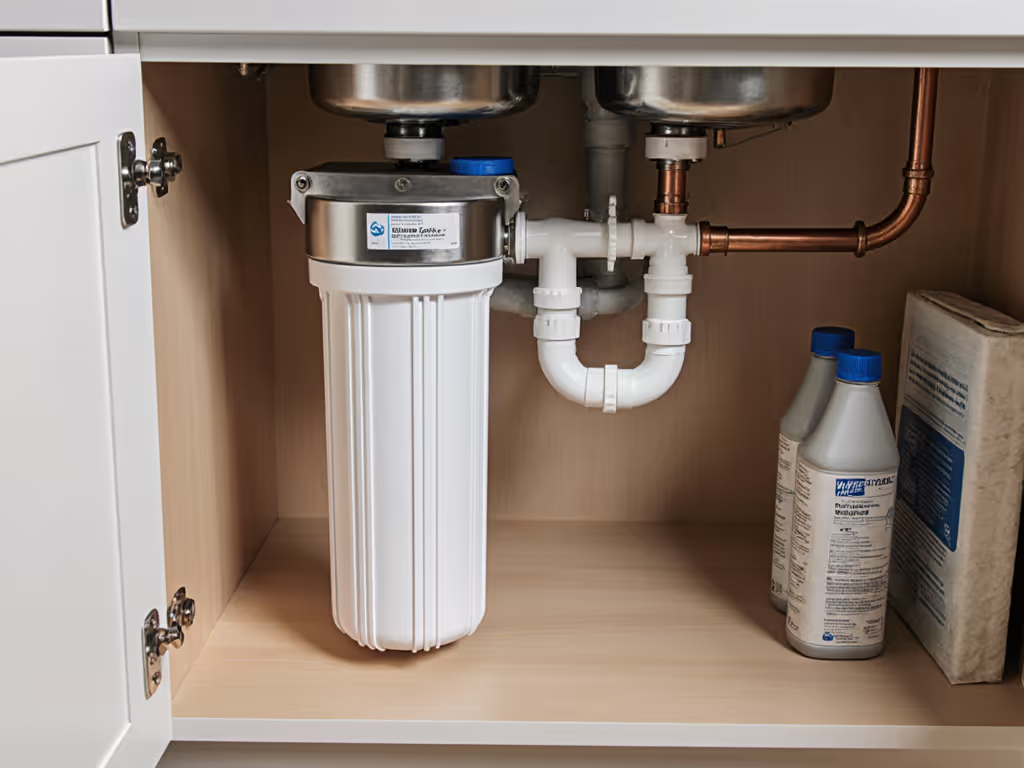
- Clearance: Can you swap cartridges without lying under the sink with a flashlight? Check required clearance, most manuals hide this.
- Tool use: Does it need wrenches? Tool-less housings (like quarter-turn locks) cut maintenance time from 20 minutes to 60 seconds.
- Replacement reminders: Is there a visual/timer indicator? If you forget changes, certifications are irrelevant.
I tested a "premium" under-sink filter claiming NSF 53 for PFAS. Great on paper, awful in reality. Changing the cartridge required disassembling 3 fittings in a cramped cabinet. If it is hard to maintain, it will not protect you. And that's exactly what happened: users skipped changes, and lead seeped through exhausted media.
When You Might Need Both (Or More)
NSF 42 and 53 often work together. For example:
- City water with lead pipes: An NSF 53 filter for lead plus NSF 42 for chlorine (which can leach lead from pipes).
- PFAS hotspots: Look for NSF 53 specifically for PFAS, not all 53 filters cover it. (Note: NSF 401 or P473 standards also cover emerging contaminants.)
- Well water: You might need NSF 53 for nitrates and NSF 42 for iron/manganese. Never assume one filter solves all.
Pro tip: Renters or those in tight spaces should consider countertop filters with NSF 53 certification. The PUR PLUS dispenser (featured above) combines NSF 42 (chlorine/taste) and NSF 53 (lead/microplastics) with a drip-free spigot and tool-free filter changes, critical for quick apartment swaps. Its flow rate stays steady at 0.8 GPM even when filtering lead, avoiding the "trickle faucet" problem.
The Bottom Line: Certified Protection That Fits Your Life
NSF 42 vs 53 isn't a debate, it's a decision tree based on your water report. Your action plan:
- Get your water tested (CCR or lab report).
- Identify your top 1-2 health risks (lead, PFAS, etc.).
- Demand NSF 53 certification for those specific contaminants.
- Verify capacity, flow rate, and maintenance ease before buying.
Stop gambling with flimsy fridge filters or counterfeit cartridges. A certified filter only works if you use it correctly, every day. And if it's hard to maintain, it will not protect you. Choose systems designed for real life, not just lab benches. Your water's safety isn't about the sticker on the box. It's about what happens when you turn on the tap, month after month, without a second thought.
Related Articles