The Ultimate Guide to Choosing the Best Water Filter System for Home: Certified Solutions for Cleaner, Greener Living
By Diego Alvarez • 21st Oct
You want crystal-clear, safe water without overspending or creating mountains of used cartridges, and the right water filter system for home can make that happen. Yet choosing one can feel overwhelming because every household’s water source, contaminants, and usage are different. City water is disinfected but often tastes like a pool, while well water can be pristine one month and rusty the next. How do you sort carbon blocks from Reverse Osmosis [RO] systems and whole-house units, and how do you verify claims? This guide brings clarity with certification-backed insights, practical comparisons, and sustainability smarts. Throughout, you will see how Clean Water, Less Waste provides personalized recommendations, verified reviews using NSF/ANSI [National Sanitation Foundation/American National Standards Institute] standards, and guides for city and well water to help you cut through noise and choose a system you can trust.
Why Water Quality Varies by Source: City vs Well Water
Knowing your water source is the first domino to tip, because it shapes which contaminants you should target and where filtration belongs. Municipal water is treated to meet federal benchmarks set by the EPA [Environmental Protection Agency], but treatment doesn’t remove everything; chlorine or chloramine control microbes while leaving taste, odor, and some disinfection byproducts behind, and aging pipes can add lead. The EPA [Environmental Protection Agency] action level for lead at the tap is 15 parts per billion, and some cities still battle legacy plumbing, so point-of-use drinking filters are common. Private wells bypass municipal treatment altogether, making testing essential because aquifers can carry iron, manganese, sulfur odors, hardness minerals, nitrates near agriculture, or bacteria after storms. Seasonal shifts, construction, and drought can change water profiles faster than you expect, so periodic testing is smart even when taste seems fine. Learn how seasonal changes impact filtration choices in our seasonal water quality guide. Clean Water, Less Waste organizes guidance by source, including dedicated well water playbooks that translate test results into specific, certified options and practical next steps you can act on with confidence.
- City water common issues: chlorine or chloramine taste, lead from service lines, disinfection byproducts, PFAS [Per- and Polyfluoroalkyl Substances] in some regions.
- Well water common issues: iron and manganese staining, sulfur odor, hardness scale, nitrates, arsenic, coliform bacteria, and turbidity after heavy rains.
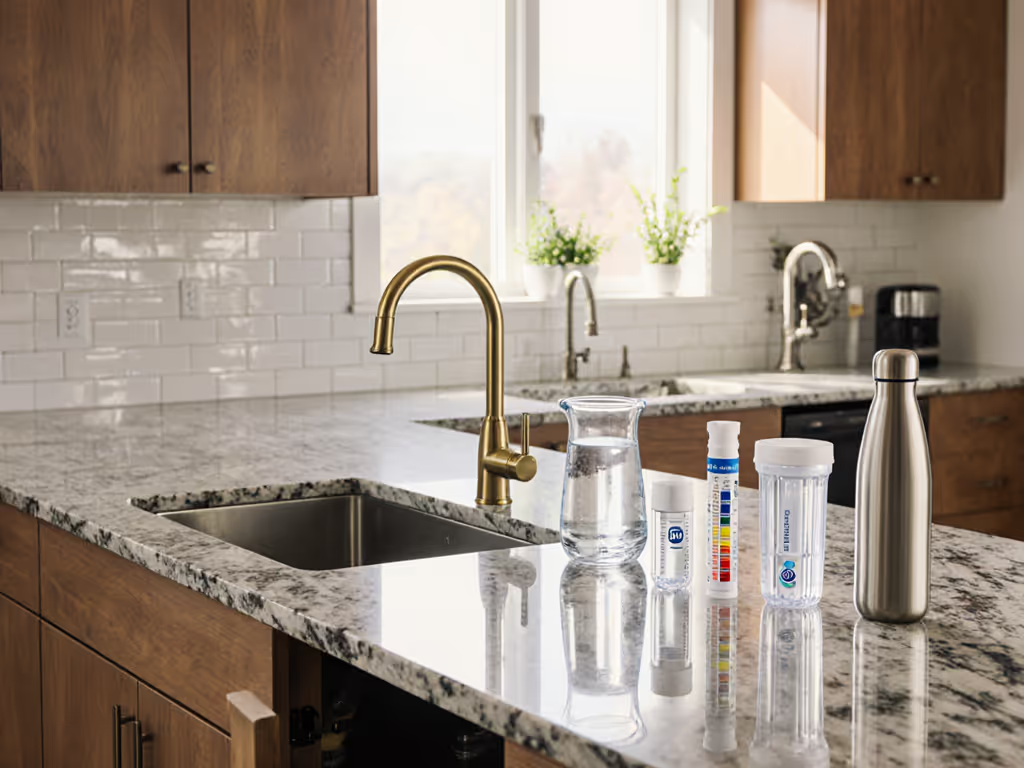
- Quick check: start with an at-home screening kit and, for wells, a lab test annually or after floods; then match results to certified reduction claims.
How Certifications Prove Performance: NSF/ANSI Standards Explained
Marketing claims can be colorful, but certifications translate performance into measurable, auditable proof under standardized conditions. NSF/ANSI [National Sanitation Foundation/American National Standards Institute] standards outline what a filter must reduce, how much, and for how long, and they verify materials are safe in contact with drinking water. For example, NSF/ANSI 42 covers aesthetic improvements like chlorine and taste, while NSF/ANSI 53 covers health-related contaminants such as lead and cysts. Not sure which certification matters? See our NSF 42 vs 53 guide for plain-English differences. Reverse Osmosis [RO] systems are validated under NSF/ANSI 58, and NSF/ANSI 401 evaluates “emerging compounds” like certain pharmaceuticals and pesticides. UV [Ultraviolet] systems are covered by NSF/ANSI 55 for disinfection performance, and NSF/ANSI/CAN 372 confirms lead-free materials in wetted parts. Independent verification matters because a 90 percent reduction in a lab without a standard can mean very different things across products. Clean Water, Less Waste explains these standards in plain English and checks lab reports, so when you see “lead reduction at 150 gallons under NSF/ANSI 53,” you know exactly what that means for your kitchen faucet.
Key NSF/ANSI [National Sanitation Foundation/American National Standards Institute] Drinking Water Standards at a Glance
| Standard | Focus | Typical Contaminants/Claims | Where You’ll See It |
|---|---|---|---|
| NSF/ANSI 42 | Aesthetic effects | Chlorine, taste and odor, particulate class reductions | Pitchers, faucet mounts, under-sink carbon blocks, whole-house carbon |
| NSF/ANSI 53 | Health effects | Lead, cysts, volatile organic compounds [VOC], some PFAS [Per- and Polyfluoroalkyl Substances] | Under-sink carbon blocks, specialty cartridges, some whole-house units |
| NSF/ANSI 58 | Reverse Osmosis [RO] | Total Dissolved Solids [TDS] reduction, fluoride, nitrate, arsenic depending on membranes | Under-sink Reverse Osmosis [RO] systems |
| NSF/ANSI 401 | Emerging compounds | Select pharmaceuticals, microplastics, pesticides, BPA | Advanced under-sink or countertop systems |
| NSF/ANSI 55 | UV [Ultraviolet] disinfection | Disinfection performance for microbes | Whole-house or point-of-use UV [Ultraviolet] add-ons |
| NSF/ANSI/CAN 372 and 61 | Lead-free and materials safety | Low lead content and safe contact materials | Plumbing components and system parts |
How to Choose a Water Filter System for Home: Types, Pros, and Trade-offs
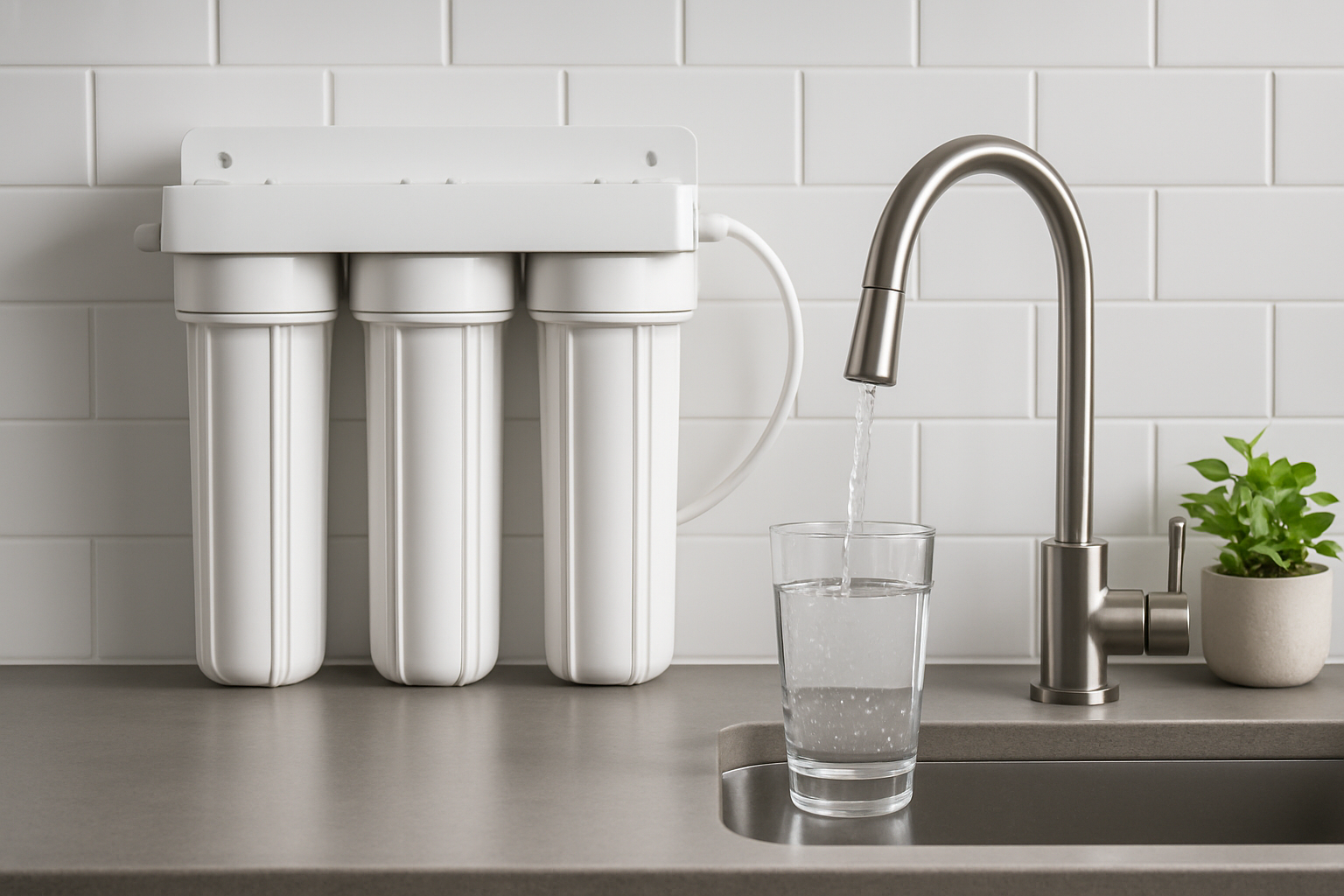
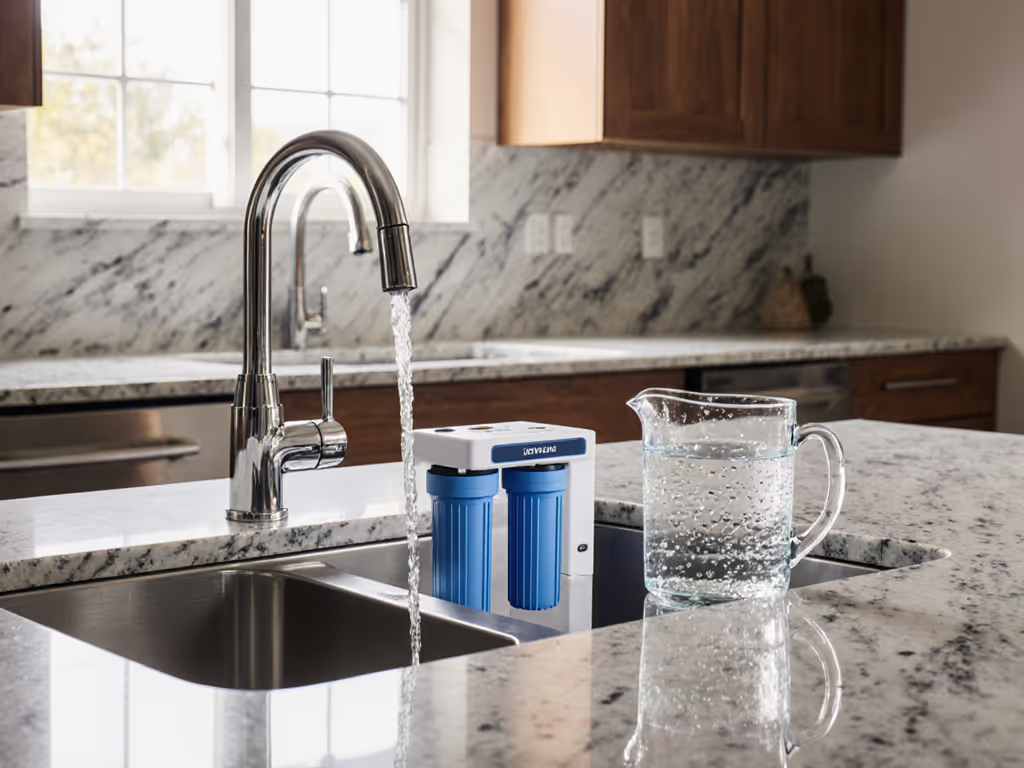
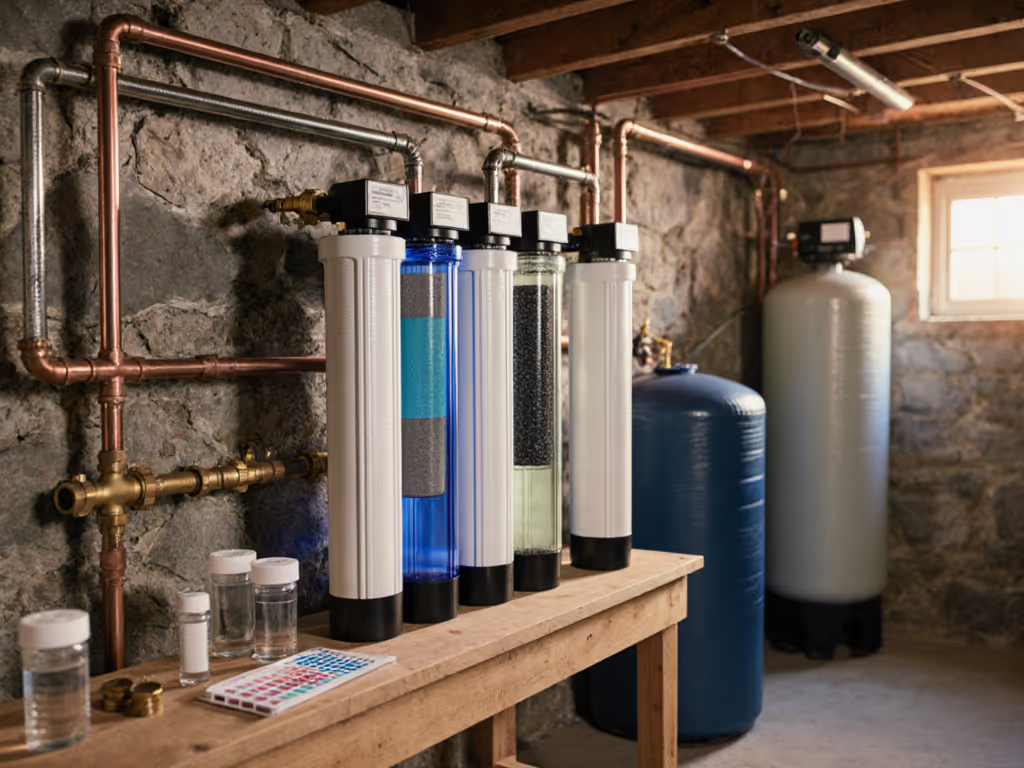
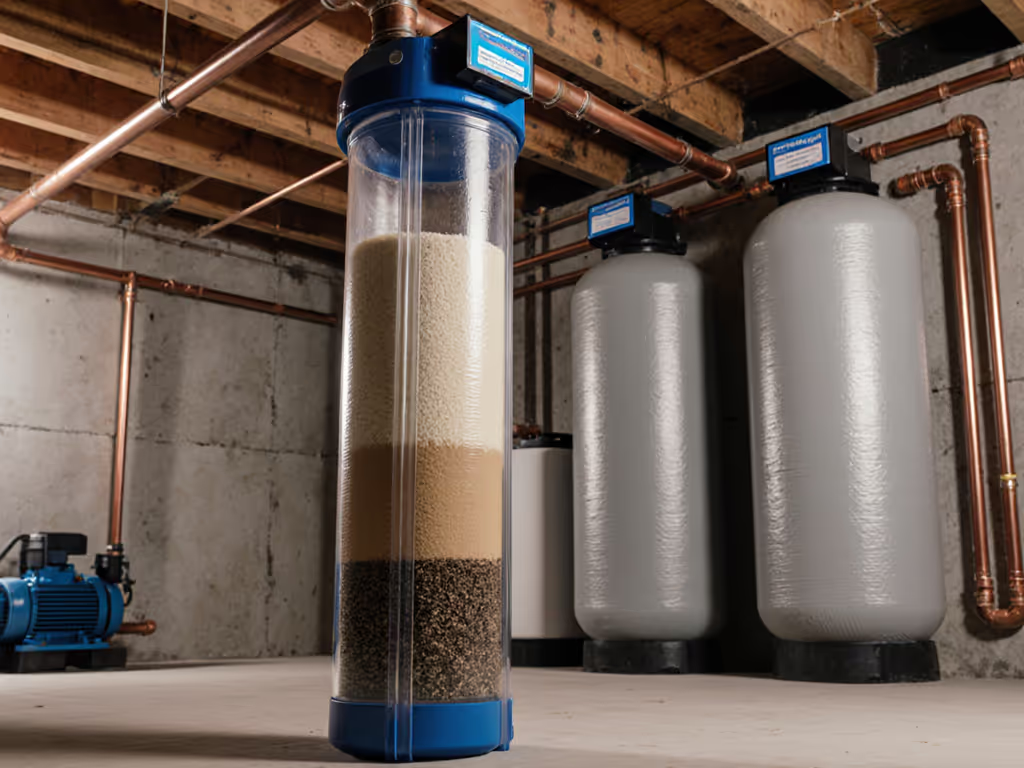
Begin with your test results and target outcomes, then decide on point-of-use for drinking water or point-of-entry for whole-house coverage, or both if needed. Pitchers and faucet-mounted filters excel at speed and simplicity for chlorine taste and some lead, while under-sink carbon blocks add higher capacity and stronger health claims under NSF/ANSI [National Sanitation Foundation/American National Standards Institute] 53. Reverse Osmosis [RO] provides broad reduction of Total Dissolved Solids [TDS], fluoride, arsenic V, and nitrate with a storage tank and dedicated faucet, though it wastes some water during membrane flushing; many modern units are more efficient than previous generations. If you are deciding between technologies, see our activated carbon vs RO guide. Whole-house carbon tackles chlorine or chloramine and volatile organic compounds [VOC] for every tap and protects plumbing and appliances, but it does not replace a drinking-grade under-sink option for heavy metals. For wells, prefilters for sediment, iron or manganese media, and UV [Ultraviolet] disinfection may be essential. Ask yourself: What do I want every shower and laundry cycle to avoid, and what must my family not ingest at the kitchen tap? Clean Water, Less Waste maps these choices to certified products and calculates ongoing costs and waste to keep your decision grounded and green.
Common System Types Compared
| Type | Best For | Certifications Often Seen | Pros | Trade-offs |
|---|---|---|---|---|
| Pitcher or Faucet-Mount | Chlorine taste, basic particulate, some lead | NSF/ANSI 42, 53 | Low cost, no tools, fast startup | Small capacity, frequent cartridge changes, slower flow |
| Under-Sink Carbon Block | Lead, cysts, VOC, chlorine taste | NSF/ANSI 53, 42 | Higher capacity, strong health claims, good taste | Annual cartridge cost, install time, dedicated faucet sometimes |
| Reverse Osmosis [RO] | Broad TDS reduction, fluoride, nitrate, arsenic V | NSF/ANSI 58 | Comprehensive reduction, consistent performance | Uses water during operation, remineralization may be desired |
| Whole-House Carbon | Chlorine or chloramine across the home, VOC | NSF/ANSI 42 | Better taste and odor at every tap, protects plumbing | Not a substitute for drinking-grade heavy metal reduction |
| UV [Ultraviolet] Disinfection | Microbial safety, especially on wells | NSF/ANSI 55 | Chemical-free inactivation of microbes | Requires clear water, annual lamp changes, power source |
- Point-of-use: treat the sip and the sauce pot with the strongest claims where it counts.
- Point-of-entry: protect showers, laundry, and pipes from chlorine, sediment, and stains.
- Combo approach: common for city homes wanting great taste and whole-house comfort, or wells needing multi-stage treatment.
Cost, Capacity, and Waste: The Total Ownership Equation
Affordability is not just the sticker price; it is the sum of purchase, replacement filters, maintenance time, and waste. For example, a low-cost pitcher can create a steady stream of spent cartridges, while a high-capacity under-sink carbon block reduces both changeouts and plastic. Reverse Osmosis [RO] used to be criticized for wasting water, but many units now achieve 2:1 or better recovery ratios, and some add smart shutoff valves to curb waste; the flip side is multi-stage filters to replace on schedule. For whole-house carbon, lifespan is measured in gallons and months, so matching media size to your family’s flow matters. Think like a project manager: what is my annual gallon usage for drinking and cooking, and how does that translate into cartridge count and cost per gallon? Clean Water, Less Waste quantifies capacity, cost per gallon, and estimated waste footprint to help you see beyond marketing and into the math that sustains your goals and the planet.
Ownership Snapshot: Cost and Waste Considerations
| System | Typical Capacity | Filter Changes/Year | Estimated Cost/Year | Waste Footprint |
|---|---|---|---|---|
| Pitcher | 40–120 gallons per cartridge | 6–12 | Moderate if used heavily | Higher plastic count from frequent cartridges |
| Under-Sink Carbon Block | 500–1500 gallons per cartridge | 1–3 | Moderate to low per gallon | Lower plastic, longer intervals |
| Reverse Osmosis [RO] | Varies by tank and membrane | 2–4 stages on schedule | Moderate; decreases with higher efficiency | Replace pre/post filters and membrane periodically |
| Whole-House Carbon | 50,000–1,000,000 gallons | Media every 1–5 years | Spread over long life | Media disposal; minimal small-plastic waste |
| UV [Ultraviolet] | Flow-rated, not gallons | Lamp yearly, sleeve as needed | Predictable recurring cost | Lamp recycling required |
Build Your Shortlist: Matching Contaminants to Certified Solutions
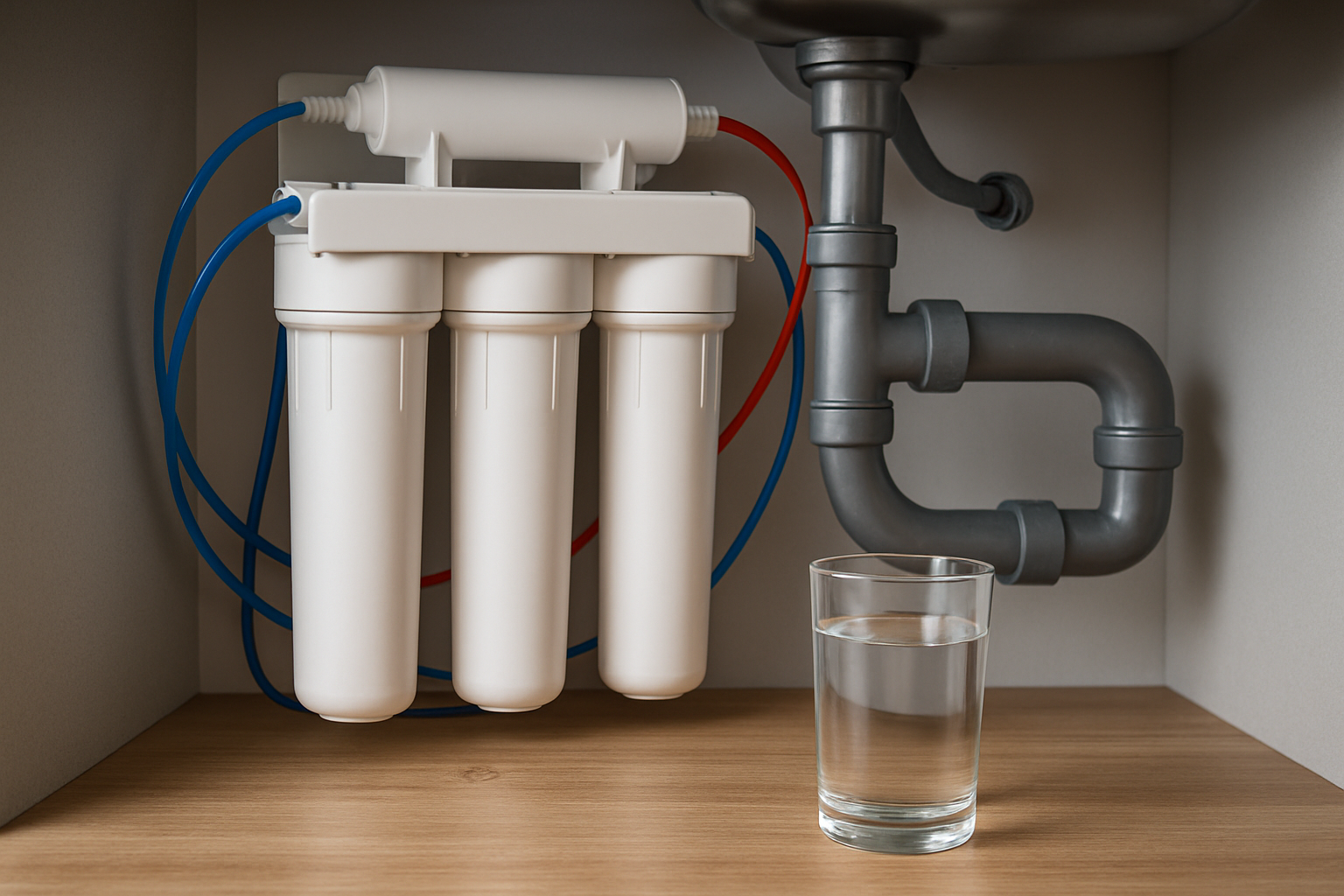
Once you know your target contaminants, build a shortlist whose claims are certified under the relevant NSF/ANSI [National Sanitation Foundation/American National Standards Institute] standard, then check capacity and maintenance. If a lab test shows lead, look for NSF/ANSI 53 lead reduction with a stated capacity; if your utility uses chloramine, ensure the carbon is rated for chloramine reduction under NSF/ANSI 42, often requiring catalytic carbon. For targeted solutions, see our NSF 53-certified lead removal filters. On wells with confirmed bacteria, a UV [Ultraviolet] unit rated under NSF/ANSI 55 downstream of sediment and carbon is a common design, because UV [Ultraviolet] needs low turbidity to do its job. For PFAS [Per- and Polyfluoroalkyl Substances], seek systems with certified reduction claims under NSF/ANSI 53 or NSF/ANSI 58, noting which specific compounds were tested. Instead of guesswork, Clean Water, Less Waste cross-references your report and filters out hype, highlighting only those options with verified data, clear maintenance schedules, and waste-aware packaging to keep your home safer and your footprint smaller.
From Contaminant to Certified Treatment Path
| Contaminant/Concern | Primary Treatment | Helpful Certifications | Notes |
|---|---|---|---|
| Chlorine taste and odor | Carbon block or whole-house carbon | NSF/ANSI 42 | Great first step for city water; improves showers and laundry |
| Chloramine | Catalytic carbon | NSF/ANSI 42 | Confirm chloramine rating; longer contact time helps |
| Lead | Certified carbon block | NSF/ANSI 53 | Check capacity and flow rate for your kitchen usage |
| PFAS [Per- and Polyfluoroalkyl Substances] | Reverse Osmosis [RO] or specialty carbon | NSF/ANSI 53 or 58 | Verify which PFAS [Per- and Polyfluoroalkyl Substances] compounds were tested |
| Nitrate and fluoride | Reverse Osmosis [RO] | NSF/ANSI 58 | Consider remineralizing post-filter for taste |
| Arsenic V | Reverse Osmosis [RO] | NSF/ANSI 58 | Arsenic III may need pre-oxidation to V |
| Iron and manganese | Oxidation and media filtration | Performance claims vary | Often whole-house on wells; pre-oxidant or air injection helps |
| Bacteria and cysts | UV [Ultraviolet] or 0.2–0.5 micron absolute filters | NSF/ANSI 55, 53 | UV [Ultraviolet] requires clear water and power |
| Hardness scale | Ion exchange softener or template-assisted crystallization | Material safety standards | Reduces scale on fixtures and heaters; not a health claim |
Installation, Maintenance, and Real-World Tips
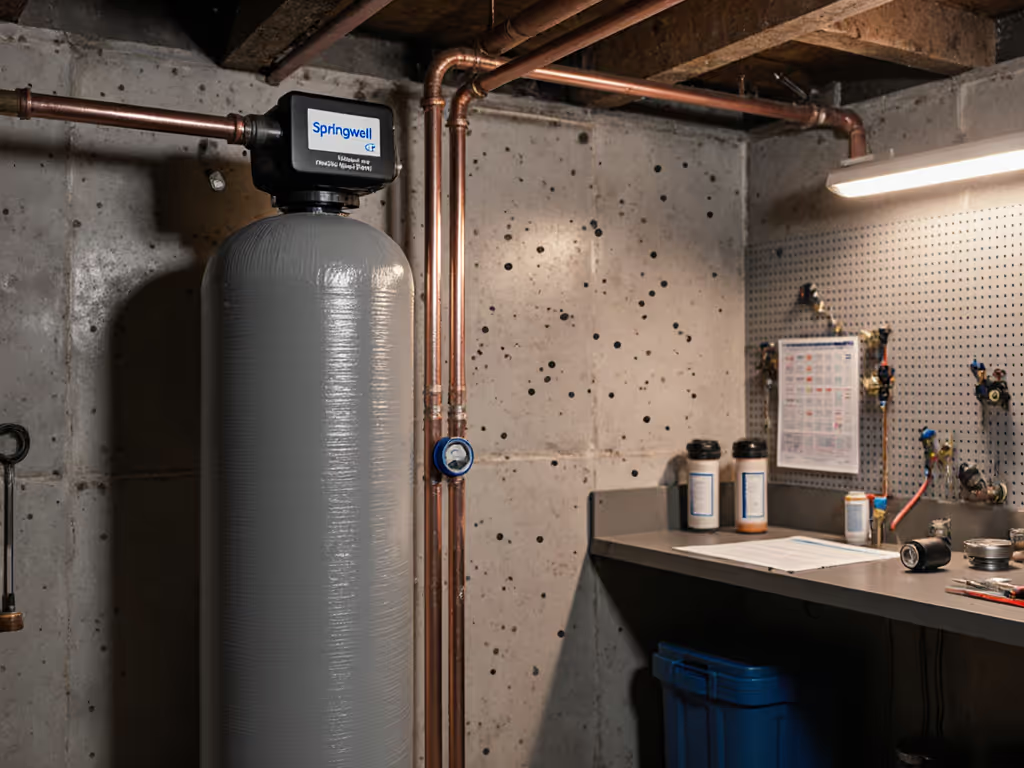
Picking the right system is half the battle; installing it correctly and keeping it serviced is where performance stays on track. For under-sink units, measure space for housings and a tank, and plan the path to a dedicated faucet or existing cold line if compatible; flow rates and faucet fitments are easy to overlook. Whole-house systems should be sized for family peak flows in gallons per minute, include a bypass and sediment prefilter, and sit where maintenance is comfortable and drain access exists; pressure gauges upstream and downstream make diagnosing clogs simple. Mark your calendar for filter changes based on gallons or time, because performance declines are often gradual and unnoticed. For step-by-step fixes and upkeep, see our water filter troubleshooting guide. A simple log on your phone that records dates, tastes, and any pressure changes can be your early warning radar. Clean Water, Less Waste includes maintenance playbooks and case studies, such as a four-person home that cut plastic cartridge waste by 70 percent by moving from pitchers to a high-capacity under-sink carbon block plus a compact Reverse Osmosis [RO] membrane with extended-life prefilters, saving money and trips to the store while improving taste and confidence.
- Test first, then shop: use results to filter filters.
- Check certifications and capacities, not just marketing claims.
- Match point-of-use and point-of-entry to your goals and budget.
- Plan maintenance from day one with calendar reminders and spare cartridges.
- For wells, sequence sediment, iron, carbon, and UV [Ultraviolet] thoughtfully.
How Clean Water, Less Waste Guides Smarter, Certified Choices
When you are staring at ten similar cartridges and three gleaming tanks, objective data is the difference between a guess and a great decision. Clean Water, Less Waste focuses on what matters most: verified contaminant reduction under the correct NSF/ANSI [National Sanitation Foundation/American National Standards Institute] standards, true capacity at realistic household flows, maintenance cadence, and long-term waste footprint. You get personalized recommendations that account for city or well water, plumbing layout, and family size, alongside certified product reviews that link claims to the exact standard and protocol. The site’s tables, calculators, and side-by-side comparisons let you weigh Total Dissolved Solids [TDS] reduction against filter life or waste output, so you can pick the setup that meets your health, taste, and sustainability goals. With guides for various water sources, including well water, and in-depth explainers on NSF 42 vs 53 vs 58 and beyond, the platform trims hours of research into a clear, confidence-building path. By offering verified, certification-based performance data and personalized guidance, the website enables users to compare filters on factors like verified contaminant reduction, capacity, maintenance, and long-term waste footprint.
Ready to put it all together? Start with your water source and test results, decide where treatment will live in your home, and shortlist only those systems with certifications that match your contaminants. Then review cost per gallon, changeout frequency, and waste profile to avoid buyer’s remorse. A carefully chosen water filter system for home gives you safer sips, better showers, and lower impact, day after day.
Certified choices, matched to your unique water, deliver cleaner drinking, better taste, and a smaller footprint without the guesswork.
Imagine a year from now, when every glass, shower, and load of laundry feels fresher while your budget and waste bin shrink in tandem. What will it take to align your priorities with a precise, certification-backed water filter system for home?
Additional Resources
Explore these authoritative resources to dive deeper into water filter system for home.
- Whole House Filtration Systems - Culligan DIY
- Whole House Systems - Protect Your Home's Water Supply
Choose Smarter With Clean Water, Less Waste
Get certification-based data and personal guidance to compare verified reduction, capacity, upkeep, and waste footprint, with guides for city and well water.
Related Articles