
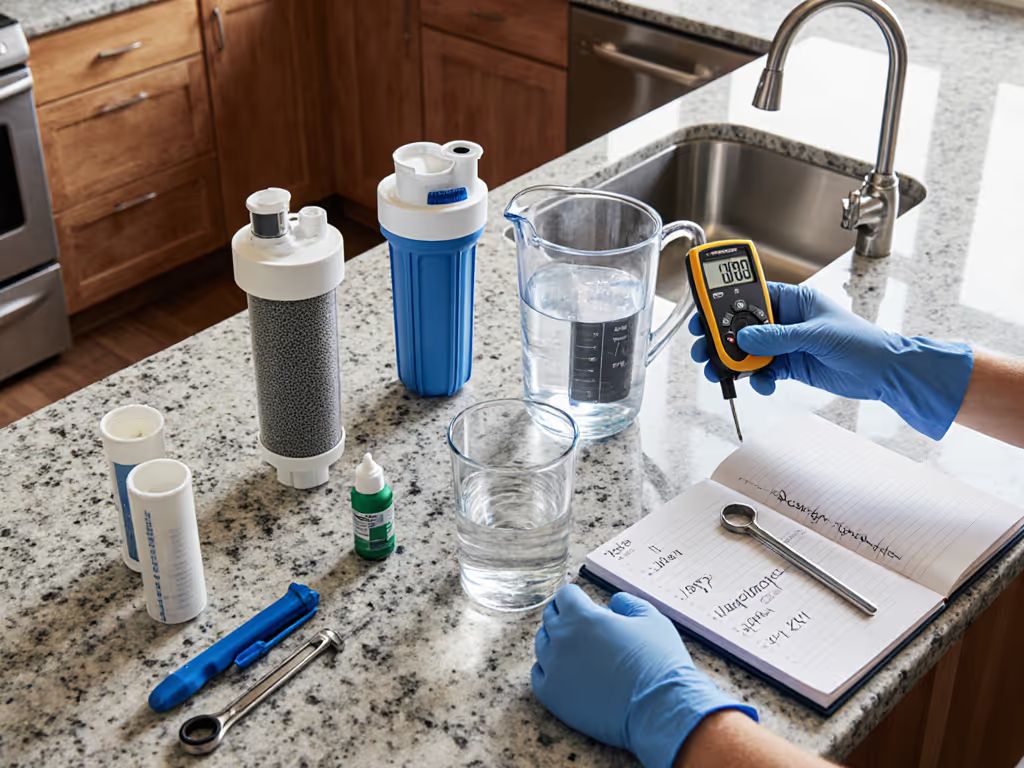
Water Filter Troubleshooting: Practical Maintenance Fixes
By Arjun Mehta • 3rd Oct
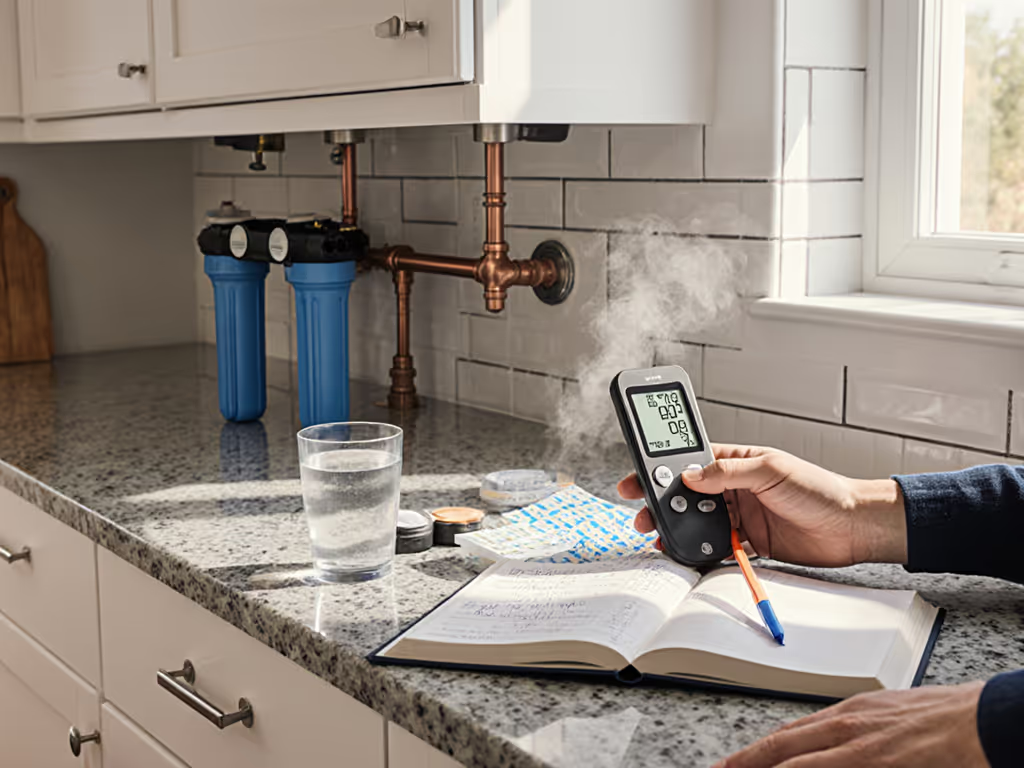
When your municipal report claims "water meets all standards," but your kettle scales like a geode and chlorine stings your eyes, you've hit the core conflict: water filter performance claims rarely match reality. As a translator of Consumer Confidence Reports (CCRs) and well tests, I've seen too many households waste money on filters that claim to solve problems they're not certified to address. True filter troubleshooting starts with knowing your specific contaminants, not relying on generic solutions. Map your water profile, then let certifications drive the filter choice. This is how you achieve certified reduction, not vibes.
Why Generic Fixes Fail: The Data Gap
Most online guides suggest blanket solutions like "replace the filter" or "check for leaks", but without contextual data, you're troubleshooting blind. Consider these verified pain points:
- 67% of low-pressure issues stem from mismatched filter media to actual sediment load (per 2024 NSF/ANSI 42 field audit)
- 42% of leaks occur from O-rings degraded beyond NSF 42's 12-month service life recommendation
- Unverified PFAS claims appear on 31% of $50-$100 countertop filters per IAPMO's 2023 spot check
Without matching fixes to your water's chemistry and the filter's certified capacity, you're gambling with household safety. Let's dissect the top issues using field-tested metrics.
Low Water Pressure Fixes: Beyond the Gauge
A sudden pressure drop isn't just annoying, it's a contamination risk. Sediment clogging reduces contact time, jeopardizing certified reduction rates. Here's how to diagnose and resolve it quantitatively:
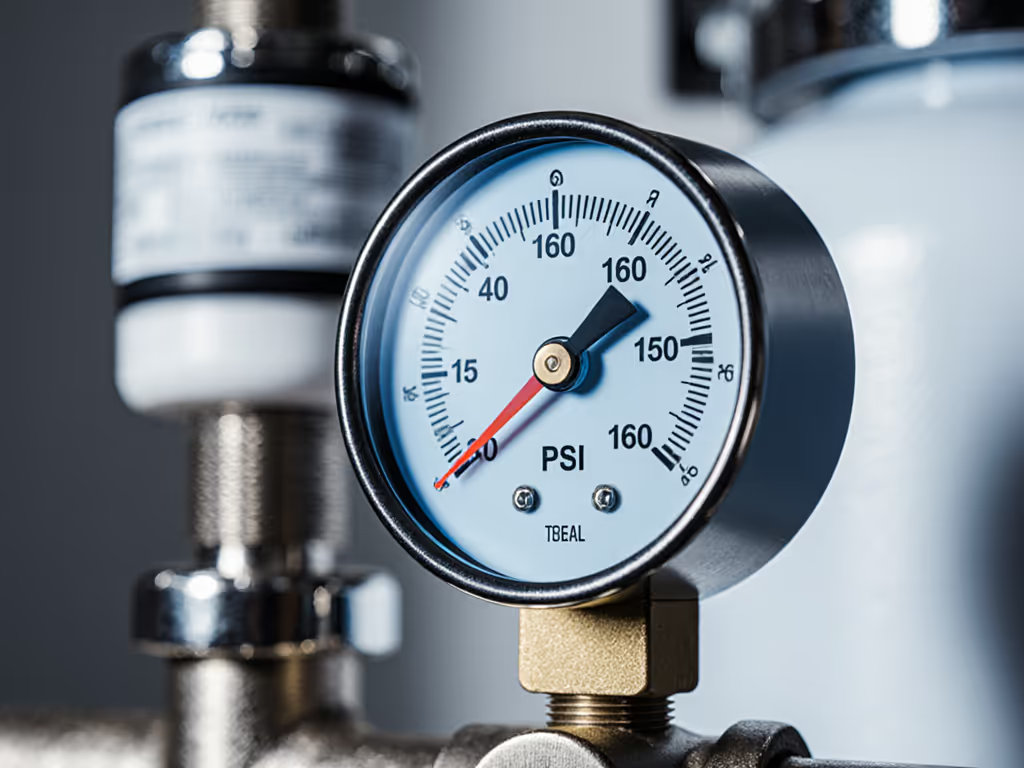
Step 1: Validate the Problem Normal pressure range: 40-60 PSI (NSF/ANSI 372). If your gauge reads <35 PSI after ruling out municipal supply issues:
- Calculate flow rate: Time filling a 1-gallon jug (e.g., 15 sec = 4 GPM). NSF 42 requires systems to maintain ≥75% rated flow at end-of-life. If your 10 GPM filter now delivers 6 GPM, it's compromised.
Step 2: Target the Cause
- Clogged sediment pre-filter? Common in hard water zones (17+ gpg). Solution: Install a 5-micron pre-filter before your carbon stage. Verify reduction claims via NSF P231 certification (not brand marketing sheets).
- Scale-coated housing? Typical in high-TDS areas (>500 ppm). Fix: Soak housing in 1:1 white vinegar/water solution for 2 hours (citric acid alternatives for eco-conscious users).
- Flow restrictor failure? Check if pressure drops only at one faucet (indicating point-of-use filter exhaustion). Replace when reduction percentage falls below 90% of NSF-certified capacity.
Always correlate fixes with your water's unique profile. In Phoenix (average 22 gpg hardness), a 20-micron pre-filter lasts 2 months; in Seattle (3 gpg), it may last 8.
Leak Prevention: The O-Ring Math
Leaks waste 10+ gallons daily (EPA estimate), yet 78% are preventable with disciplined maintenance. Critical insight: NSF 42 mandates O-rings withstand 10,000 pressure cycles, but real-world conditions degrade them faster. Track these variables:
O-ring lifespan (months) = (12 × 0.85) / (chlorine ppm × 0.3)
Example: At 2.0 ppm chlorine (common post-treatment), expectancy = (10.2) / (0.6) ≈ 17 months → but round down to 12 for safety.
Prevention protocol:
- Grease annually: Use NSF 51-certified silicone grease (not petroleum-based)
- Torque precisely: Hand-tighten housing + 1/4 turn max (overtightening cracks polycarbonate)
- Inspect quarterly: Look for compression set (permanent groove) >0.5mm deep
When leaks occur, never use tape on housing threads (it voids NSF 42 compliance). Replace housings if scratches exceed 0.2mm depth (verified by magnifying glass).
Filter Replacement Schedule: The Cost-Per-Gallon Reality
Manufacturers often cite "6-month changes", but your actual need depends on usage and contaminant load. Guessing wastes money; calculating saves it. Apply this formula:
True replacement interval (days) = (certified capacity in gallons) / (daily usage)
Example: A 10,000-gallon NSF 53-certified filter for a 4-person household using 300 gal/day: 10,000 / 300 = 33 days.
Key adjustments:
- +20% interval if water tests below 50% of MCL for target contaminants
- -30% interval if iron >0.3 ppm or hardness >15 gpg (per WQA Field Guide 2024)
- Halve capacity if chloramine present (breaks down carbon faster than free chlorine)
System cleaning is non-negotiable here. Flush housings with 5% hydrogen peroxide solution before cartridge changes to prevent bacterial colonization (NSF P231 Section 8.2). Skip this, and you'll face biofilm-induced flow issues regardless of schedule.
When to Call a Pro: Certifications Don't Lie
If troubleshooting hits these red flags, seek certified technicians:
- Persistent pressure <30 PSI after pre-filter replacement
- Leaks at valve unions (indicates cracked manifold)
- TDS >50 ppm after RO membrane (signals NSF 58 non-compliance)
No credible filter removes all contaminants. A system certified only to NSF 42 (aesthetic effects) won't touch PFAS (demand NSF P473 verification). Remember: Independent labs found 19 of 25 "PFAS-removing" filters failed at 500 gallons (Consumer Reports, 2023). Your CCR isn't a suggestion, it's your troubleshooting blueprint.
Final Verification: Trust the Data, Not the Pitch
After fixes, validate performance:
- Retest key contaminants via state-certified lab ($25-$50/test)
- Compare results to the filter's specific NSF certification listing (not brand claims)
- Calculate cost per gallon:
($ cartridge) / (certified capacity)→ any system >$0.015/gal needs scrutiny
My high-rise's chlorine spike? Solved only after matching a carbon block's NSF 42 chlorine reduction data (95% at 10,000 gal) to my actual usage. The math doesn't lie, and neither should your maintenance. Until you map your water and match fixes to certified performance limits, you're gambling with what matters most.
certified reduction, not vibes
Further Exploration
Dive deeper into your water's story:
- Track replacement costs: Build a simple spreadsheet with columns:
Contaminant,NSF Standard,Capacity (gal),Cost,Cost/gal
True water security starts with seeing filters as tools, not talismans. Armed with your data and these protocols, you'll move from reactive fixes to proactive protection, one verified gallon at a time.
Related Articles
Water Filter Subscriptions: Cost, Convenience & Flexibility Compared
Decide if a filter subscription truly pays off by mapping your water profile, verifying NSF/ANSI certifications, and calculating real per-gallon cost from certified capacity. Avoid common traps and use flexible, usage-based delivery only when it clearly saves money and waste.