How to Choose the Best House Water Filter for Your Needs (Without Wasting Money or Water)
By Diego Alvarez • 26th Oct
You deserve tap water that is safe, great tasting, and affordable to maintain, and the right house water filter can deliver all three without draining your budget or wasting water. Yet picking a filter often feels like decoding alphabet soup of certifications, cartridges, and claims. That is why a step-by-step approach works best: start with your water, match the technology to your contaminants, and validate claims with credible standards. Along the way, you should also consider flow, pressure, long-term costs, and the waste footprint so your choice keeps paying off for years.
Because most people compare only headline promises, the biggest wins come from digging one layer deeper and asking, what exactly am I removing, how sure am I it will be removed, and what will it cost per gallon over time. Public utility data, a basic home test, or a lab panel can reveal chlorine, chloramine, lead, iron, hardness, disinfection byproducts, pesticides, or per- and polyfluoroalkyl substances. Then you can map those findings to proven technologies like activated carbon, ion exchange, reverse osmosis, or ultraviolet disinfection. With that clarity, you will eliminate guesswork and choose confidently.
Start With Your Water: What You Are Actually Filtering
Before shopping, identify your source and your likely contaminants, because city water and private wells can differ dramatically. Municipal systems usually prioritize microbiological safety, so you will often taste chlorine, and you may see chloramine, disinfection byproducts, and occasional lead from plumbing. In contrast, wells may carry iron, manganese, hardness minerals, sulfur odor, and sometimes microbial risks or pesticides, depending on geology and land use. According to the Environmental Protection Agency (Environmental Protection Agency), roughly 10 to 15 percent of household sampling in older housing shows lead exceeding action levels, and studies indicate per- and polyfluoroalkyl substances are now detectable in many U.S. supplies.
Because data beats guesswork, begin with these steps, even if you plan to upgrade later. First, pull your consumer confidence report if you are on city water; utilities publish annual numbers for regulated contaminants and disinfectants. If you are unsure how to read it, use our CCR interpretation guide to translate the results into actionable filtration targets. Next, run an at-home screening kit for basics like hardness, pH, and chlorine, or send a sample to a certified lab for a comprehensive panel if you are on a well. Finally, write a short problem statement such as remove chlorine taste, reduce lead, block microplastics, or cut iron stains to anchor your choice.
- Common city water targets: chlorine and chloramine, lead from old lines, disinfection byproducts, per- and polyfluoroalkyl substances, microplastics, and taste or odor issues.
- Common well water targets: iron and manganese staining, hydrogen sulfide odor, hardness and limescale, turbidity and sediment, bacteria risk, and occasional pesticides.
- Must-have tests for wells: total coliform and E. coli, iron and manganese, hardness, pH, nitrate or nitrite, and any regional concerns recommended by your county.
How a House Water Filter Works and Where It Fits
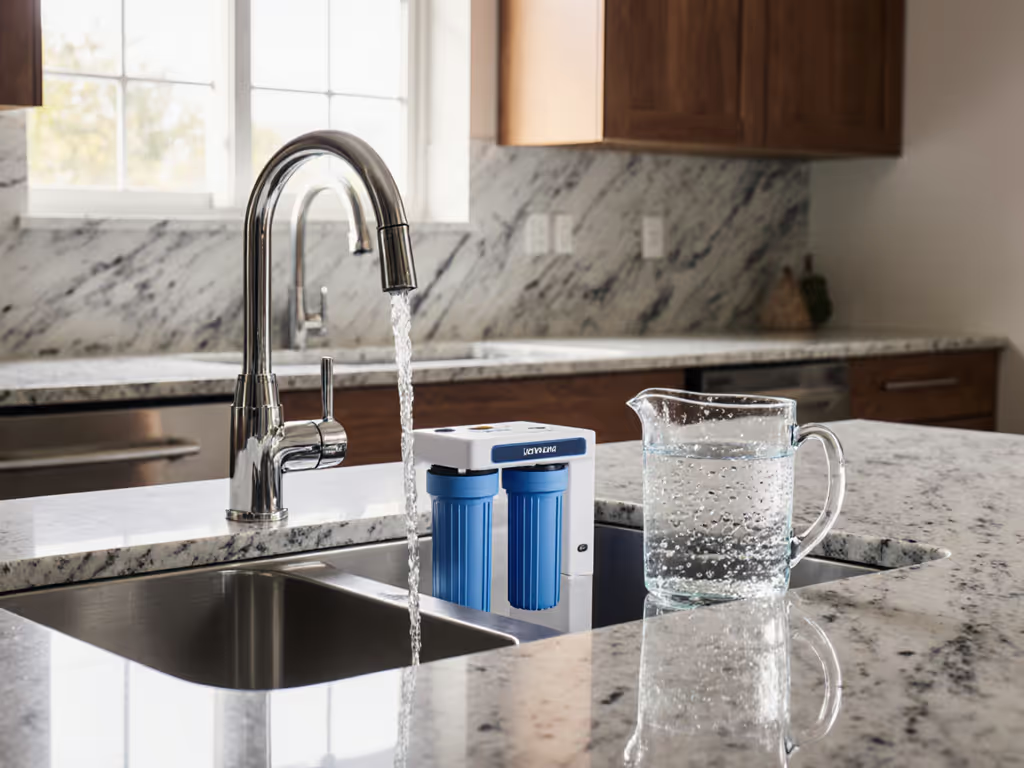
A whole-home system treats all water as it enters your house, protecting plumbing, showers, laundry, and appliances, while point-of-use systems focus on drinking and cooking at a sink or fridge. In many homes, a layered approach makes sense: a whole-house sediment prefilter protects fixtures and a kitchen drinking station handles the toughest contaminants for taste and health. Mounting locations matter too, because pressure and flow should remain strong at peak demand when showers, laundry, and dishwashers run simultaneously. Choosing the right micron rating, media type, and capacity helps keep pressure drop minimal and maintenance predictable.
Flow rate is a practical anchor for sizing, and matching it with your home’s peak use keeps things simple. A typical three-bath home often needs 10 to 12 gallons per minute at peak, and a large family with irrigation may push higher. If your filter housing or media is undersized, you will feel pressure dips and risk channeling, which reduces effectiveness. Conversely, if you oversize wildly, you may overpay upfront and replace media infrequently, which can be fine if the total cost per gallon still pencils out in your favor.
Certifications That Matter: NSF/ANSI Explained Without the Jargon
Independent certification is your best shortcut for separating marketing hype from verified performance, and the most recognized standards are published by the National Sanitation Foundation and American National Standards Institute partnerships. When a product claims chlorine reduction per NSF or American National Standards Institute protocols, a lab has tested it to a specific reduction level and capacity, not just a one-time pass. Similarly, standards for lead, cysts, volatile organic compounds, pharmaceuticals, or per- and polyfluoroalkyl substances each define how much a filter must reduce and for how long. If a product does not list a specific National Sanitation Foundation and American National Standards Institute standard number next to a contaminant and capacity, treat the claim as unverified. To decode the differences between standards, see NSF 42 vs 53.
Clean Water, Less Waste publishes certified product reviews with line-by-line analysis of National Sanitation Foundation and American National Standards Institute claims, which helps you understand the exact reduction performance, test conditions, and maintenance implications. You will also see whether a manufacturer holds listings with the International Association of Plumbing and Mechanical Officials (International Association of Plumbing and Mechanical Officials) or the Water Quality Association (Water Quality Association), two additional bodies that validate compliance. The key is to match the standard to your target contaminant and to verify capacity so you know how often you will be replacing cartridges or media. The table below decodes the most common standards so you can shop confidently.
| Standard | What It Verifies | Typical Use Case | Notes |
|---|---|---|---|
| NSF/ANSI 42 (National Sanitation Foundation and American National Standards Institute) | Aesthetic effects like chlorine, taste, odor, and particulates | Improve taste and protect plumbing with sediment and carbon stages | Great first step for city water with noticeable chlorine |
| NSF/ANSI 53 (National Sanitation Foundation and American National Standards Institute) | Health effects such as lead, cysts, and some volatile organic compounds | Lead reduction under verified conditions for older plumbing and fixtures | Check certified capacity for cartridge replacement intervals |
| NSF/ANSI 58 (National Sanitation Foundation and American National Standards Institute) | Reverse osmosis system performance including specific contaminant reduction | High purity drinking water under the sink for mixed contaminant loads | Includes efficiency ratio requirements for waste water management |
| NSF/ANSI 401 (National Sanitation Foundation and American National Standards Institute) | Emerging compounds like pharmaceuticals and certain herbicides | Extra assurance for trace contaminants in urban areas | Pair with other standards for broader coverage |
| NSF/ANSI P473 (National Sanitation Foundation and American National Standards Institute) | Per- and polyfluoroalkyl substances reduction performance | Communities with per- and polyfluoroalkyl substances advisories or concern | Look for verified reduction to below advisory levels |
Pick the Right Technology for the Job
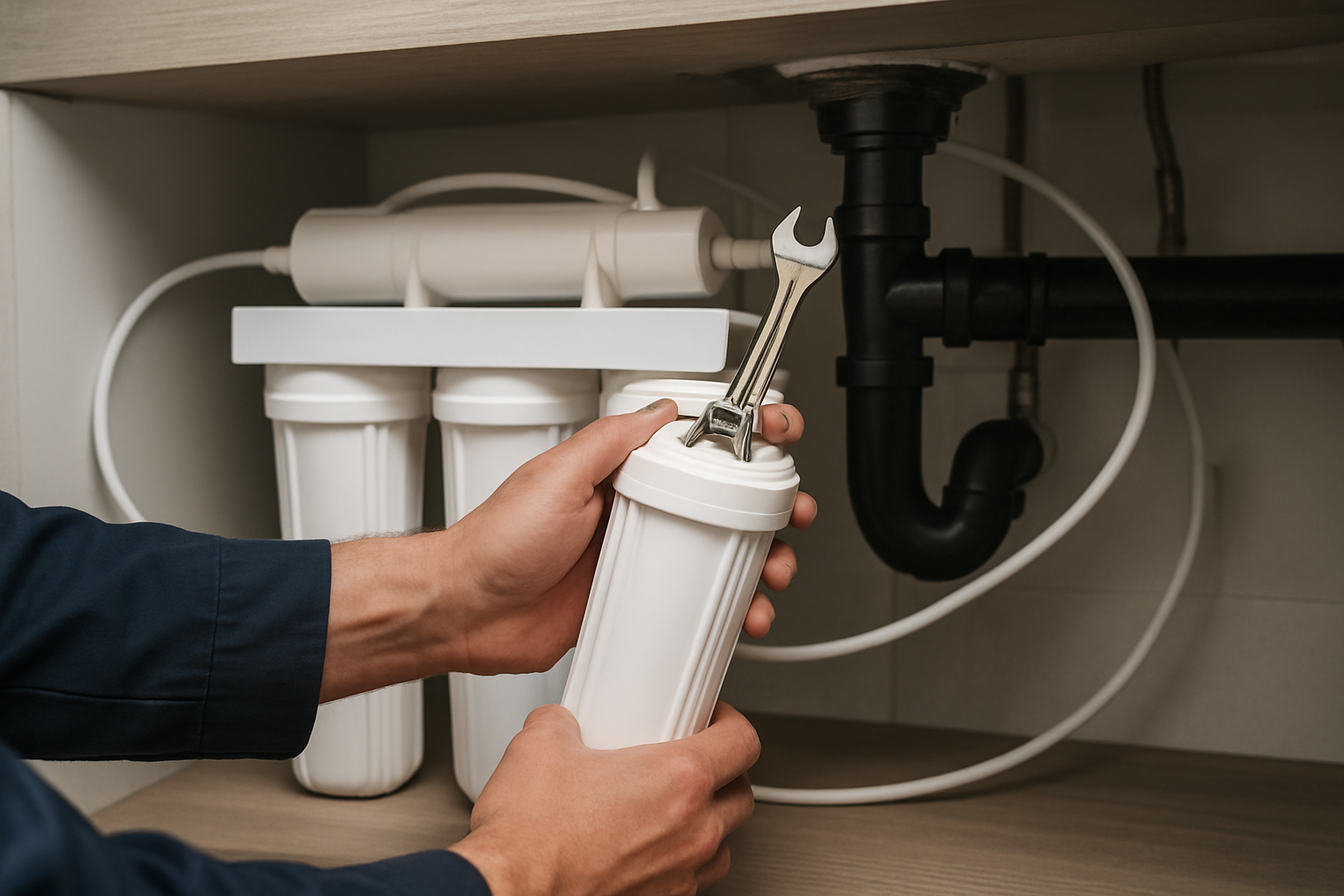
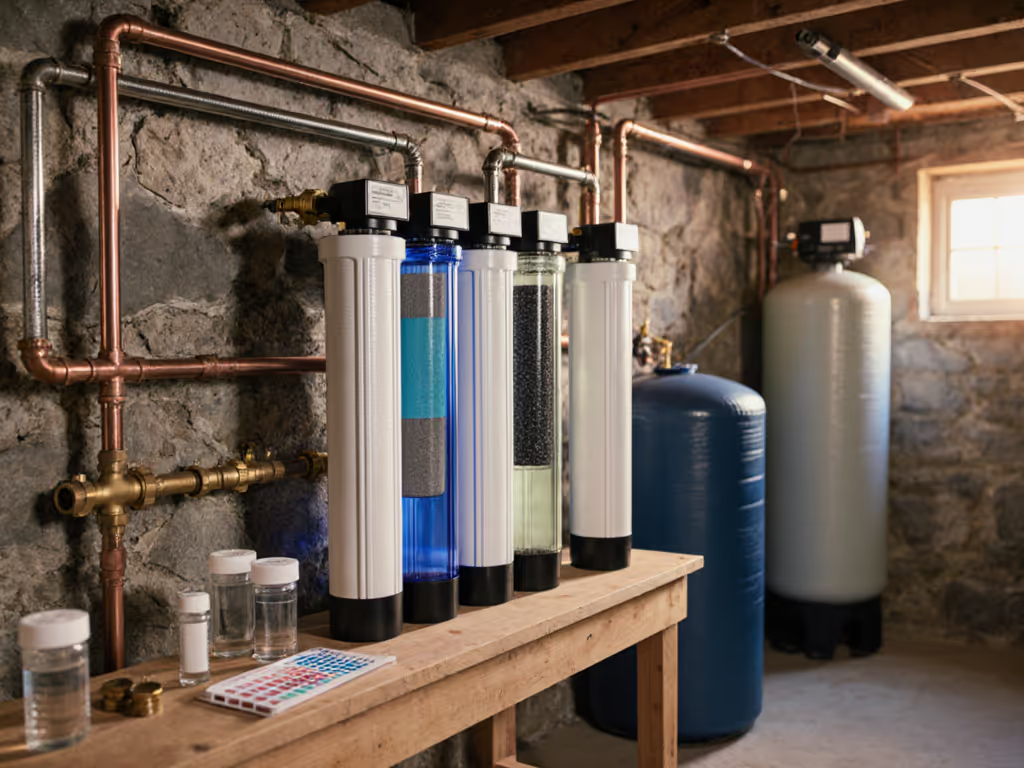
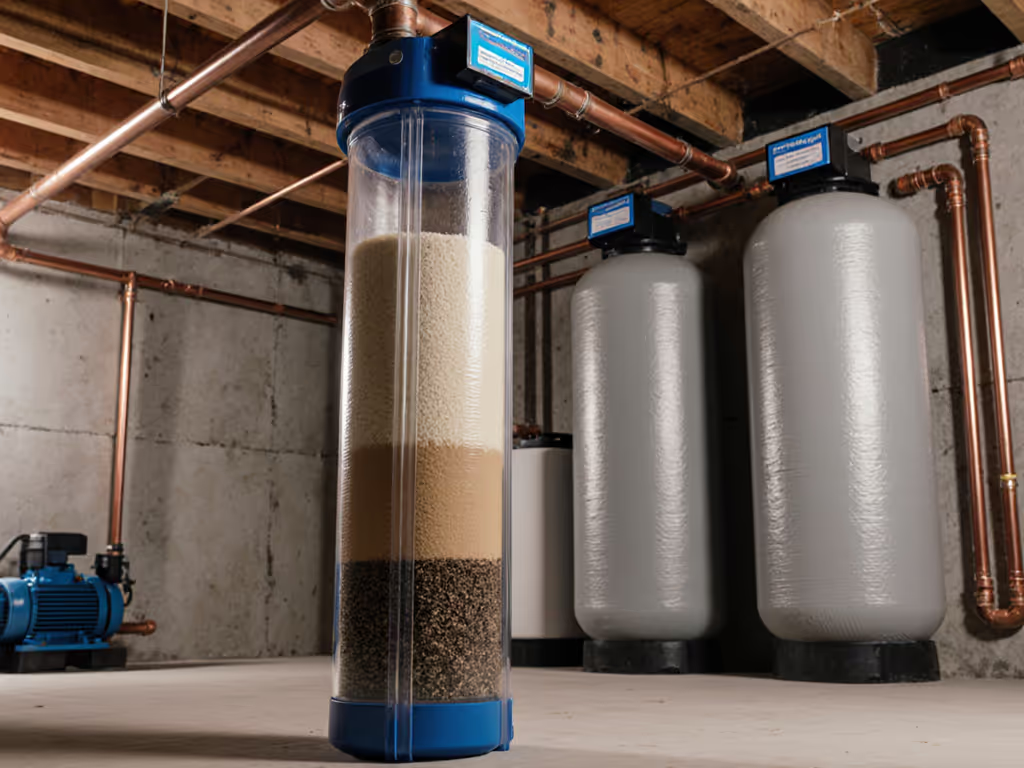
Different contaminants require different tools, so your best setup often combines stages that do complementary work. Activated carbon excels at adsorbing chlorine and many organic compounds, catalytic carbon tackles stubborn chloramine, and ion exchange resins target lead or hardness depending on the resin type. Reverse osmosis produces very low total dissolved solids drinking water, while ultraviolet disinfection inactivates microorganisms for well owners without adding chemicals. For iron and manganese in wells, oxidizing media like greensand or air injection tanks convert dissolved metals into filterable particles, which you then capture with a robust sediment stage.
Because every technology has tradeoffs, it helps to compare in one view before you buy. Start with our plain-English overview of activated carbon vs RO to understand how each works and where it fits. Consider target contaminants, maintenance frequency, pressure impact, and any water waste or brine discharge. Whole-home softeners use salt and require regeneration, which adds brine waste, whereas scale conditioners do not soften but reduce scale adhesion. Reverse osmosis purifies drinking water exceptionally well yet creates a wastewater stream, which efficient modern systems minimize with better membranes and auto-flush features.
| Technology | Best At | Limits | Waste And Maintenance | Best Placement |
|---|---|---|---|---|
| Activated or Catalytic Carbon | Chlorine, chloramine, taste, odor, many pesticides and volatile organic compounds | Does not remove hardness or nitrate; capacity can be exhausted by high loads | Cartridge or media replacement based on gallons and contaminant load | Whole-home or under-sink |
| Ion Exchange Resin | Lead with specific resins; hardness with softener resin | Not effective on chlorine; requires prefiltration for sediment | Softener regeneration with salt; lead-specific cartridges replaced on capacity | Whole-home softener or under-sink lead stage |
| Reverse Osmosis | Broad reduction including total dissolved solids, arsenic, fluoride, nitrate | Lower flow; typically for drinking, not whole-home | Wastewater during production; periodic membrane and prefilter changes | Under-sink drinking station |
| Ultraviolet Disinfection | Inactivates bacteria and viruses in clear water | Does not remove chemicals or metals; needs low turbidity | Lamp replacement annually; quartz sleeve cleaning | Whole-home after sediment and carbon |
| Oxidizing Media or Air Injection | Iron, manganese, hydrogen sulfide odor in wells | Requires correct pH and contact time; backwash drain needed | Backwashing cycles; periodic media refresh | Whole-home ahead of carbon |
| Sediment Filtration | Sand, rust, silt, microplastics down to chosen micron size | Does not remove dissolved contaminants | Filter changes when pressure drop increases | First in line to protect everything downstream |
Total Cost and Waste: Budget Smarter, Save Water
When you compare systems, translate price tags into cost per gallon and include both consumables and water waste so you see the true operating picture. Use our cost per gallon guide to run the numbers before you buy. A cartridge that costs less but lasts a fraction of the gallons can be pricier in the long run, and an undersized unit replaced frequently generates more solid waste. For drinking systems that discharge wastewater, look for clearly stated efficiency ratios and consider alternatives like more efficient membranes or a permeate pump. For whole-home systems, calculate media lifespan based on your target contaminants and household usage to avoid surprises.
To make the math easy, build a small scorecard for each candidate using your estimated daily gallons, verified capacity from certification listings, and replacement costs. Then layer in any salt, backwash, or wastewater overhead along with the time you will spend maintaining the system. You can also weigh avoided costs, like extended appliance life or reduced bottled water purchases, which often tip the scales in favor of a better filter. The table below shows how a simple comparison can reveal the smarter buy.
| Scenario | Upfront Cost | Certified Capacity | Replacement Cost And Interval | Estimated Cost Per 1,000 Gallons | Notable Waste |
|---|---|---|---|---|---|
| Carbon Whole-Home Cartridge | 300 | 100,000 gallons for chlorine per NSF/ANSI 42 (National Sanitation Foundation and American National Standards Institute) | 120 every 12 months | ~1.20 | Spent cartridge annually |
| Lead-Target Under-Sink | 200 | 1,000 gallons for lead per NSF/ANSI 53 (National Sanitation Foundation and American National Standards Institute) | 80 every 6 months | ~80.00 | Two small cartridges per year |
| Reverse Osmosis Drinking | 350 | Varies per NSF/ANSI 58 (National Sanitation Foundation and American National Standards Institute), with efficiency ratio 3:1 | 120 annually across pre, post, and membrane averaged | ~35.00 plus wastewater | Wastewater during production, minimized with efficient design |
Numbers above are examples; your home may differ based on use and water quality, which is why verified capacity and honest maintenance schedules matter. If a manufacturer publishes only vague ranges rather than specific certified capacities, ask for the official listings or choose a different model. Clean Water, Less Waste emphasizes total cost and waste footprint in every review so you can compare apples to apples across performance, capacity, maintenance, and long-term environmental impact. Over a few years, those small differences compound into major savings and less waste at the curb.
Installation, Maintenance, and Sizing: Avoid Headaches Later
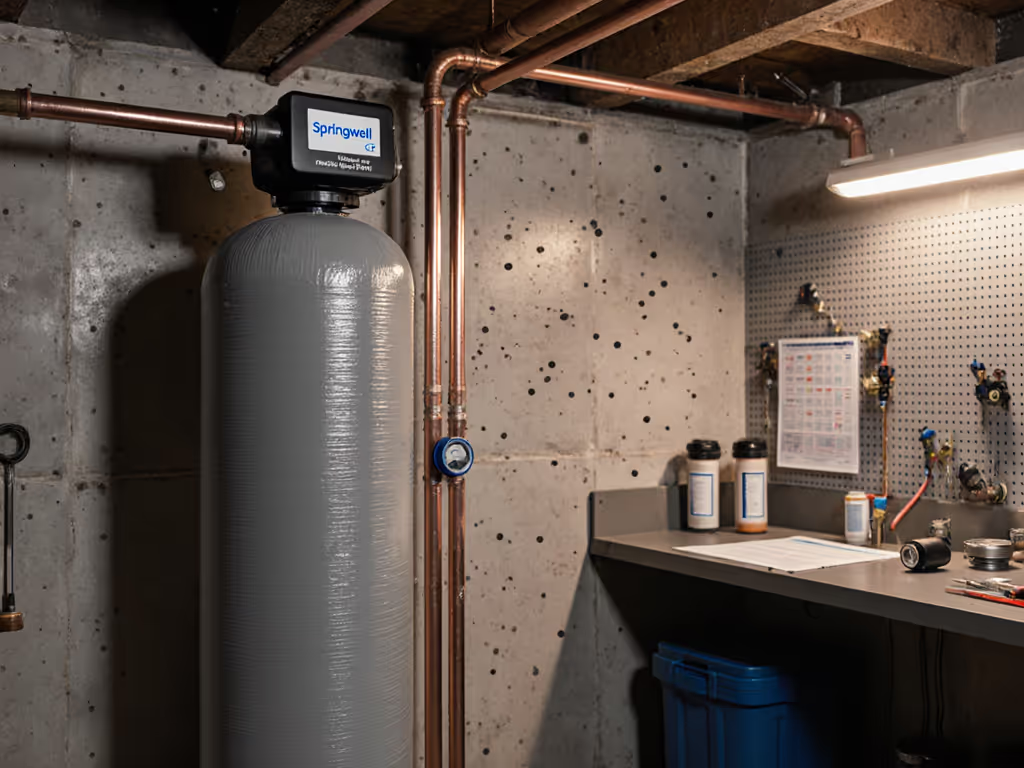
A smooth experience starts with sizing, and that means matching the filter housing and media to your home’s peak flow so pressure stays comfortable. For many three-bath homes, a 1 inch inlet with a rated 10 to 12 gallons per minute is appropriate, and larger homes may step up to bigger housings. Make sure to include a sediment prefilter to protect carbon blocks and resins, and add a bypass valve so you can service components without shutting down the entire house. If you choose ultraviolet disinfection for a well, keep water clear with prior sediment and carbon, and maintain lamp replacement on schedule.
Maintenance is far easier with a short checklist and a calendar reminder, especially when cartridges have different lifespans. Write down each stage, its certified capacity, and an estimated change date based on your usage, then confirm by watching for pressure drop or taste changes. Keep spare O-rings and lubricant on hand, and consider a pressure gauge before and after the filter to spot clogging early. If you prefer less frequent attention, oversized media tanks with automatic backwash can stretch service intervals dramatically.
- Add shutoff valves and a bypass around whole-home units to simplify service.
- Place sediment filtration first, then carbon or specialty media, then ultraviolet disinfection if used.
- Protect against freezing, provide a drain for backwashing units, and mount housings at a comfortable height.
- Use certified plumber’s tape and torque to spec to avoid leaks and cracked housings.
Real-World Examples to Guide Your Choice
City condo with chlorine and lead risk: You want better taste and verified lead reduction for cooking and drinking without remodeling. A compact under-sink system with certified National Sanitation Foundation and American National Standards Institute 53 performance for lead, paired with a carbon block for taste and odor, gives you high-impact results. If you like ultra-clean water, add a reverse osmosis drinking stage with an efficiency-minded design to limit wastewater and keep cost per gallon in check. Meanwhile, a simple under-sink or point-of-entry sediment and carbon pair can handle shower and laundry aesthetics nicely.
Suburban family on city water with heavy usage: Your priorities are clean showers, appliance protection, and budget control. A whole-home sediment prefilter and a catalytic carbon tank certified for chlorine or chloramine capacity will improve taste and protect everything downstream, and a kitchen drinking station provides extra assurance for trace contaminants. By right-sizing the tank to your flow and household gallons, you maintain pressure while avoiding premature media exhaustion. With scheduled maintenance, you will likely spend less than bottled alternatives and send fewer spent cartridges to the landfill.
Rural well with iron and occasional bacteria positives: Your water test shows iron staining, sulfur odor, and occasional microbial presence, so the sequence matters. Start with oxidation and filtration for iron and manganese, follow with carbon to polish taste and remove residual odor, and finish with ultraviolet disinfection to inactivate microbes without chemicals. For options we have tested side by side, see our verified iron removal systems. Because clarity is essential for ultraviolet, a good sediment stage and correct contact time are vital. Clean Water, Less Waste offers guides for various water sources, including well water, so you can tailor each stage to your actual chemistry.
How Clean Water, Less Waste Helps You Decide
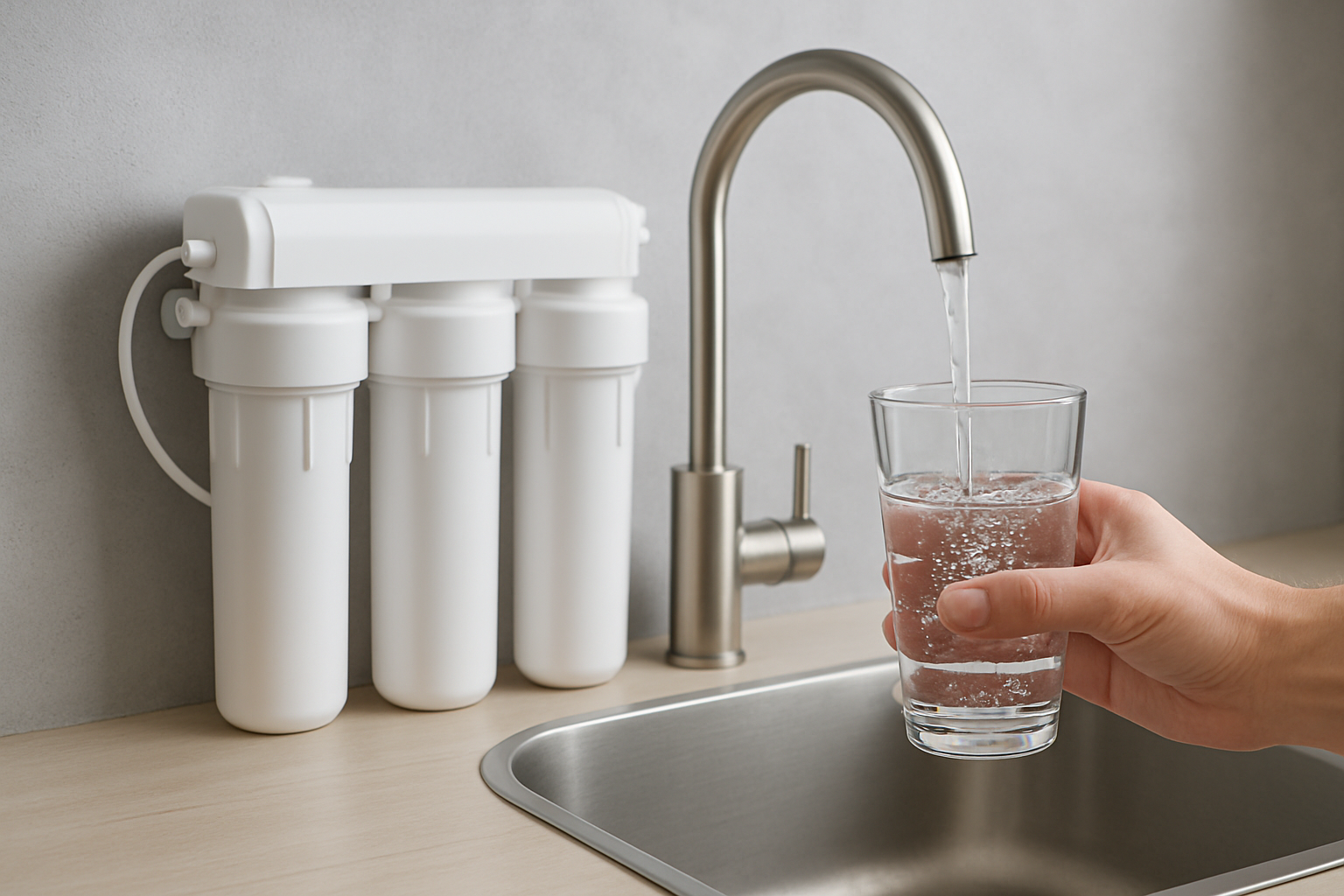
Consumers struggle to match the right filter to their specific contaminants while balancing cost and waste, and that is exactly the problem Clean Water, Less Waste solves. You get personalized filtration recommendations built on your water source and test results, so you see only relevant options. You also get certified product reviews that unpack National Sanitation Foundation and American National Standards Institute listings, compare verified contaminant reduction, and translate capacity into real maintenance intervals. Finally, each review highlights the long-term waste footprint and cost per gallon so you can choose a sustainable, wallet-friendly path. We do not sell or install filters or equipment; we provide personalized recommendations, independent reviews, guides, and educational content to help you choose the right products and to explain options you can pursue with retailers or qualified installers.
To make decisions tangible, we compare systems by verified performance rather than brand promises, and we present the tradeoffs clearly. We also include in-depth explanations of certifications, such as how National Sanitation Foundation and American National Standards Institute 42 differs from National Sanitation Foundation and American National Standards Institute 53, or when a reverse osmosis certification under National Sanitation Foundation and American National Standards Institute 58 is the right move for your drinking water. The matrix below shows the kind of side-by-side view you can expect, helping you prioritize what matters most for your home and habits.
| Option | Verified Target Contaminants | Certified Standard | Capacity | Maintenance Rhythm | Waste Footprint | Best Fit |
|---|---|---|---|---|---|---|
| Whole-Home Carbon | Chlorine, taste, odor, particulates | NSF/ANSI 42 (National Sanitation Foundation and American National Standards Institute) | High, months to a year or more | Simple cartridge or periodic media refresh | Low solid waste, no wastewater | City water aesthetics and appliance protection |
| Lead-Focused Under-Sink | Lead, cysts, selected volatile organic compounds | NSF/ANSI 53 (National Sanitation Foundation and American National Standards Institute) | Moderate, months between changes | Cartridge swap based on certified gallons | Low solid waste, no wastewater | Older homes and baby bottles or cooking |
| Reverse Osmosis Drinking | Broad spectrum including total dissolved solids, nitrate, fluoride | NSF/ANSI 58 (National Sanitation Foundation and American National Standards Institute) | Moderate to high with storage tank | Prefilters 6 to 12 months, membrane 2 to 3 years | Wastewater stream, efficiency varies | Mixed contaminants and picky palates |
| Ultraviolet Disinfection | Microbial inactivation in clear water | Often validated by International Association of Plumbing and Mechanical Officials or Water Quality Association listings | Continuous, no capacity limit when maintained | Lamp yearly, sleeve cleaning | No chemicals, low solid waste | Wells with bacteria risk |
Choosing Confidently: A Simple Step-by-Step Plan
- Identify your source and get data. Use your utility report or a lab test, especially for wells, to define the problem you are solving.
- Match technologies to targets. Use the certification table to align contaminants with proven standards and media types.
- Size for comfort. Choose housings and tanks that maintain comfortable pressure at your peak flow.
- Calculate real costs. Convert capacity and replacement schedules into cost per gallon and note any wastewater or brine.
- Verify claims. Look for specific National Sanitation Foundation and American National Standards Institute standard numbers tied to named contaminants and capacities.
- Plan maintenance. Set reminders and stock the consumables you will need in the next 12 months.
If you want a mental diagram, imagine your main line entering the home, hitting a shutoff valve, then a sediment stage, then carbon or specialty media, and finally any disinfection step before branches to fixtures. At the kitchen, picture a dedicated drinking line for an extra layer like reverse osmosis or a lead-target cartridge. Each stage has a job aligned to your test results and a clear capacity you track over time. With this structure, your system feels simpler, not more complicated.
Clean Water, Less Waste was designed for people who value evidence and simplicity: you tell us about your water and we return a shortlist mapped to verified performance and total cost and waste. That combination lets you choose a safer, better-tasting, and more sustainable setup without overspending. You also get guides for various water sources, including well water, because rural challenges differ from urban ones and deserve specific answers. When your filter plan fits your home like a glove, daily life gets easier instantly.
Frequently Asked Questions About Choosing
Do I need a whole-home system or just a drinking filter? If taste and odor bother you in showers and laundry, a whole-home carbon stage is a good baseline, and a dedicated drinking filter adds targeted protection for the glass you put to your lips. What about pressure? Choose housings rated for your peak gallons per minute, keep sediment first, and change filters before pressure drop becomes noticeable. For wells with iron, can I skip oxidation? Not if the iron is dissolved; you need to convert it to a filterable form to avoid staining and protect downstream media.
Are pitcher filters enough? They can improve taste, but capacities are limited and many do not carry health-effect certifications for tough contaminants unless explicitly listed with National Sanitation Foundation and American National Standards Institute numbers. Will reverse osmosis waste too much water? Modern systems with efficient membranes and periodic flush control discharge far less than older designs, and they often replace bottled water, reducing plastic waste dramatically. How will I know it is working? Certification-backed performance, taste improvements, and periodic testing give you confidence that your investment is doing its job.
Ready to make a confident pick? With a clear contaminant map, verified certifications, correct sizing, and a cost and waste scorecard, your decision practically makes itself. Clean Water, Less Waste exists to bring all of that together in one place, with expert explanations and practical calculators. When you choose with evidence, your water improves immediately and your budget thanks you later.
Final Thoughts That Lead to Action
The promise is simple yet powerful: match your specific contaminants to certified technology, and your water gets cleaner without wasting money or water. Imagine opening your tap to great taste and reliable protection, with a maintenance schedule that feels routine rather than burdensome. In the next 12 months, the right choices can save you hundreds of dollars and keep dozens of cartridges out of the trash, all while raising comfort and confidence at home.
What would it feel like to know your house water filter is doing exactly what you bought it to do, verified on paper and proven in your glass?
Additional Resources
Explore these authoritative resources to dive deeper into house water filter.
- Whole House Filtration Systems - Culligan DIY
- Whole House Systems - Protect Your Home's Water Supply
Choose Smarter With Clean Water, Less Waste
Get verified, certification-based guidance and well water to city guides so you can compare reduction, capacity, upkeep, and long-term waste with confidence. We provide guidance and personalized recommendations - we do not sell or install filtration equipment.
Related Articles