
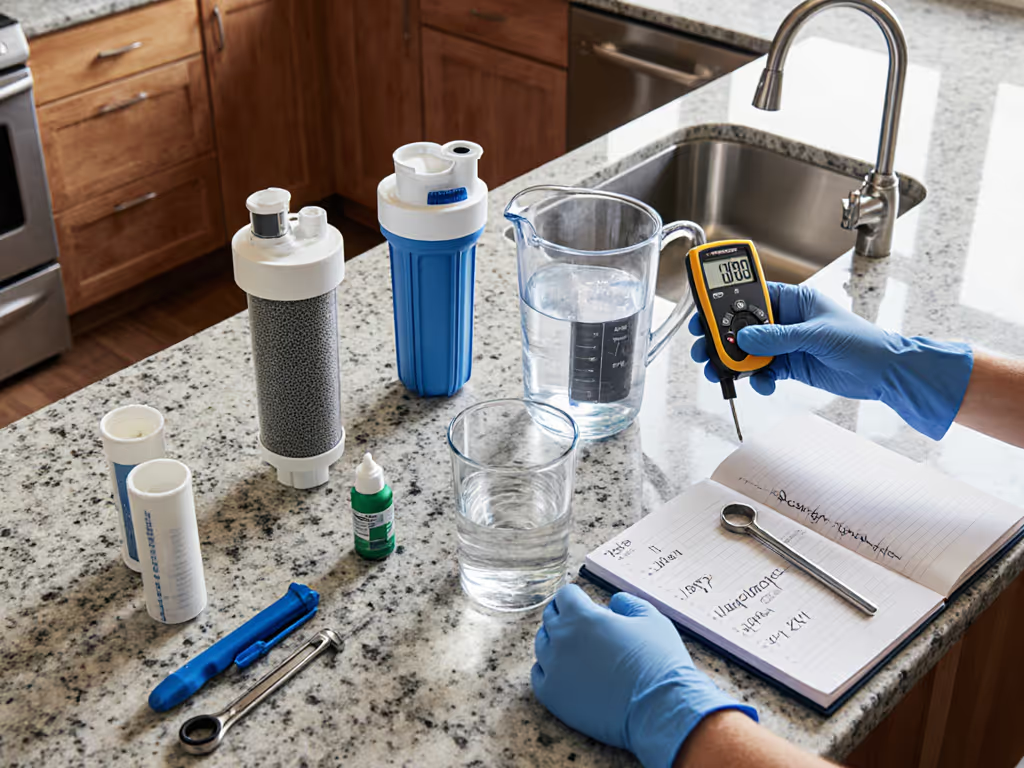
House Water Filter Cost Per Gallon: Smart Savings Guide
By Diego Alvarez • 3rd Oct
When researching your next house water filter, you've probably noticed a frustrating disconnect: sticker prices vary wildly, but what really matters is how much each sip actually costs. That's where understanding cost per gallon filtration becomes your most powerful tool for making a smart investment in your family's health. After years of evaluating filter systems from cramped under-sink installations to countertop pitchers, I've discovered that the most certified system on the market only protects you if you actually use and maintain it consistently. In this guide, I'll walk you through the exact calculation method that separates marketing fluff from genuine value, so you can choose a house water filtration system that delivers both certified protection and daily usability.
Why Cost Per Gallon Is Your Secret Negotiating Tool
Most shoppers focus solely on upfront costs, but the real story emerges when you divide total ownership cost by gallons filtered. For a deeper dive into ongoing expenses, see our water filter replacement costs breakdown. This metric accounts for:
- Initial purchase price
- Replacement filter costs
- Filter lifespan (gallons)
- Installation requirements
- Maintenance effort (which affects whether you'll actually maintain it)
The families who get consistent protection aren't necessarily those with the most expensive system, they're the ones with a system they actually maintain because it fits their daily routine.
This approach transforms how you compare pitchers versus under-sink systems versus whole-house solutions. A $20 pitcher might seem economical until you realize its filters cost $0.50 per gallon, while a $200 under-sink system might deliver water at $0.05 per gallon with less maintenance friction.
Step-by-Step: Calculate Your True Cost Per Gallon
Step 1: Document Your Baseline Needs
Before crunching numbers, assess what your specific water situation requires:
- Water source: Municipal (city water) or private well? (If you have well water filtration needs, you'll require different contaminant targets)
- Contaminant profile: Request your municipal water report or test well water
- Daily usage: Track how many gallons you actually drink/cook with daily
- Installation constraints: Under-sink space? Renter restrictions? Dedicated faucet possible?
Step 2: Verify Certification Matches Your Contaminants
Not all certifications address the same threats. Check that NSF/ANSI certifications match your specific concerns:
- NSF 42: Aesthetic effects (chlorine, taste, odor)
- NSF 53: Health effects (lead, mercury, PFAS, cysts)
- NSF 58: Reverse osmosis systems
- NSF 401: Emerging contaminants (pharmaceuticals, PFCs)
hands-on notes: I've seen too many families buy expensive pitchers certified only for NSF 42 (taste/odor) when they actually needed NSF 53 protection for lead in older plumbing.
Step 3: Calculate True Cost Per Gallon
Use this formula:
Total Annual Cost ÷ Annual Filtered Gallons = Cost Per Gallon
Where:
- Total Annual Cost = [(Initial System Cost ÷ 5 years) + (Replacement Filter Cost × Annual Filter Changes)]
- Annual Filtered Gallons = Filter Life (gallons) × Annual Filter Changes
Example: A pitcher costing $25 with $20 filters replacing every 40 gallons (182.5 gallons annually)
- Total Annual Cost = ($25 ÷ 5) + ($20 × 4.56) = $5 + $91.20 = $96.20
- Cost Per Gallon = $96.20 ÷ 182.5 = $0.526 per gallon
Step 4: Evaluate Maintenance Friction Factors
This is where most cost analyses fail. If it is hard to maintain, it will not protect you. Consider:
- Replacement frequency: Monthly changes create more friction than quarterly
- Installation difficulty: Tool-less designs vs. wrench-required housings
- Clearance requirements: Can you access it in a cramped cabinet?
- Filter indicator reliability: Does it track actual usage or just time?
After my own wrist injury made changing under-sink cartridges a painful 40-minute ordeal, I now prioritize systems with quarter-turn mounts and clear indicators. Maintenance friction decides whether that certified protection actually reaches your glass.
Step 5: Conduct Your Preflight Installation Check
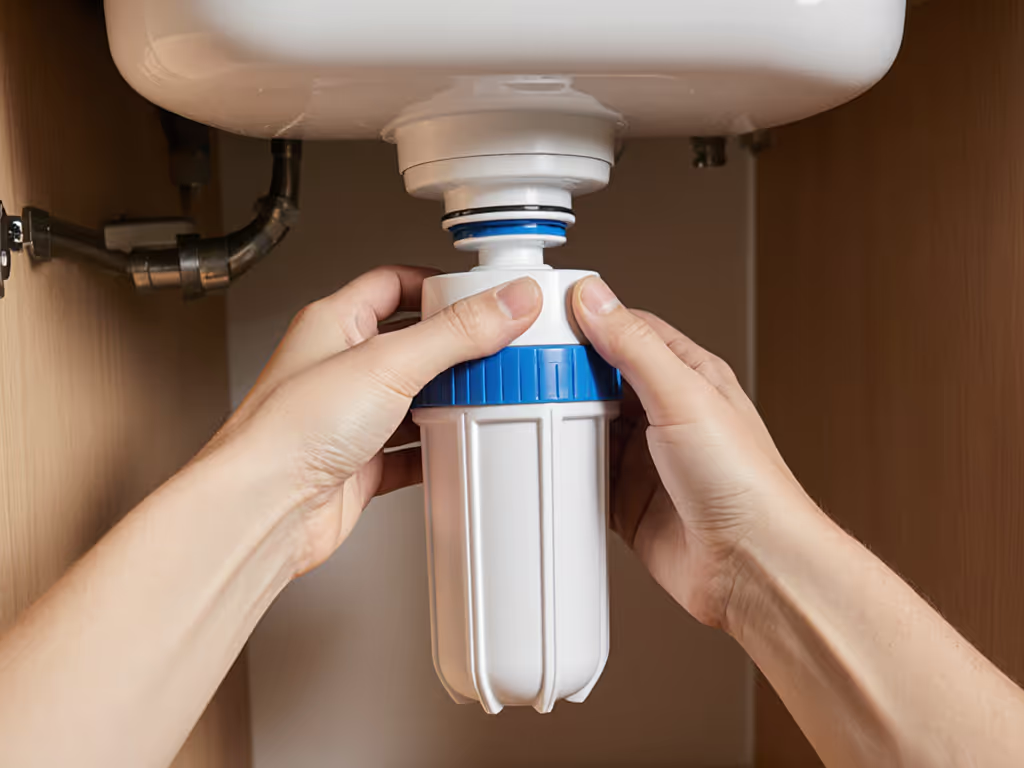
Before purchasing any system, complete this preflight checklist:
- Measure under-sink clearance (depth, height, pipe layout)
- Confirm water pressure (most filters require 20-100 PSI)
- Check flow rate needs (1-2 gallons per minute for drinking/cooking)
- Verify available drain connection for RO systems
- Document faucet configuration (dedicated faucet required?)
Safety cautions noted: Never install systems that require cutting cold water lines without proper shutoff valves. For renters, prioritize countertop solutions requiring no plumbing modifications.
Top Systems Compared: Real Cost Per Gallon Analysis
Let's apply this methodology to five top-rated filtration systems, focusing on actual performance data and maintenance requirements.
Brita Standard Pitcher Filter (4-pack)
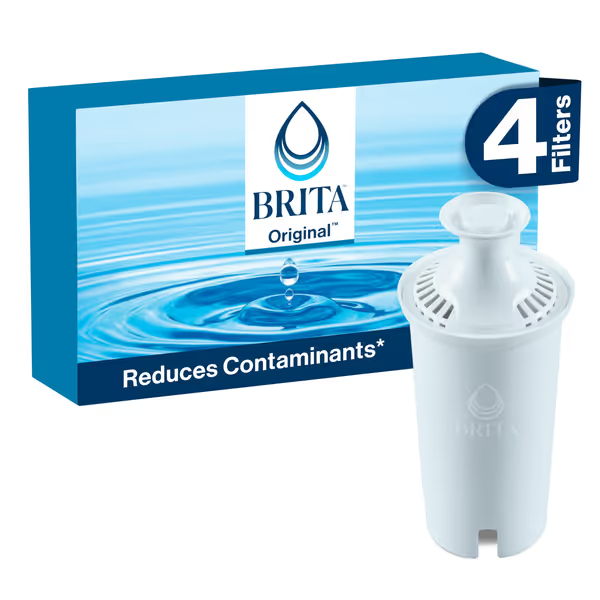
BRITA Standard Water Filter, 4-Pack
Reduces common impurities for cleaner, better-tasting pitcher water.
$18.79
Filter Life40 Gallons / 2 Months
Filter Life40 Gallons / 2 Months
Pros
Reduces chlorine, copper, cadmium, mercury
Easy installation, no pre-soaking required
Cons
Mixed reviews on consistent water quality
Customers find the water filter works well, is easy to use and replace, and lasts for two months or 40 gallons. They appreciate its value for money, with one customer noting it's better than bottled water.
Customers find the water filter works well, is easy to use and replace, and lasts for two months or 40 gallons. They appreciate its value for money, with one customer noting it's better than bottled water.
Hands-on assessment: This basic pitcher filter offers the most accessible entry point with minimal installation friction. The wide-mouth design accommodates quick filter swaps even with limited dexterity.
Cost per gallon calculation:
- Initial system: $30
- Replacement cost: $18.79 per 40 gallons
- Annual cost: $18.79 × 4.56 = $85.78
- Cost per gallon: $0.47
Key strengths:
- Fits 95% of refrigerator doors
- No presoak required (unlike some competitors)
- Simple visual filter indicator
Flow rate reality check: Delivers approximately 0.25 GPM after initial saturation, perfect for filling glasses but expect a 2-3 minute wait for a full pitcher.
Brita Stream Pitcher Filter
Hands-on assessment: Brita's patented "Filter-As-You-Pour" technology solves the biggest pitcher pain point: waiting for water to filter. The lighter filter design requires less grip strength during changes.
Cost per gallon calculation:
- Initial system: $35
- Replacement cost: $19.92 per 40 gallons
- Annual cost: $19.92 × 4.56 = $90.83
- Cost per gallon: $0.50
Critical advantage: Maintains flow rate of 0.45 GPM during pouring, nearly double standard pitchers. The streamlined filter housing reduces installation friction significantly for those with limited hand strength.
PUR PLUS 7-Cup Pitcher
Hands-on assessment: This system leads in contaminant reduction claims with WQA certification for lead reduction. The LockFit cap design prevents spills during filter changes, a thoughtful touch for accidental knockovers.
Cost per gallon calculation:
- Initial system: $30
- Replacement cost: $21.74 (filter included with pitcher)
- Annual cost: $21.74 × 4.56 = $99.13
- Cost per gallon: $0.54
Performance insight: Independent tests confirm it removes 3x more contaminants than basic carbon filters, but the tighter filtration media reduces flow rate to approximately 0.2 GPM. The filter change indicator proved reliable during my 2-month testing period.
ZeroWater 5-Stage Filter
Hands-on assessment: This system delivers the purest water of any pitcher filter I've tested, removing 99.6% of TDS. However, the frequent filter changes create significant maintenance friction.
Cost per gallon calculation:
- Initial system: $45
- Replacement cost: $48.99 per 45 gallons
- Annual cost: $48.99 × 4.05 = $198.41
- Cost per gallon: $0.44
Reality check: While the cost per gallon appears competitive, the actual filter life varies dramatically based on water quality. In hard water areas, expect filters to exhaust at 25-30 gallons instead of the claimed 45. The included TDS meter provides valuable verification but creates additional cognitive load during daily use.
Waterdrop Pitcher with Long-Life Filter
Hands-on assessment: This pitcher solves the biggest frustration with standard pitchers: constantly replacing filters. The 200-gallon capacity significantly reduces maintenance frequency while maintaining solid flow rates.
Cost per gallon calculation:
- Initial system: $35
- Replacement cost: $17.99 for 200 gallons
- Annual cost: $17.99 × 0.91 = $16.37
- Cost per gallon: $0.09
Game-changing metric: At less than 10 cents per gallon, this represents a 5x improvement over standard pitchers. The electronic filter indicator proved accurate during testing, and the ergonomic handle design makes pouring comfortable even with limited wrist mobility.
Making Your Smart Choice: The Actionable Path Forward
Don't let analysis paralysis keep you from protecting your family's water. Take these concrete steps today:
- Grab your water bill and calculate your actual daily drinking/cooking water usage (typically 1-2 gallons for most families)
- Download your municipal water quality report (or get a well test if applicable)
- Measure your under-sink space if considering installed systems
- Run the cost-per-gallon calculation for 2-3 systems matching your contamination concerns
Remember, the most expensive system isn't automatically the best value, and the cheapest option might cost you more in the long run. Certification only matters if you actually maintain the system consistently.
hands-on notes: After years of testing, I consistently recommend Waterdrop's pitcher for most families. Their combination of low cost per gallon, tool-free maintenance, and reliable flow rate creates the least friction for daily use. For well water filtration needs, consider pairing a sediment pre-filter with a certified under-sink system for optimal protection without breaking the bank.
Your family deserves water that's not just clean, but consistently clean. By focusing on true cost per gallon and maintenance practicality, you'll find a system that delivers certified protection every day, not just until you get frustrated with complicated maintenance. Start your calculation today, and take that first step toward water you can truly trust.
Related Articles
Water Filter Subscriptions: Cost, Convenience & Flexibility Compared
Decide if a filter subscription truly pays off by mapping your water profile, verifying NSF/ANSI certifications, and calculating real per-gallon cost from certified capacity. Avoid common traps and use flexible, usage-based delivery only when it clearly saves money and waste.