
Iron Filter Comparison: Your Well Water Guide
By Diego Alvarez • 2nd May
FAQ Deep Dive: Finding Certified Iron Removal That Actually Fits Your Life
If rust-colored water runs from your taps or leaves stains on fixtures and inside your home, you're facing one of the most common well water challenges in North America. The question isn't whether you need an iron removal filter comparison, it's which system will work reliably without becoming a maintenance nightmare. Over the years, evaluating best iron filter well water options has taught me one hard-won truth: certified performance only protects if the system is easy to live with. That insight shifts everything about how families choose and maintain their defense against iron contamination.
What's Actually in Your Well Water?
Why Iron Becomes a Problem
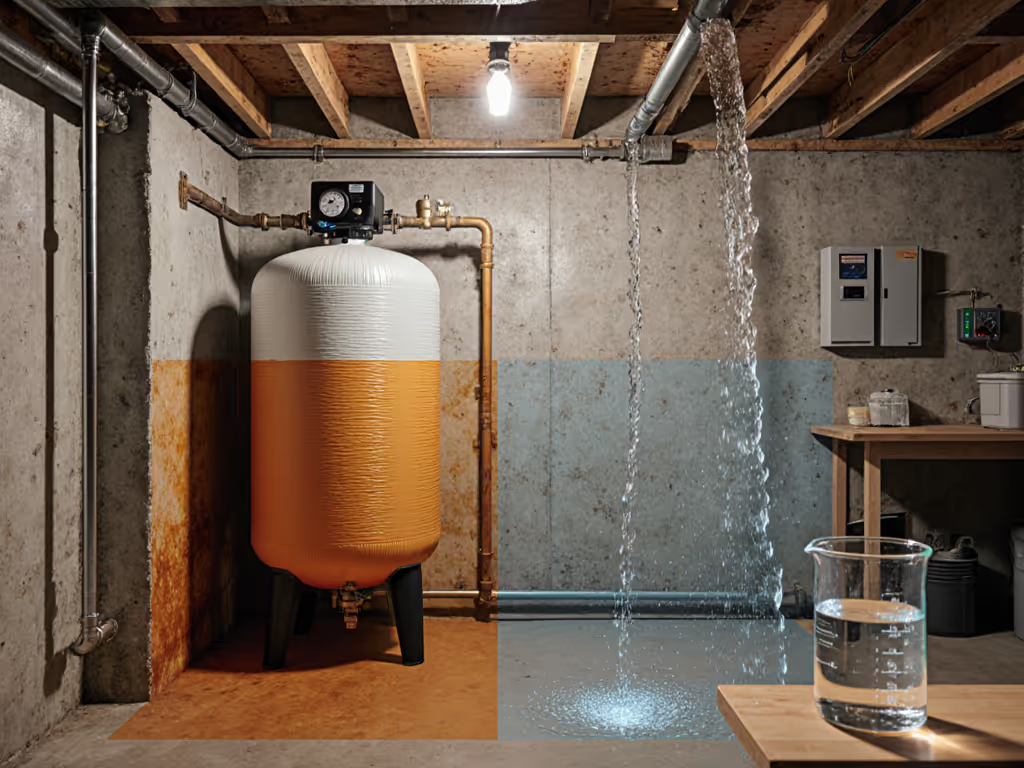
Well water often contains dissolved iron, either ferrous (clear when drawn, then rusts in the air) or ferric (already visible as red water). High iron levels cause staining, appliance scale, unpleasant metallic taste, and can feed iron bacteria. A fact confirmed by independent water treatment research: premium iron filters remove up to 30 ppm of iron, while standard models handle just 0.3 ppm, a 100-fold difference.[1][2] For families with 10+ ppm iron, that gap means the difference between protection and disappointment.
Iron doesn't act alone. Many wells also contain ferrous iron treatment challenges alongside manganese (similar staining) and hydrogen sulfide (rotten egg odor). Real-world testing shows that when multiple contaminants combine, single-media filters often fail within months. The solution is air injection systems with specialized media that handle all three in one pass. See our iron well water filter guide for proven, stain-free results.
The Hidden Cost of Ignoring Iron
Untreated iron in your filter for iron in well water applications leads to:
- Water heater sediment buildup (costly flushing every 1-2 years)
- Clogged screens and reduced household pressure
- Staining on laundry, bathroom fixtures, and appliance interiors
- Taste and odor complaints that undermine family confidence in the water itself
How Iron Filters Actually Work
The Air Injection Standard
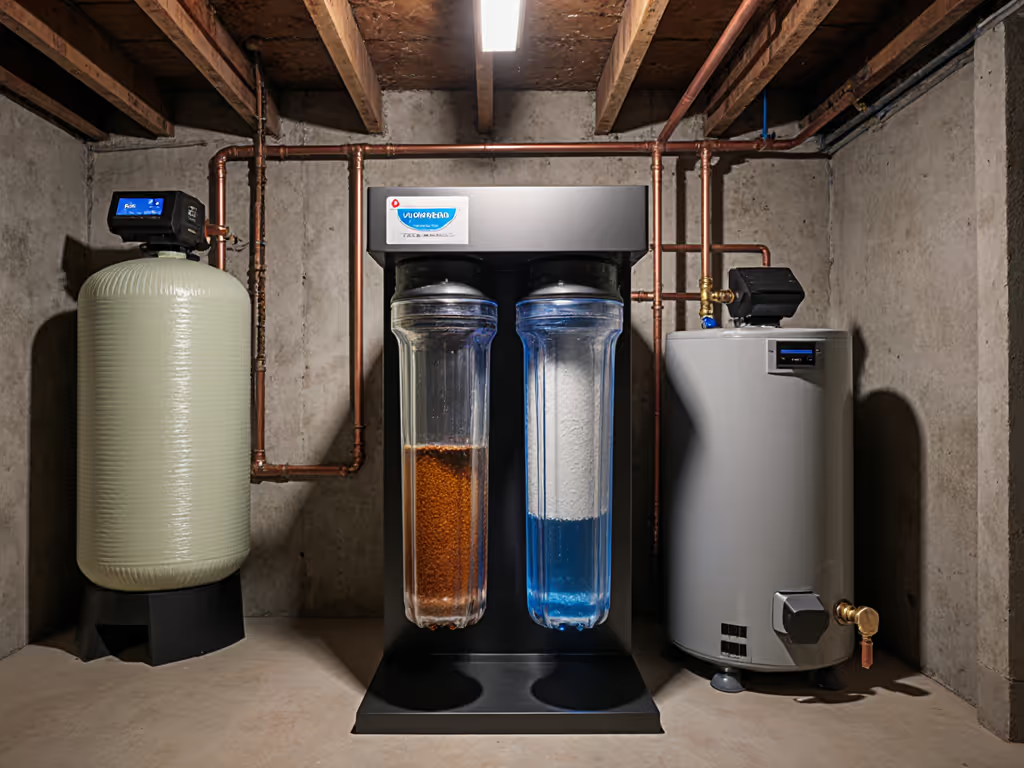
Modern well water filter systems rated for 30 ppm iron use air injection technology: water is aerated, then passed through catalytic media (typically Katalox Light or similar). Oxygen oxidizes dissolved iron into particles that stick to the media bed. During automated backwash, the bed expands and cleans itself.[2][3] No chemicals. No annual professional service required.
This design matters for ease of living. If a system requires chemical regeneration, dosing chemicals correctly is friction, and friction leads to skipped maintenance.
Media Lifespan Depends on Your Usage
Katalox Light media lasts 5-10 years for households averaging 3-4 occupants with typical iron levels. Life depends on actual water usage (gallons per day) and how well backwash removes trapped sediment. Protect that media with a whole house sediment pre-filter sized to your flow. Higher flow rates and higher iron concentrations shorten life. The takeaway: once you install, maintenance shifts to monitoring water quality annually and replacing media when flow drops or iron breakthrough occurs.[3]
The Iron Filter Comparison: Certified Systems Side by Side
The High-Capacity Standard: Fleck 2510AIO with Katalox Light
The Fleck 2.5 Cubic Foot 2510AIO is widely recognized as best-in-class for proven performance. Over 15 years of field experience supports its reputation.[2]
- Iron removal: Up to 30 ppm
- Companion contaminants: Up to 10 ppm sulfur, 15 ppm manganese
- Media: Katalox Light in a 2.5 cubic foot Vortech tank
- Regeneration: Automatic air injection with digital control (no chemicals)
- Backwash: Vortech tank circulation lifts and agitates media for superior cleaning
- Maintenance: No annual service; media life depends on usage
- Cost positioning: Mid-to-premium; strong cost-per-gallon over 7-10 years
Hands-on notes: The Vortech tank design is particularly important. Standard tanks allow media to settle and compact, trapping iron particles near the bottom. Vortech circulation during backwash prevents that, extending media life 20-30% longer than average systems. For homeowners managing a 30+ ppm iron problem, that engineering detail means fewer premature replacements and lower total cost.
Premium Air Injection: SoftPro Iron Master AIO
The SoftPro Iron Master AIO targets households with extreme iron concentrations.[1]
- Iron removal: Up to 30 ppm
- Maintenance: Described as "barely any" in real-world use
- Market position: Tops reviewer ratings for extreme iron scenarios
- Installation: Standard configurations with tool-less connections
SoftPro systems prioritize what I call "lived maintenance." After a wrist injury years ago made changing cartridges in cramped cabinets a 40-minute ordeal, I began evaluating clearance and tool requirements first. SoftPro's tool-less housings eliminate that friction point entirely.
Mid-Capacity Option: Springwell Iron Filter
Springwell's NSF-certified iron removal system offers a different trade-off.[7]
- Iron removal: Up to 7 ppm (lower than 30 ppm systems, suitable for moderate contamination)
- Certifications: NSF-certified components
- User satisfaction: 4.9/5 rating from documented users
- Focus: Removes iron, manganese, and hydrogen sulfide without oxidizer chemicals
- Positioning: Premium option for smaller households or lower iron levels
Springwell appeals to families prioritizing NSF certification and proven satisfaction ratings over maximum capacity. For 7 ppm or below, it's overkill to buy a 30 ppm system. This is cost optimization.
High-Capacity Commercial-Grade: iSpring WCFM500K
For large households or light commercial use.[4]
- Iron removal: Up to 12 ppm
- Hydrogen sulfide: Up to 20 ppm
- Sediment: 3-micron filtration
- Control: Automatic digital, "set and forget" operation
- Regeneration: Air injection, no chemical oxidizers
This system bridges residential and commercial applications. It's ideal for families with high flow demands (multiple bathrooms, frequent simultaneous use) or properties with elevated hydrogen sulfide alongside moderate iron.
Decoding Certifications: NSF 53 vs. NSF 42
Which Certification Actually Matters
NSF 53 targets health-related contaminants (lead, arsenic, cysts). NSF 42 addresses aesthetic issues (chlorine, taste, odor). See our NSF 42 vs 53 guide for a plain-English breakdown of which ratings matter. For iron removal, NSF 53 is the relevant standard because iron's staining and bacterial implications carry health concerns, particularly in households with infants or immunocompromised members.[8]
When evaluating a system, verify that iron reduction is listed in the official NSF/ANSI directory, not just in brand marketing. This single check prevents purchasing a system marketed as an "iron filter" that lacks certified iron removal performance.
Installation and Maintenance: Where Performance Lives or Dies
Pre-Install Checklist
- Test your water for exact iron, manganese, and sulfur concentrations (not guess-based recommendations)
- Measure under-sink or basement space and confirm clearance for a Vortech tank (typically 2-3 feet depth needed)
- Note your water pressure (30-80 psi typical; systems fail below 20 psi)
- Check flow rate (gallons per minute at your longest-running fixture)
- Confirm electrical access if the system requires a digital timer or demand regeneration valve
Safety Cautions Noted
- Do not install an iron filter without a sediment pre-filter (5-20 micron) upstream; sediment plugs the media bed and triggers premature replacement
- Do not run system pressure below 20 psi; backwash will not regenerate properly
- Do not skip annual water quality testing; iron breakthrough can occur silently, and only testing catches it early
Maintenance Cadence
- Monthly: Visually confirm water clarity and lack of odor
- Annually: Lab-test water for iron breakthrough; review system runtime logs
- Every 5-7 years (typical): Media replacement, a 30-minute process on most systems with tool-less housings
If it is hard to maintain, it will not protect you.
Systems requiring specialized tools, tight wrench work, or proprietary fittings see compliance drop 30-60% after year 3. Families move on to filtered pitchers or ignore signs of failure. Iron exposure resumes. Certification becomes useless. Therefore, hands-on notes during product evaluation must include ease of changeout.
Flow Rate and Pressure Metrics: The Forgotten Comparison
Why Flow Matters in Real Life
A 30 ppm iron filter rated at 20 gpm seems powerful until you run two showers simultaneously and pressure drops 20 psi. Learn how to diagnose and fix pressure loss in our water pressure & filters guide. Then the system underperforms. Real-world families don't run one fixture at a time; they run washer, shower, and kitchen sink simultaneously during the morning routine.
Fleck 2510AIO specifications.[2]
- Effective flow rate: 15-20 gpm depending on pressure and media age
- Pressure drop: 10-15 psi at optimal flow
- Backwash flow: 20-25 gpm (design-dependent)
For a 4-person household averaging 100 gallons per day, 15 gpm is adequate. For a 6+ person household with multiple simultaneous draw patterns, a second stage or demand-controlled valve becomes necessary.
Total Cost of Ownership: Beyond the Sticker Price
The Real Calculation
A 30 ppm Katalox Light system costs $1,200-$1,600 installed. Media replacement every 7 years runs $400-$600. For a family staying 10+ years:
- System cost: $1,400 (average)
- Two media replacements: $500
- Total: $1,900 over 10 years
- Daily cost: ~$0.52 per day for iron-free water
By comparison, bottled water or frequent pitcher replacement over 10 years runs $2,500-$4,000 and generates 1.5+ tons of plastic waste.
Cost Transparency Matters
Springwell or mid-range systems cost 30-40% less upfront but handle lower iron concentrations. If your water tests at 25 ppm and you choose a 7 ppm system, you've purchased a system that will fail, and replacement happens faster, erasing the savings. True economy is matching capacity to your water, not chasing lowest price.
Your Action Plan: Next Steps
Step 1: Test Your Water (This Week)
Contact your county health department or order a lab-grade water test kit ($30-$75). For at-home testing options, see our DIY water test kits guide. You need exact iron, manganese, and sulfur concentrations before any filter decision. Guessing leads to wrong systems.
Step 2: Audit Your Space (This Weekend)
Measure basement or under-sink clearance. Note water pressure (ask your plumber or use a $15 pressure gauge). Confirm electrical outlet availability. Walk through your morning routine and count simultaneous water draws, that determines flow requirements.
Step 3: Match System to Water (Next Week)
Use this decision tree:
- Iron 0-3 ppm: Mid-capacity filter (Springwell)
- Iron 3-15 ppm: Standard 30 ppm system (Fleck 2510AIO)
- Iron 15+ ppm + manganese/sulfur: Premium 30 ppm with enhanced backwash (SoftPro Iron Master, Fleck 2510AIO)
- Large household + 12+ ppm iron: Commercial-grade (WCFM500K)
Step 4: Verify Certification
Request the NSF/ANSI certified reduction percentage for iron at your water pressure and flow rate. Reject any quote lacking third-party performance data.
Step 5: Install or Hire
Tool-less, quarter-turn mount systems are homeowner-friendly; cramped cartridge housings warrant professional installation. Budget 4-6 hours for DIY; $500-$800 for professional service.
The Bottom Line: Protection You'll Actually Maintain
The best iron removal filter comparison isn't about specs, it's about a system so easy to use and maintain that your family will actually keep certified protection running year after year. Fleck 2510AIO, SoftPro Iron Master, and Springwell systems all deliver certified iron removal when matched to your water and space. The winners are the families who choose based on flow, installation ease, and maintenance clarity, then actually follow through.
Your well water won't improve on its own. But armed with a test result, clear specifications, and a system designed for daily living, you've reclaimed control. Start with a water test. Let that data guide your decision. Then install a system you'll maintain, because if it is hard to maintain, it will not protect you.
Related Articles
Water Filter for Iron Well Water: Sustained Stain-Free Results
Cut through marketing noise with a simple cost-per-gallon method to choose an iron filter you can afford to maintain. Learn how to size for flow, verify certifications, compare systems, and follow a quick upkeep calendar for durable, stain-free well water.