Nature-Inspired Water Filtration vs Traditional: Certified
By Arjun Mehta • 10th May
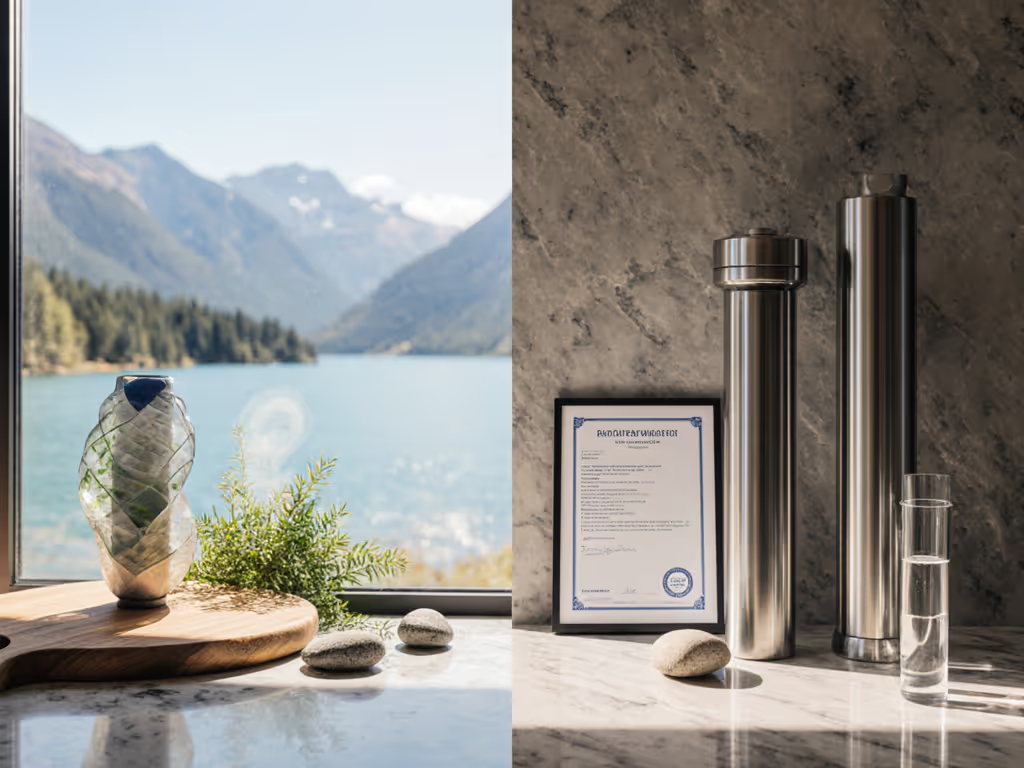
When I moved into a new building years ago, the welcome packet included a Consumer Confidence Report that looked reassuring until I watched my kettle fill with scale deposits and tasted chlorine spikes in the tap water. If you need help decoding your utility's report, use our CCR interpretation guide. I pulled the utility's lab data, cross-checked it against certified filter claims, and built a spreadsheet comparing actual reduction numbers against vendor marketing language. The taste improved, and the spreadsheet approach became my template from then on.
Today, nature-inspired water filtration and bio-mimicry filtration systems have entered mainstream conversations alongside conventional cartridge and membrane technologies. The marketing promises are seductive: nature has perfected filtration over billions of years, so why not harness that wisdom? Yet between the compelling science and the sales pitch lies a critical gap that skeptics and data-driven homeowners must navigate. Both approaches (biomimetic and traditional) can work. The deciding factor is certification, cost-per-gallon, and waste footprint. Anything else is wishful thinking.
This deep dive answers the questions homeowners actually need resolved: What are nature-inspired filters actually certified to remove? How do they stack up on performance and total cost? When does mimicking nature beat engineering familiarity, and when does it fall short? Start with your local risk profile using our tap water contaminants checklist.
FAQ Deep Dive: Nature-Inspired vs. Traditional Filtration
Q1: What Exactly Is Nature-Inspired Filtration, and How Is It Different From Traditional Approaches?
Nature-inspired (or biomimetic) filtration draws design principles from biological systems refined over millions of years. Instead of relying purely on synthetic membranes or activated carbon, researchers study how plants, animals, and ecosystems naturally filter water, then translate those mechanisms into testable technologies.
Common examples include:
- Xylem-based (sapwood) filtration: Peeled sapwood from conifers and non-flowering trees like pine and ginkgo mimics the plant's natural water-transport conduits. Hollow tubular structures (xylem tissue) create microscale sieves that trap bacteria and some viruses while allowing water through.
- Lotus effect filtration: The waxy leaf surface of lotus flowers resists fouling and self-cleans by shedding particles. Engineers apply this principle to design membrane coatings that reduce clogging and extend cartridge life.
- Mussel adhesive technology: Mussels anchor themselves to rocks using amino-acid-rich proteins. Researchers replicate this mechanism in biofilter matrices that bind contaminants and allow beneficial microorganisms to colonize the filter media.
- Wetland emulation: Artificial wetlands mimic the layered sediment, vegetation, and microbial activity found in natural marshes to remove nitrogen, phosphate, and suspended solids through settling and biological uptake.
- Mangrove-inspired desalination: Yale researchers developed devices that copy how mangroves extract fresh water from salty environments, using specialized membranes to create negative pressure and reject salt.
Traditional approaches, by contrast, rely on mechanical, chemical, or membrane engineering optimized in laboratory and industrial settings over the past 50-100 years:
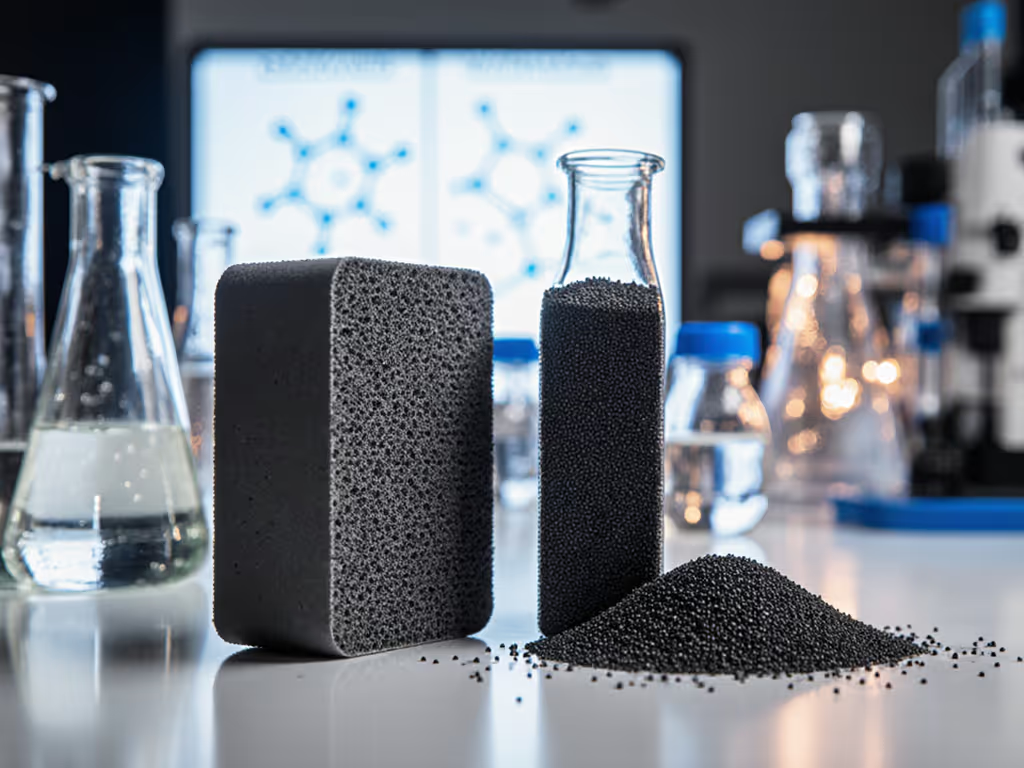
- Activated carbon (coconut shell, coal, or wood-based) adsorbs dissolved contaminants and chlorine.
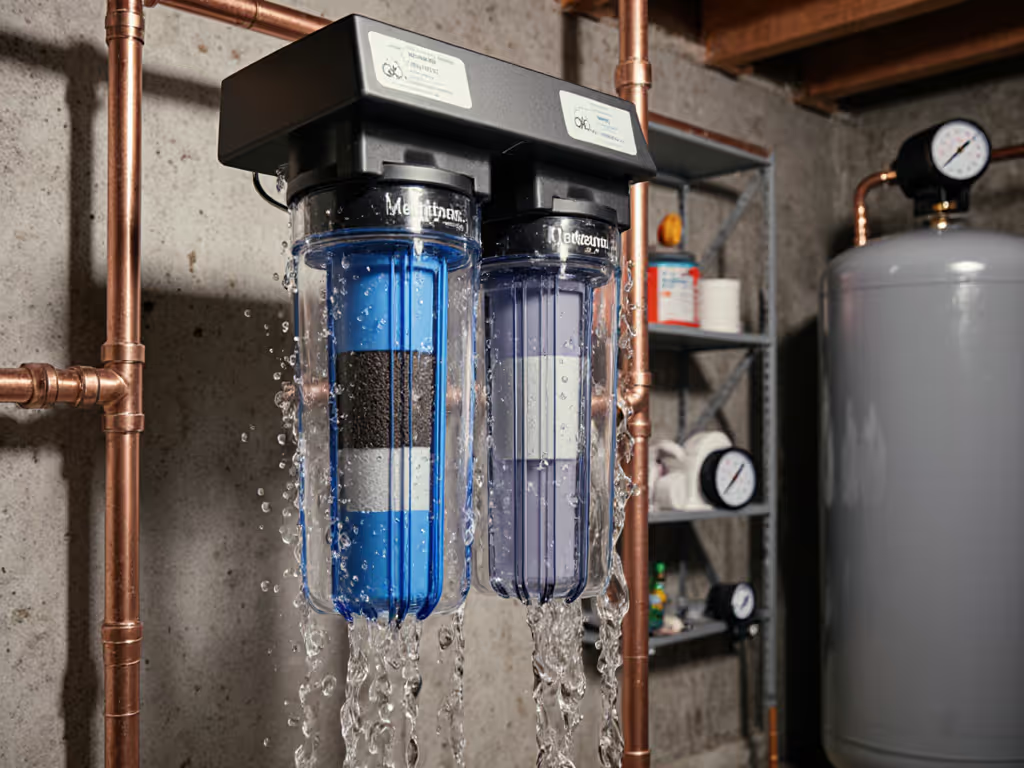
- Reverse osmosis (RO) forces water through semi-permeable membranes under pressure to reject dissolved solids, bacteria, viruses, and some chemicals.
- Ceramic or sintered glass cartridges create mechanical barriers to trap particles and pathogens.
- Ion exchange (softeners, mixed-bed cartridges) swaps hardness minerals or radioactive ions for sodium or potassium.
- UV and ozone oxidation destroy pathogens or volatile organic compounds (VOCs).
The key distinction is origin, not effectiveness. Both can be certified; both can fail if not matched to the actual contaminants in your water.
Q2: Are Nature-Inspired Filters Certified, and If So, to What Standards?
This is where skepticism is justified.
MIT's sapwood-based filtration system, perhaps the most scrutinized nature-inspired approach, has been studied in peer-reviewed literature and can remove 99% of E. coli and rotavirus under laboratory conditions. A 3 cm³ piece of untreated sapwood reportedly filters several liters per day. Impressive data, yes. But: These are research-grade results from controlled lab environments, often on challenge tests with target pathogens in distilled water, not on real household tap water loaded with multiple contaminant types.
As of May 2026, sapwood-based filters are not widely certified to NSF/ANSI 42 (taste/odor), NSF/ANSI 53 (health effects), NSF/ANSI 58 (reverse osmosis), or NSF/ANSI P231 (lead reduction). Not sure which standard matters? See NSF 42 vs 53 explained. A handful of prototype studies exist, but commercial household products carrying these certifications are rare. That gap between lab proof and third-party certification is crucial.
Lotus effect coatings are integrated into some membrane and carbon filters manufactured by larger companies. Here, the benefit is incremental: extended cartridge life and reduced fouling, not primary contaminant removal. These are applied to traditionally certified media, not replacements for them.
Mussel-inspired biofilter matrices have been published in academic journals but, like sapwood, lack widespread commercial NSF/ANSI certification on household systems. The promise is genuine; the residential track record is not yet mature enough for "certified" claims in most markets.
Artificial wetlands are certified by some municipalities for greywater treatment (non-potable reuse) under NSF/ANSI 350 standards, but they are not point-of-use (POU) drinking water filters. They do not meet NSF/ANSI 53 for direct consumption in a home kitchen or under-sink setting.
The central tension: Nature-inspired filtration is scientifically promising but commercially and certificationally immature for most household applications.
Traditional systems (RO, ceramic, activated carbon cartridges from established brands) do carry NSF/ANSI certifications, meaning independent labs have tested them at rated flow rates, capacity (in gallons), and pressure conditions, documenting the percentage reduction for specific contaminants. You can pull the certification listing and verify the claim.
Certification does not mean perfection. It means transparent, repeatable, third-party-verified performance under defined conditions. Map your water, then let certifications drive the filter choice.
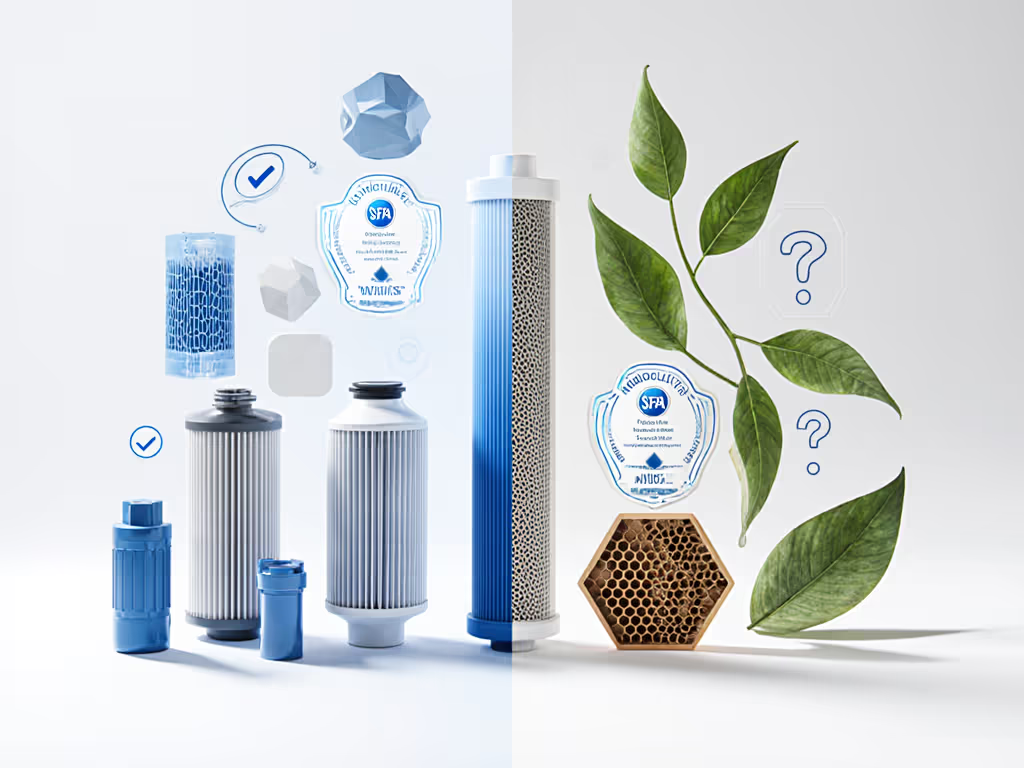
Q3: How Do Nature-Inspired and Traditional Filters Compare on Performance?
On paper, the most rigorous comparison requires:
- Contaminant matching: What are you actually trying to remove? Bacteria? Viruses? Lead? Chloramine? PFAS? Arsenic? Different filters target different contaminants.
- Certification coverage: Does the filter (or combination of filters) carry an NSF/ANSI listing for that specific contaminant at your household's typical flow rate and water pressure?
- Capacity: How many gallons can the filter treat before performance drops below the certified threshold?
- Cost per gallon: (Cartridge cost + housing cost + installation) ÷ certified capacity = true cost-per-gallon.
Example A: Bacteria Removal
Nature-inspired sapwood: Lab data shows ~99% removal of E. coli and rotavirus. No NSF/ANSI 53 certification currently.
Traditional ceramic or RO: NSF/ANSI 53-certified units reduce bacteria and viruses by 99.9% or better, depending on the cartridge. Tested and verified.
Confidence level: Traditional wins because it's independently certified. That doesn't mean sapwood won't work, it means you have a lab number to trust.
Example B: Chlorine and Taste/Odor Removal
Nature-inspired lotus-coated carbon cartridges: Coating may extend cartridge life by 10-15%. The carbon itself (if sourced from coconut shell or quality coal) is traditionally certified for NSF/ANSI 42 chlorine removal. The lotus benefit is marginal, perhaps extended useful life, but the primary removal mechanism is the carbon, not the coating.
Traditional activated carbon: NSF/ANSI 42-certified, tested to remove chlorine, taste, and odor to rated capacity. Proven.
Confidence level: Both work; the lotus coating is a nice-to-have, not a game-changer.
Example C: Hard Water and Mineral Removal
Nature-inspired: No mature biomimetic approach is certified for softening or ion exchange.
Traditional ion-exchange softeners and mixed-bed cartridges: NSF/ANSI 44-certified for hardness reduction. Proven for decades.
Confidence level: Traditional is the only certified option.
Q4: What About Total Cost, Waste, and Long-Term Viability?
Here's where the comparison gets real.
Traditional RO Systems:
- Upfront cost: $200-$800 (point-of-use); $1,500-$5,000 (whole-home).
- Cartridge life: 6-24 months (depends on incoming water quality and cartridge type).
- RO recovery ratio: 25% to 50% (i.e., 3-4 gallons of wastewater per 1 gallon of treated water). High rejection water is a concern for environmentalists. For a lifecycle view of waste and plastic usage across technologies, read our filter environmental impact comparison.
- Cost-per-gallon over 3 years: $0.50-$2.00 (varies widely with cartridge life and reject ratio).
- Waste footprint: Plastic housings, multi-stage cartridges, and significant wastewater output.
Nature-Inspired Sapwood Filtration (hypothetical residential product):
- Upfront cost: Unknown; not yet widely commercialized for homes.
- Cartridge life: Research suggests 1-3 liters per cm³ sapwood before clogging. A small piece (1-2 cm³) might need replacement every 1-2 months at heavy use.
- Waste profile: Biodegradable sapwood (advantage), but if packaged in plastic or shipped frequently for small pieces, shipping waste could offset the material benefit.
- Cost-per-gallon: Speculative, but if a unit costs $100 and a cartridge lasts 30 gallons, you're looking at $3.33 per gallon (100 ÷ 30) plus shipping, worse than many traditional systems on a cost basis.
Traditional Ceramic Cartridges:
- Upfront cost: $80-$300 (countertop).
- Cartridge life: 1,000-2,000 gallons (ceramic is hardy; performance degrades gradually).
- Recovery ratio: ~100% (no wastewater; you get almost all the water you put in).
- Cost-per-gallon over 2 years: $0.08-$0.30.
- Waste footprint: Reusable ceramic core (can be cleaned, not discarded); plastic housing; modest overall waste if cartridges are long-lived.
The math on waste: A nature-inspired product that requires monthly replacements generates more total waste (packaging, transport, plastic wrapping) than a traditional ceramic system with a 12-month cartridge life, even if the filter material itself is biodegradable. Waste footprint is not just material; it includes logistics.
Certifications and cost-per-gallon matter more than the origin story. A traditional ceramic filter that lasts 1,500 gallons at $1 per gallon total cost beats a nature-inspired filter at $3 per gallon, even if the biomimetic version is theoretically more "natural."
Q5: Which Approach Should I Choose for My Home?
If your household needs a certified solution today, traditional systems win.
They have track records, third-party verification, accessible replacement parts, and transparent cost math. NSF/ANSI certifications are not flawless, but they are predictable. You can verify a claim. You can calculate cost-per-gallon. You can cross-check the certification listing against your local Consumer Confidence Report (CCR) or well test to confirm that the filter actually targets your contaminants.
Nature-inspired systems are worth monitoring, not buying yet, unless you are:
- Involved in off-grid or emergency preparedness and willing to test sapwood or plant-based biofilters in parallel with certified backups (not as replacements).
- A research institution or pilot community evaluating biomimetic approaches in controlled settings.
- Buying a traditional filter that integrates a biomimetic coating or additive (like lotus-effect carbon or mussel-inspired binding matrices). Here, you get the certification of the traditional base plus potential longevity benefit of the natural tweak. That's a legitimate middle ground.
The decision tree:
- Pull your CCR or well test. Know what contaminants are actually in your water.
- Match certified filters to those contaminants. Cross-reference NSF/ANSI listings on the certification database.
- Calculate cost-per-gallon over 3-5 years. Factor in cartridge life, recovery ratio, and replacement schedule.
- Assess waste footprint. How many cartridges per year? How much water goes to drain? What happens to the housing?
- Choose the certified option with the best cost-per-gallon and lowest waste profile. This will almost always be traditional in 2026. As nature-inspired systems mature and earn certifications, re-evaluate.
Conclusion: Follow the Certification, Not the Story
The romance of nature-inspired filtration is understandable. The idea that a piece of tree sapwood or a mussel-inspired polymer can replace chemical engineering and synthetic membranes is appealing, especially to environmentally conscious households skeptical of industrial solutions.
But romance and marketing narrative are not guarantees. Certification, third-party lab reports, and transparent cost-per-gallon calculations are.
Nature-inspired water filtration research is genuine and exciting. Sapwood, lotus coatings, and biomimetic membranes may become dominant household technologies in the next 5-10 years. For now, they are laboratory successes awaiting commercial maturity and independent verification.
If you want filtered water today that you can trust, the path is clear: Map your water, then let promotions and stories take a back seat to certified performance data. Pull your CCR or well report, compare filter systems against your specific contaminants, calculate the true cost-per-gallon, and choose accordingly. The taste will improve. The math will stick. And you will avoid regret.
Further Exploration
Start by obtaining your Consumer Confidence Report (municipality) or well test (private well) from your local water utility or a certified laboratory. Search the NSF/ANSI Certified Products Database online to cross-reference certified filters for your contaminants. Request the specific lab report (reduction percentage at rated flow and capacity) for any filter you're considering. Build a simple spreadsheet comparing cost-per-gallon over 3-5 years, factoring in cartridge life, replacement intervals, and any wastewater ratio if RO is involved. To crunch the numbers faster, use our cost-per-gallon savings guide. This data-driven approach takes an hour but replaces months of secondhand advice and greenwashing. Your household's water chemistry is unique; your filter choice should be too.
Related Articles