Hospital-Grade Well Water Filtration for Immune-Vulnerable Safety
By Lina Petrov • 12th Oct
For immune-vulnerable households relying on well water, standard filtration often falls dangerously short. True safety requires hospital-grade protocols: multi-barrier defense against pathogens, third-party verified performance, and waste-conscious engineering. Unlike municipal supplies with continuous monitoring, well owners bear full responsibility for removing bacteria, viruses, and cysts that threaten immunocompromised individuals (where failure carries life-or-death stakes).
Understanding Pathogen Risks in Well Water
Well water bypasses municipal treatment, leaving it exposed to:
- Bacterial contamination (E. coli, coliform) from septic leakage
- Viral threats (norovirus, rotavirus) from surface runoff
- Cyst parasites (Giardia, Cryptosporidium) resistant to chlorine
- Opportunistic pathogens (Legionella, Pseudomonas) thriving in plumbing
For immunocompromised individuals (those undergoing chemotherapy, organ transplants, or with HIV/AIDS), these contaminants pose severe infection risks. For background on pollutants and health impacts, see our tap water contaminants checklist. The CDC notes cysts alone cause 58% of U.S. waterborne disease outbreaks, with mortality rates 10× higher in immune-suppressed patients.
Hospital-Grade Filtration: Beyond Basic Certifications
Medical facilities adhere to NSF/ANSI 55, 60, and 61 standards for water safety. For home systems to meet this threshold, they must deliver:
1. Multi-Stage Pathogen Destruction
| Stage | Function | Immune-Vulnerable Requirement |
|---|---|---|
| Pre-filtration | Sediment/rust removal (≥5-micron) | Protects downstream components |
| Primary Disinfection | UV (40-100 mJ/cm²) or chlorine oxidation | 99.99% bacteria/virus reduction |
| Secondary Barrier | Absolute 1-micron cyst filter | Blocks chlorine-resistant parasites |
| Post-Treatment | Activated carbon polishing | Removes disinfection byproducts |
2. Auditable Performance Proof
- UV systems must validate intensity sensors and sleeve cleanliness
- Chemical injectors require residual monitoring (0.2-0.5 ppm free chlorine)
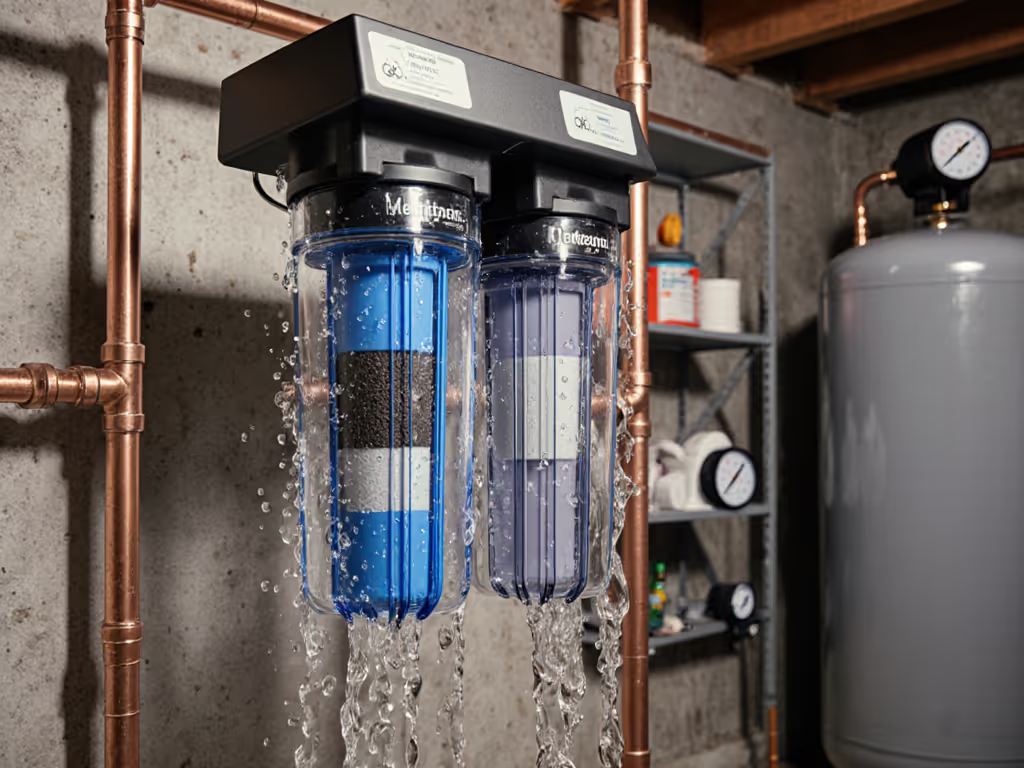
- Filter housings need pressure gauges to detect bypass failure
3. Fail-Safe Redundancy Hospital systems use parallel treatment trains. Home equivalents incorporate:
- Battery-backed UV alarms
- Bypass valves with tamper seals
- Flow restrictors preventing unsafe throughput
Verification: Where Claims Meet Evidence
"Claims need documents" isn't rhetoric, it's non-negotiable for immune safety. Scrutinize:
Laboratory Validation
- Demand test reports against live pathogens (not just surrogates)
- Verify reduction percentages at your flow rate (e.g., 3 GPM vs. 5 GPM)
Certification Nuances
- NSF/ANSI 55 Class A: Validates UV systems for pathogen disinfection
- NSF/ANSI 53: Confirms cyst reduction in carbon filters
- NSF P231: Tests microbiological water purifiers
Avoid systems citing only aesthetic certifications (NSF/ANSI 42). A filter claiming "cyst reduction" without NSF 53 is conjecture.
Implementation: Staging Defense for Well Water
Step 1: Water Testing
Test for:
- Total coliform/E. coli (EPA 1603)
- Protozoan cysts (Method 1623.1)
- Pipe-borne pathogens (Legionella, Pseudomonas)
Frequency: Quarterly for immune-vulnerable households.
Step 2: Pre-Filtration
- Spin-down filter (50+ micron): Removes sand/silt
- String-wound sediment filter (5 micron): Captures finer particles
Maintenance: Monthly flushing; cartridge replacement at 15 PSI drop.
Step 3: Primary Disinfection
- UV irradiation (55 W minimum): Effective against viruses, and requires pre-sediment removal
- Chlorine injection (sodium hypochlorite): Oxidizes iron/manganese while disinfecting If you’re battling reddish stains or metallic taste, see our iron removal systems for well water comparison.
Critical metric: UV dose must exceed 40 mJ/cm² at end-of-lamp life. Confirm this at your peak flow.
Step 4: Secondary Barriers
- Cyst-rated carbon block (1-micron): Physically blocks parasites
- Post-carbon polishing: Adsorbs chlorine byproducts
Step 5: Point-of-Use Protection
Install NSF 53-certified filters at critical faucets for:
- Drinking
- Medical equipment rinsing
- Immune-vulnerable bathing
Maintenance: Ensuring Continuous Protection
| Component | Frequency | Verification Method |
|---|---|---|
| UV Lamp | Annual replacement | Radiometer or dosimeter test |
| Quartz Sleeve | Biannual cleaning | UVT >85% transmission check |
| Sediment Filters | 500-1,000 gal | Pressure gauge differential |
| Chlorine Residual | Daily | DPD test strips at endpoints |
Cost Transparency
- Budget $0.03-$0.08/gallon for certified systems
- Avoid proprietary cartridges forcing 30%+ cost premiums
Final Verdict: No Compromise Protocol
For immune-vulnerable well water safety:
- Test relentlessly assume quarterly pathogen screens
- Demand certified performance NSF 55, 53, or P231 for each stage
- Stage redundantly sediment → disinfection → cyst removal
- Monitor continuously UV sensors, pressure gauges, chlorine tests
Systems omitting third-party validation data or maintenance transparency fail hospital-grade criteria. Your defense is only as strong as its weakest audited link, and for the immunocompromised, verification isn't a preference; it's survival.
"Boil-water advisories arrive too late for the immune-suppressed. Preemptive multi-barrier filtration is non-negotiable, it's the ICU for your water line."
Related Articles