Why Cylindrical Water Filters Flow Better: Geometry Explained
By Nkechi Okafor • 6th May
Introduction
Water flow through a filter seems straightforward: water enters, contaminants are captured, clean water exits. But beneath that simplicity lies geometry; the shape of your filter cartridge has genuine hydraulic consequences that ripple through your entire system's performance. Cylindrical water filters have become the default shape in home and point-of-use systems for a reason grounded in physics, not marketing. Understanding why cylindrical design optimizes water flow will help you assess whether a filter platform matches your actual flow demands and contaminant profile.
This article untangles the geometry-to-performance link using principles from filter geometry and certified test data, so you can separate technical reality from hype. The key insight: shape matters, but only in context of the media inside and what you're actually trying to remove.
FAQ Deep Dive: Cylindrical Filter Geometry and Flow
Why Do Cylindrical Filters Dominate the Market Compared to Other Shapes?
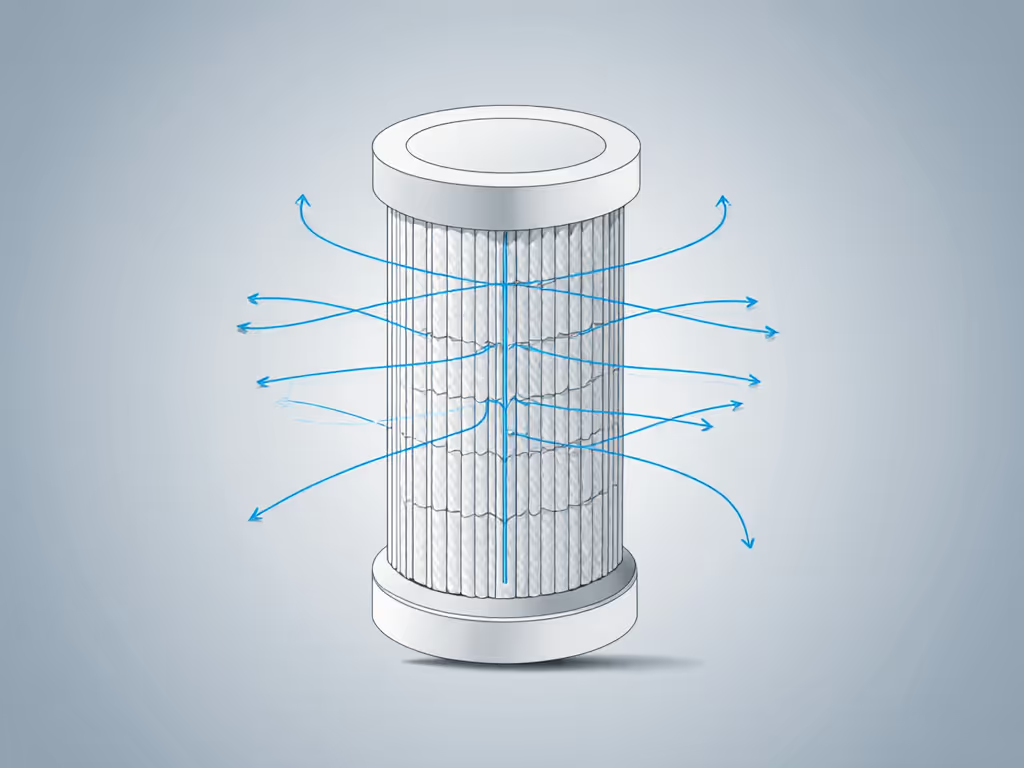
Cylinders maximize filter surface area efficiency per unit volume. When you roll a flat sheet of filter media into a cylinder, you're creating a geometric win: the circumference of the cylinder (the area available for water to pass through) scales much more efficiently than a flat or box-shaped cartridge occupying the same footprint.
Consider this: a flat cartridge sitting in an undersink housing has two active surfaces (front and back). A pleated cylindrical cartridge, by contrast, exposes dozens of circumferential inches of media, all working in parallel. Water doesn't queue; it finds pathways across the entire outer perimeter. The result is lower pressure drop (the resistance water experiences passing through media) at the same gallons-per-minute flow rate.
Put numerically: a cylindrical pleated cartridge might deliver 0.5 gallons per minute at a 15 PSI pressure drop, while a flat cartridge of similar media mass might start showing drag at 0.3 GPM under the same conditions. Pressure drop is direct: higher drop stresses your system, slows flow, and increases the risk of bypass if a cartridge clogs prematurely. For a deeper look at how filters affect household pressure and flow, read our Water Pressure & Filters guide.
How Does Surface Area Relate to Flow Rate and Contaminant Capture?
Surface area and flow rate are not the same thing, and conflating them is a common source of confusion.
Surface area is the total contact zone between water and filter media. More surface area means water spends time, however briefly, in contact with activated carbon pores, ion-exchange resin, or mechanical barriers.
Flow rate is how many gallons per minute move through the system.
These two forces are in tension:
- A filter with massive surface area but denser, more selective media (like reverse osmosis membranes or tight carbon blocks) will have lower flow rates because water moves slowly through the media to allow contaminant capture.
- A cylindrical cartridge with looser pleated media will have higher flow rates because water has multiple pathways and less resistance.
The geometry of the cylinder helps balance this tension. By distributing flow across a large perimeter, cylindrical filters reduce the pressure load on any single area of media.
This means the media can be more selective (featuring tighter pore structure) without creating unacceptable backpressure. In reverse osmosis or carbon-block systems, cylindrical pre-filter stages often handle the sediment and chlorine load precisely because their geometry allows steady flow even as the media works hard.
Certified performance testing (the kind that earns NSF/ANSI 42, 53, or 58 marks) measures both flow and contaminant removal at rated conditions. If you're comparing standards, see our NSF 42 vs 53 guide. A filter certified at 0.75 gallons per minute under NSF 53 (heavy metals and some pesticides) has proven it can sustain that flow while meeting removal targets. The cylindrical shape enables higher rated flows than flat alternatives because geometry and media work together as a system.
Does Filter Shape Alone Determine Whether It Will Remove Your Actual Contaminants?
No. Shape is architecture; media is chemistry and physics.
A beautifully engineered cylindrical cartridge filled with generic polyester will not reduce lead, PFAS, or arsenic. Conversely, a plainly designed carbon cartridge with the right activated carbon blend and sufficient contact time will reduce chlorine taste and odor.
Certifications matter here. When you see that a filter is NSF/ANSI 53-certified, you're seeing proof that testing labs ran that exact cartridge (often cylindrical) with that exact media and confirmed lead reduction, typically to less than 0.005 milligrams per liter at a specified flow rate and service life. The geometry supported the media's performance; it did not replace it.
The practical lesson: If your municipal water report flags arsenic or your well test shows iron and manganese, the shape of the filter is secondary to whether the media (and its certification) targets those specific contaminants. A cylindrical housing is wasted on a filter not designed for your hazards.
When Does Filter Geometry Matter Less?
In sediment-only, low-micron applications, geometry matters less because flow resistance is naturally low and the capture mechanism (mechanical sieving) doesn't require prolonged contact. A 5-micron polyspun cartridge, whether cylindrical or flat, will do its job.
Geometry also matters less if:
- Your water pressure is very high (above 80 PSI); backpressure isn't a bottleneck.
- You have a dedicated faucet with low flow expectations (less than 0.5 GPM).
- Your main goal is taste and odor improvement, where carbon effectiveness is robust across geometries.
Geometry does matter critically when:
- You're filtering sediment, chlorine, and heavy metals in series (staging), and you need each stage to sustain acceptable flow without early clogging.
- Your household has multiple simultaneous users, peak morning showers, guest visits, and flow drops trigger bypass or customer frustration.
- You're using tighter media (NSF 58-grade reverse osmosis or tight carbon blocks) and pressure drop is already a hydraulic risk.
What's the Real-World Flow Penalty for Not Optimizing Geometry?
In undersink RO systems with poor pre-filter geometry, pressure drop can climb from 5 PSI (clean cartridge) to 25 PSI within weeks of installation, forcing owners to replace cartridges early. That's a cost and waste problem. With optimized cylindrical pre-filtration staged before the RO membrane, pressure stabilizes and cartridge life reaches rated intervals (often 6 to 12 months).
For gravity-fed systems (critical during power outages), a narrow, poorly shaped cartridge can slow filling to a trickle. See our verified gravity filter reviews for systems that maintain flow without electricity. A wider, cylindrical geometry in the same housing maintains reasonable fill rates. This matters if you're relying on the filter during an emergency when you can't afford to wait hours for a gallon of water.
How to Use Geometry Insights in Your Filter Decision
Test first, then layer certified barriers with intent. Before you prioritize filter shape, establish what you're actually filtering:
- Get your water tested: municipal report or professional lab for wells. Identify contaminants above action levels. City water users can decode results with our CCR interpretation guide.
- Match certifications to contaminants: if lead is flagged, NSF 53; if PFAS, NSF 401; if turbidity and bacteria, NSF/ANSI P231 or P473.
- Confirm the geometry supports your rated flow: read the spec sheet; if your household peaks at 2 GPM and the filter is only certified at 0.5 GPM, it's mismatched.
- Layer pre-filtration upstream: a cylindrical sediment stage before carbon or RO protects expensive media and sustains flow across the whole system. For pre-filter selection, start with our whole house sediment filter guide.
- Plan for maintenance: the best geometry doesn't help if you bypass filter changes because cartridges are hard to source or prohibitively costly.
Conclusion: Geometry Is One Layer in a Certified Stack
Cylindrical filters flow better than many alternatives because geometry optimizes surface area and reduces pressure drop, allowing media to work effectively without strangling flow. But shape alone never guaranteed safe water. A filter rated 3:1 pure-to-wastewater efficiency still depends on media quality and the layers upstream and downstream.
The households that stayed calm during boil-water notices weren't those with the fanciest filter shape; they were the ones who had verified their water first, matched certified media to actual hazards, and built a staged system that held up under demand. Geometry was the architecture that made that stack reliable.
Further Exploration: Download your local water quality report or commission a well test, then cross-reference any filter you're considering against its NSF listing to confirm contaminant coverage. Ask vendors for pressure-drop curves (flow rate versus PSI) at both clean and end-of-life cartridge conditions. Request the service life in gallons and the actual replacement interval. That combination of testing and geometry-aware specifications will guide you to a water filter that flows and delivers on its certified claims.
Related Articles