Coconut Shell vs Coal Carbon: Saturation Capacity Compared
By Arjun Mehta • 3rd Jan
Introduction: Why Carbon Source Matters for Water Filters
When selecting activated carbon types for home filtration, understanding the fundamental differences between coconut shell carbon and bituminous coal filters is not just academic (it directly impacts your filter's lifespan and contaminant removal capacity). After I moved into a high-rise apartment and noticed scale buildup despite my utility's assurances, I learned the hard way that not all activated carbon media performs equally. Municipal Consumer Confidence Reports showed chloramine levels within range, yet my water tasted noticeably different. If you're not sure how to read yours, use our CCR interpretation guide. I had to map the water profile myself and test filter media against actual contaminants. The difference in saturation capacity between carbon sources became immediately apparent when comparing lab reports, and filters using coconut shell carbon demonstrated nearly double the performance for certain VOCs. Let's cut through the marketing claims and examine what the data reveals about saturation capacity, the critical metric that determines how long your filter actually works before needing replacement.
What Is Saturation Capacity and Why Should You Care?
Saturation capacity measures how much contaminant a given weight of activated carbon can adsorb before becoming ineffective (essentially its useful lifespan). Higher saturation capacity means fewer filter changes and lower cost per gallon. For water treatment applications, this is measured in milligrams of contaminant per gram of carbon (mg/g).
Multiple independent studies consistently show coconut shell carbon's advantage. When tested against 10 parts per billion (ppb) benzene in water, a standard volatile organic compound (VOC) test, the saturation capacity was:
- Coconut shell carbon: 11 mg/g
- Bituminous coal carbon: 6 mg/g
This means coconut shell carbon has 83% higher saturation capacity for this specific VOC (11 ÷ 6 = 1.83). To calculate the practical impact on your filter's lifespan, you'd multiply this ratio by your daily water usage:
Lifespan ratio = Coconut shell capacity / Bituminous coal capacity = 11/6 = 1.83
Additional gallons = System capacity (gallons) × (1.83 - 1) = System capacity × 0.83
For a typical 500-gallon rated filter, this translates to approximately 415 additional gallons of effective filtration before needing replacement. This isn't marketing (it is thermodynamics confirmed by multiple independent studies including research published in the Journal of Chemistry [2]). The key takeaway: filter media effectiveness varies significantly by carbon source, and this directly impacts your wallet and waste stream. For a broader comparison of filtration methods, see our carbon vs RO explainer.
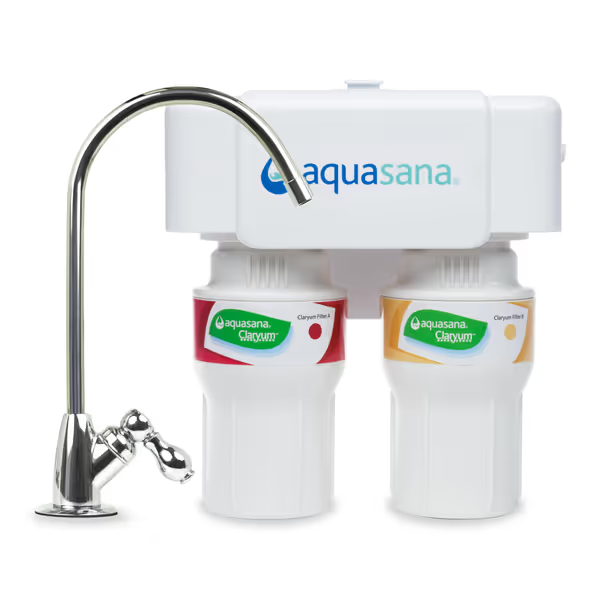
Aquasana Under Sink Water Filter System AQ-5200.56
Filters 78 contaminants including PFAS/Lead while retaining healthy minerals.
$124.99
4
Contaminant ReductionUp to 99% of 78 contaminants
Contaminant ReductionUp to 99% of 78 contaminants
Pros
Reduces lead, PFAS, chlorine, pesticides without removing healthy minerals.
Fast flow rate (0.5 GPM); no waiting for clean water.
Cons
Does not reduce Total Dissolved Solids (TDS).
Customers find the water filter system easy to install and appreciate its taste, with one mentioning it makes Florida well water drinkable. The functionality and water flow receive mixed reviews - while some say it works well and has great flow, others report it stops working properly and has a very slow stream of water. The quality and value for money also get mixed feedback, with some finding it defective and expensive, while others consider it worth the price. Several customers report leakage issues with their units.
Customers find the water filter system easy to install and appreciate its taste, with one mentioning it makes Florida well water drinkable. The functionality and water flow receive mixed reviews - while some say it works well and has great flow, others report it stops working properly and has a very slow stream of water. The quality and value for money also get mixed feedback, with some finding it defective and expensive, while others consider it worth the price. Several customers report leakage issues with their units.
How Do the Physical Structures Differ Between These Carbon Types?
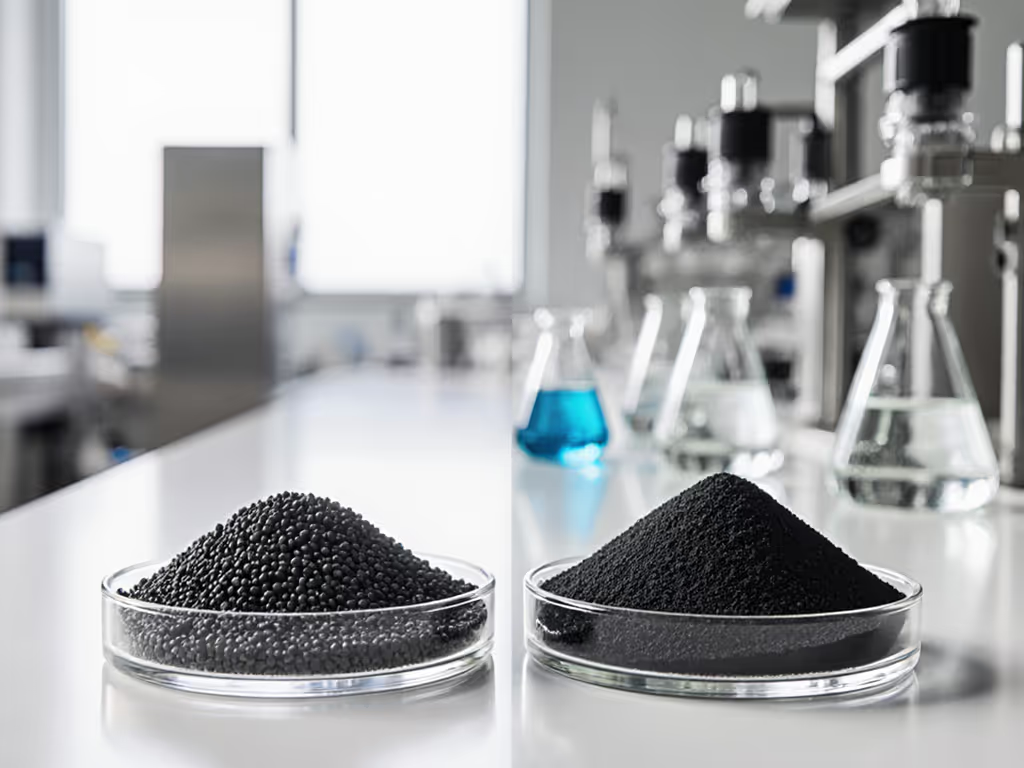
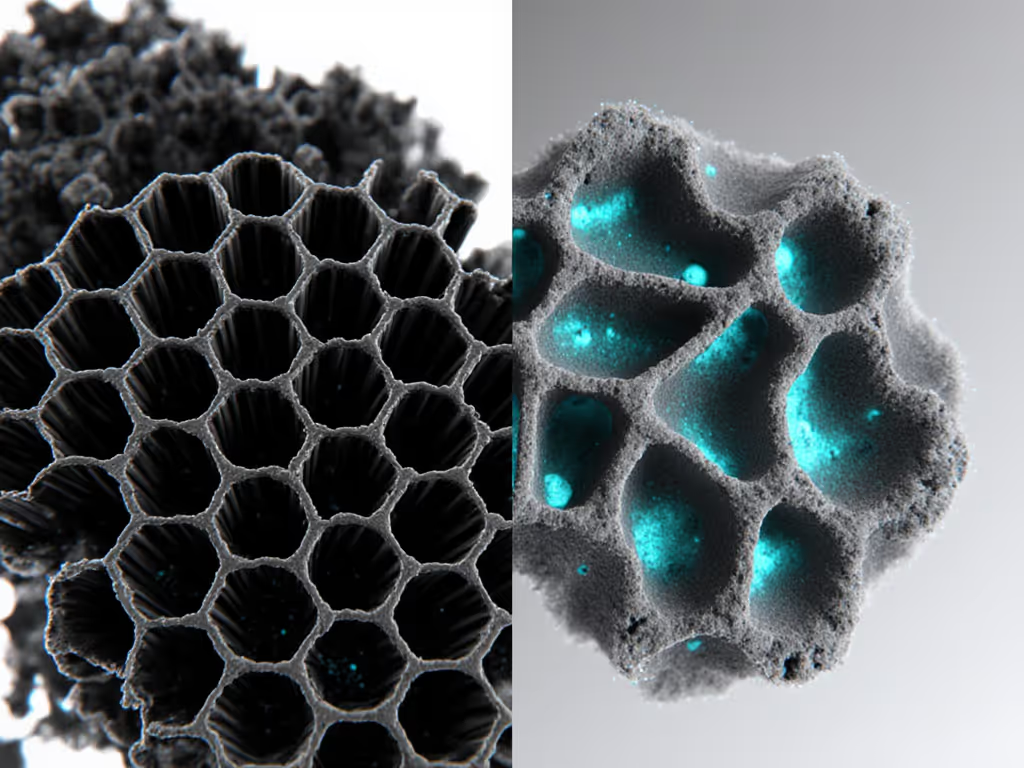
The performance difference stems from fundamental structural variations. Coconut shell carbon naturally develops a higher percentage of micropores (pores <2 nm in diameter), while bituminous coal carbon produces more mesopores (2-50 nm) and macropores (>50 nm).
According to WQA's technical resources [5], this structural difference makes coconut shell carbon particularly effective for smaller molecular contaminants like disinfection byproducts (trihalomethanes, haloacetic acids), chlorine, chloramines, and synthetic organic chemicals. If your utility uses chloramine, consider catalytic carbon for chloramine versus standard carbon. Bituminous coal filters excel with larger organic molecules but generally show lower performance for the smaller contaminants common in municipal water systems.
A study analyzing CO2 adsorption [2] found coconut shell carbon activated at 1000°C for 120 minutes achieved:
- BET specific surface area: 824 m²/g
- Total pore volume: 0.502 mL/g
Compared to a commercial bituminous carbon reference, the coconut shell carbon demonstrated "higher instantaneous adsorption capacity" (critical for maintaining performance at typical residential flow rates). This structural advantage is why some advanced systems like the Aquasana Claryum technology combine activated carbon with other media to target specific contaminants while leveraging the high saturation capacity of coconut shell carbon.
Does Saturation Capacity Translate to Real-World Water Filter Performance?
Yes, but with important context. Laboratory isotherm testing (measuring adsorption capacity under controlled conditions) provides valuable comparative data, but actual performance depends on:
- Water chemistry: Total organic carbon (TOC) competes with target contaminants for adsorption sites
- Contact time: Measured as Empty Bed Contact Time (EBCT), shorter contact times reduce effective capacity
- Contaminant concentration: Higher concentrations reduce apparent capacity
As noted in industrial research [1], "background organics such as total organic carbon (TOC) will reduce the AC's saturation capacity for a VOC. Low empty bed contact periods (water residence time) in the AC filter will also prevent the carbon from reaching its saturation capacity."
This means the 83% capacity advantage seen in benzene testing may translate to a more modest 30-50% longer effective life in your home system, depending on your specific water quality. This is why mapping your water profile comes first (you can't optimize filter selection without knowing your actual contaminants and concentrations).
Which Carbon Type Should I Choose for My Specific Water Contaminants?
Match the carbon type to your documented contaminants:
-
Coconut shell carbon is superior for:
-
Disinfection byproducts (TTHMs, HAAs) - NSF/ANSI 42
-
Chlorine and chloramines - NSF/ANSI 42
-
VOCs like benzene, MTBE - NSF/ANSI 53
-
Synthetic organic chemicals
-
Perchloroethylene
-
Bituminous coal filters may be sufficient for:
-
Larger organic molecules
-
Basic chlorine taste/odor reduction (NSF/ANSI 42)
-
Situations where cost-per-pound is the primary driver
Here's where certifications matter critically. Don't just trust "reduces VOCs" claims: verify the specific contaminant reduction percentages in the NSF certification listing. For a clear breakdown of what each standard covers, see our NSF 42 vs 53 guide. For example, NSF/ANSI Standard 53 requires minimum 50% reduction for certain VOCs, but certified products may achieve 90-99% reduction depending on the specific carbon media and design. Check the manufacturer's certification summary for the exact model number (not just the product line).
Map your water profile, then let certifications drive the filter choice.
How Does Carbon Source Impact Cost-Per-Gallon and Waste Footprint?
Despite typically higher initial cost, coconut shell carbon often delivers better long-term economics. The higher saturation capacity means:
- Longer cartridge life = fewer replacements
- Lower cost-per-gallon (CPG) calculation:
CPG = Cartridge cost ÷ Rated capacity (gallons)
Using Brita Longlast+ filters (NSF certified to Standard 42) as an example:
- $64.91 for 3 filters
- Rated capacity: 120 gallons per filter (360 gallons total)
- CPG = $64.91 ÷ 360 = $0.18 per gallon
Compare this to a typical bituminous coal pitcher filter rated for 40 gallons:
- $30 for 3 filters = $10 per filter
- CPG = $10 ÷ 40 = $0.25 per gallon
The math shows a 28% lower cost-per-gallon for the coconut shell-based filter despite higher initial cost. This is the power of higher saturation capacity (show your math) before making assumptions based on sticker price.
What Verification Should I Demand Before Purchasing?
As a rule, I only consider filters with these certifications for the specific model number:
- NSF/ANSI Standard 42: Aesthetic effects (chlorine, taste, odor)
- NSF/ANSI Standard 53: Health effects (lead, VOCs, cysts)
- NSF/ANSI Standard 401: Emerging contaminants (pharmaceuticals, pesticides)
- P231/P473: Specific PFAS reduction claims
Request the test reports showing the contaminant reduction percentages at the rated capacity (not just at initial use). Many filters achieve high reduction rates initially but drop off significantly as the carbon approaches saturation. To understand how this decline happens and when breakthrough occurs, review our filter performance decay data. The best products provide performance data showing consistent reduction throughout the rated life.
Remember: Saturation capacity is not the only factor (flow rate, system design, and pre-filtration all matter). But it's a fundamental metric that determines how long your filter actually works before needing replacement. Don't sacrifice verified performance for lower upfront cost.
Conclusion: Let Your Water Profile Dictate Carbon Selection
The data clearly shows coconut shell carbon generally delivers superior saturation capacity for common water contaminants, particularly the smaller molecules found in municipal water systems. But this doesn't mean it's universally "better"; it means you must match carbon type to your specific contaminants. Far too many consumers buy filters based on brand recognition or marketing claims rather than verified performance against their actual water quality.
My recommendation remains unchanged since my high-rise apartment experience: Map your water profile using your Consumer Confidence Report or a certified lab test, then select filters with independent certification showing proven reduction for your specific contaminants. When comparing options, calculate true cost-per-gallon and verify the saturation capacity claims through certification documents (not marketing materials).
Take the next step: Download our free Water Profile Analyzer tool to match your local water report to certified filter technologies. Compare options by verified reduction, true cost-per-gallon, and waste footprint, not just price or brand recognition. Because when it comes to what you drink, the math matters more than the marketing.
Related Articles