How to Achieve Clean Water Sanitation at Home: A Step-by-Step Guide to Safe, Sustainable Filtration
By Diego Alvarez • 22nd Oct
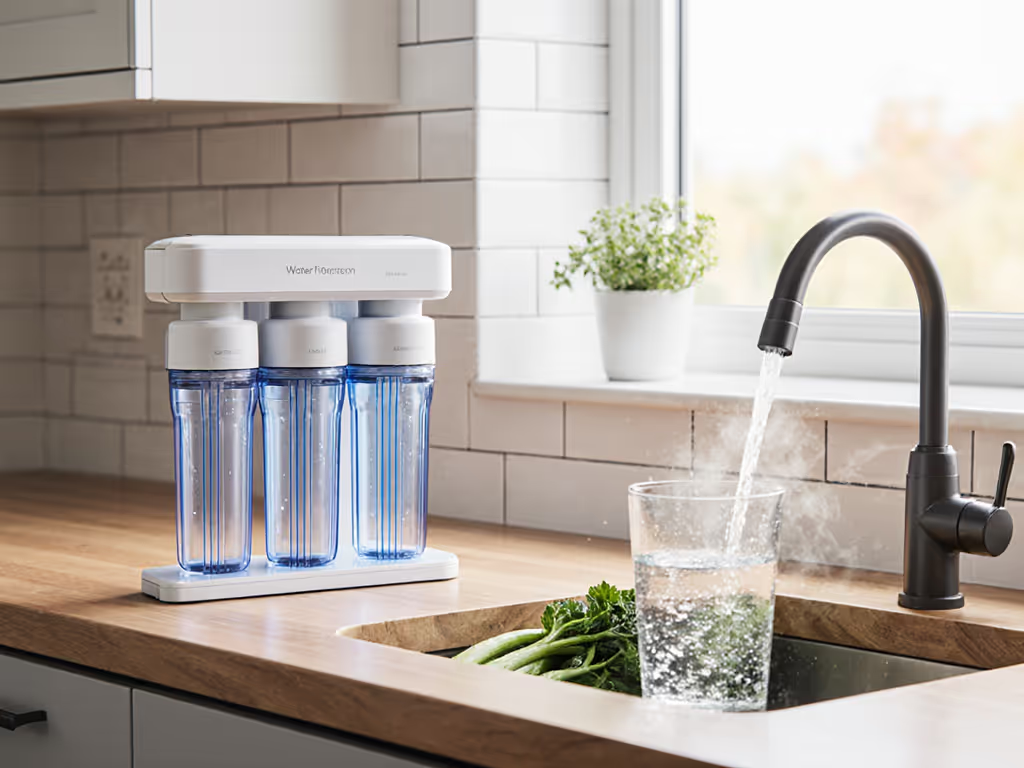
Clean water sanitation is not just a global goal; it is a daily reality you can control at your kitchen sink. While public headlines cite billions without safely managed water, the practical question at home is simpler: what is in your tap and what should you do about it? In this guide, you will learn how to test, interpret, and treat your specific water, then maintain a solution that protects health while cutting waste and cost. Along the way, you will see how Clean Water, Less Waste evaluates filter certifications and uses that analysis to inform personalized recommendations so you can act with confidence instead of guesswork.
Clean Water Sanitation: Know Your Starting Point
You cannot fix what you do not measure, so begin by identifying your source and baseline quality. If you are on city water, locate your utility’s CCR [Consumer Confidence Report], then note residual chlorine, chloramine, lead, and emerging contaminants like PFAS [Per- and polyfluoroalkyl substances]. Use our CCR interpretation guide to find and understand the numbers that matter for your home. If you are on a private well, schedule a comprehensive test at a certified laboratory following EPA [Environmental Protection Agency] recommendations for bacteria, nitrates, arsenic, hardness, pH [Potential of Hydrogen], manganese, and volatile organic compounds. Treat this like a health checkup: the water report is your blood test, and the treatment plan flows from the findings.
Next, perform quick at-home screens to supplement lab data. Use a TDS [Total Dissolved Solids] meter to track overall mineral load trends, simple colorimetric strips for free chlorine and iron, and a lead spot test if you live in older housing. Then, inventory your household realities: Do you need whole-home protection for skin and plumbing, or are you focused on drinking and cooking only? Do you prefer minimal maintenance, or are you comfortable with periodic filter swaps and sanitization? Write down your constraints, because clean water sanitation succeeds when it fits your routine, not the other way around.
- City water: review CCR [Consumer Confidence Report], add point-of-use protection for taste, lead, PFAS [Per- and polyfluoroalkyl substances], and microplastics.
- Private well: test annually for bacteria, nitrates, arsenic; retest after floods or well work.
- Rainwater or hauled water: prioritize sediment removal and disinfection via UV [Ultraviolet] or equivalent methods.
From Test to Tap: A Step-by-Step Filtration Strategy for Every Home
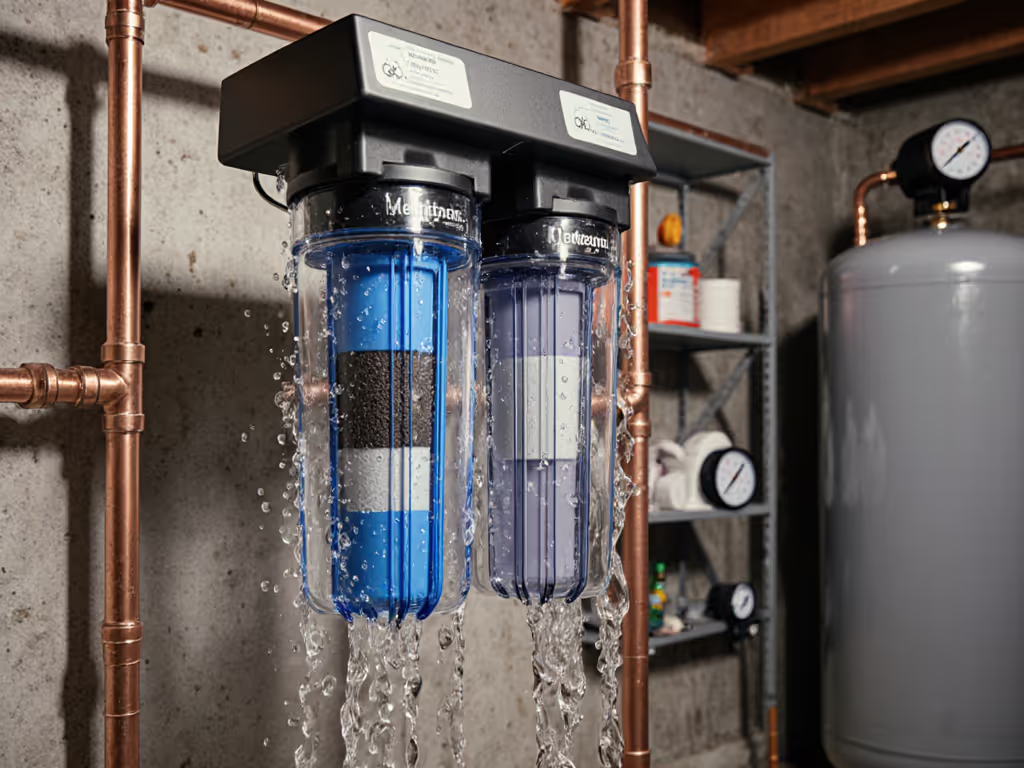
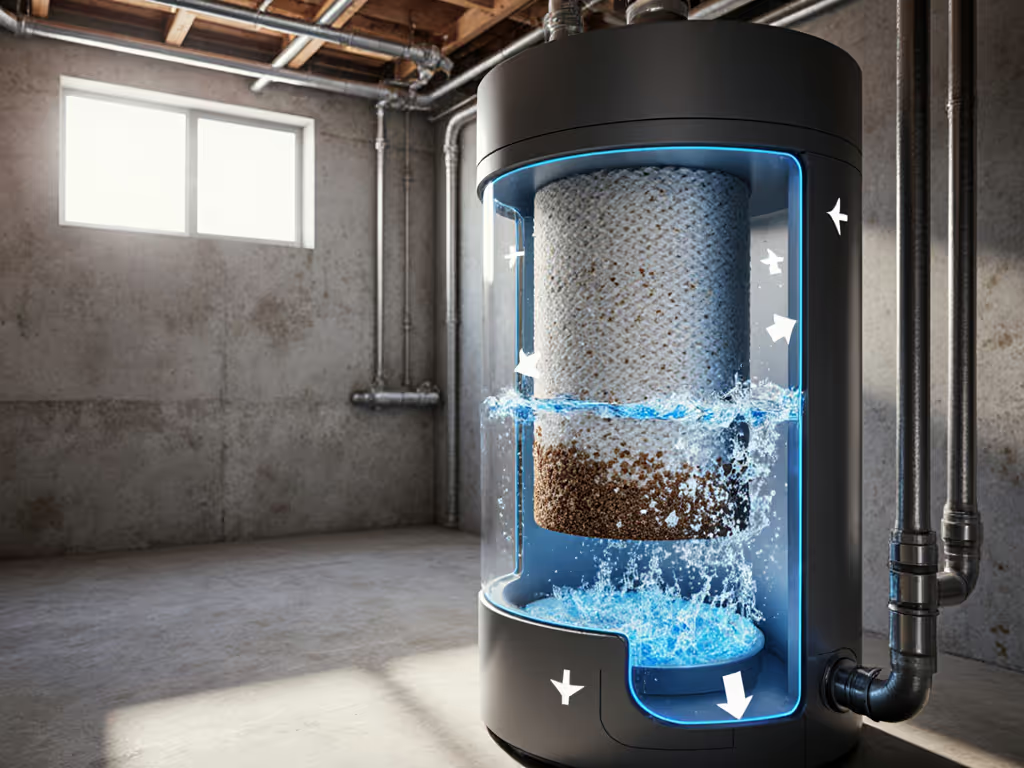
With your data in hand, plan your filtration stack in clear, logical layers. If you’re new to the core technologies, start with our filtration tech primer for plain-English explanations of carbon, RO, UV, and more. First, protect against dirt and pipe scale with a sediment prefilter sized to your flow rate in GPM [Gallons Per Minute], because clogging undermines every downstream stage. Second, use activated carbon to reduce chlorine, chloramine, and taste or odor under a standard such as NSF/ANSI [National Sanitation Foundation/American National Standards Institute] 42, and escalate to NSF/ANSI [National Sanitation Foundation/American National Standards Institute] 53 if lead or cysts appear on your report. Third, if dissolved contaminants like arsenic, nitrate, or high TDS [Total Dissolved Solids] are present, consider adding RO [Reverse Osmosis] certified under NSF/ANSI [National Sanitation Foundation/American National Standards Institute] 58 for drinking taps.
Watch This Helpful Video
To help you better understand clean water sanitation, we've included this informative video from Lamai Training Institute. It provides valuable insights and visual demonstrations that complement the written content.
Then, consider microbial barriers such as UV [Ultraviolet] disinfection or an equivalent approach where needed; consult product documentation or a qualified installer for selection and installation. Finally, close the loop with maintenance planning: mark replacement intervals on your calendar, keep spares on hand, and sanitize housings during filter changes. If you want a shortcut, Clean Water, Less Waste provides step-by-step planning guides tailored to city, well, and rainwater, so your configuration matches your lab results and lifestyle.
- Pre-filter for sediment and rust at 5–20 microns based on water clarity.
- Activated carbon for chlorine, chloramine, taste, and odor under NSF/ANSI [National Sanitation Foundation/American National Standards Institute] 42.
- Targeted reduction for lead, cysts, and PFAS [Per- and polyfluoroalkyl substances] under NSF/ANSI [National Sanitation Foundation/American National Standards Institute] 53 or NSF/ANSI [National Sanitation Foundation/American National Standards Institute] 401.
- RO [Reverse Osmosis] under NSF/ANSI [National Sanitation Foundation/American National Standards Institute] 58 for dissolved solids where indicated.
- UV [Ultraviolet] disinfection for wells or uncertain microbiological safety.
Filter Technologies and Certifications, Demystified
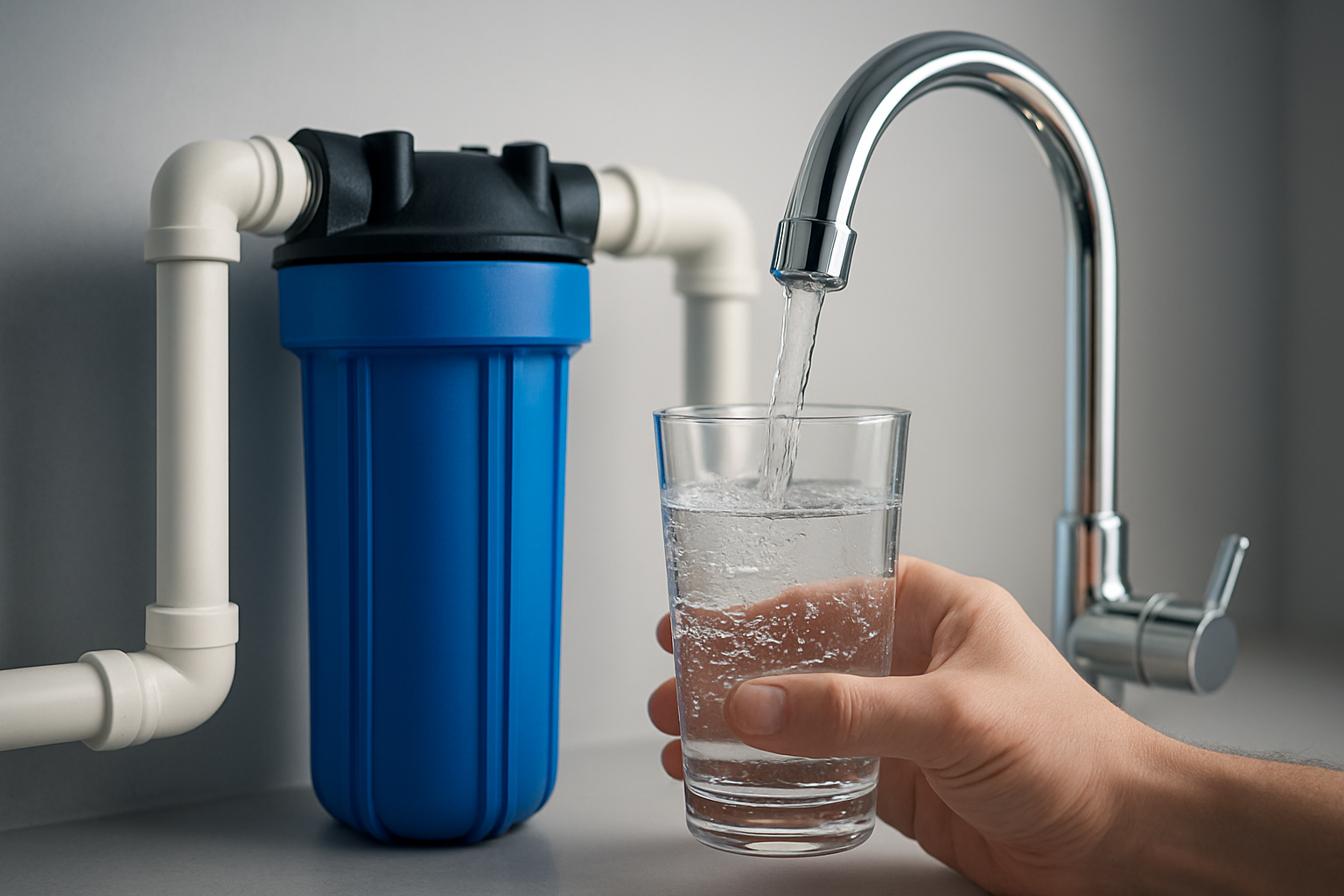
Certifications are your truth serum. When a product claims to remove lead, ask which specific NSF/ANSI [National Sanitation Foundation/American National Standards Institute] standard verifies that claim and to what reduction level. NSF/ANSI [National Sanitation Foundation/American National Standards Institute] 42 covers aesthetics like chlorine and taste or odor; NSF/ANSI [National Sanitation Foundation/American National Standards Institute] 53 covers health effects like lead and cysts; NSF/ANSI [National Sanitation Foundation/American National Standards Institute] 58 covers RO [Reverse Osmosis] performance; NSF/ANSI [National Sanitation Foundation/American National Standards Institute] 401 covers emerging contaminants such as certain pharmaceuticals and PFAS [Per- and polyfluoroalkyl substances]; and NSF/ANSI [National Sanitation Foundation/American National Standards Institute] P231 validates microbiological purifiers. Rather than memorizing every clause, use the table below to map your contaminants to proven technologies and standards, then match products accordingly. For a deeper breakdown of certification differences, see NSF 42 vs 53 explained.
Common Technologies Mapped to Validating Standards and Use Cases
| Technology | Relevant Certification | Primary Use | Example Targets | Notes |
|---|---|---|---|---|
| Activated Carbon (Block or GAC [Granular Activated Carbon]) | NSF/ANSI [National Sanitation Foundation/American National Standards Institute] 42, 53 | Aesthetic and health effects | Chlorine, chloramine, lead, cysts, some VOC [Volatile Organic Compounds] | Flow-sensitive; look for certified capacity and lead reduction claims |
| RO [Reverse Osmosis] | NSF/ANSI [National Sanitation Foundation/American National Standards Institute] 58 | Dissolved solids reduction | Nitrate, arsenic, fluoride, high TDS [Total Dissolved Solids] | Requires tank or high-output pump; consider remineralization for taste |
| UV [Ultraviolet] Disinfection | NSF/ANSI [National Sanitation Foundation/American National Standards Institute] 55 or equivalent | Microbial inactivation | Bacteria, viruses, protozoa | Needs power and clear water; replace lamp annually as specified |
| Ion Exchange (Water Softener) | NSF/ANSI [National Sanitation Foundation/American National Standards Institute] 44 | Hardness control | Calcium, magnesium | Improves appliance life; not a health filter; may affect sodium levels |
| Microfiltration/Ultrafiltration | NSF/ANSI [National Sanitation Foundation/American National Standards Institute] P231 | Microbial reduction | Cysts, some bacteria | Check pore size and microbial log reduction credits |
| Certified Pitchers | NSF/ANSI [National Sanitation Foundation/American National Standards Institute] 42, 53, 401 | Point-of-use convenience | Chlorine, lead, PFAS [Per- and polyfluoroalkyl substances] | Budget-friendly; capacity and flow decline as filters load |
Cost, Capacity, and Waste: Planning for the Long Term
Smart clean water sanitation balances safety, simplicity, and sustainability over years, not weeks. Pitchers and faucet mounts are quick wins, but cartridge waste and frequent swaps can add up. Under-sink carbon and RO [Reverse Osmosis] systems cut running costs by delivering higher capacity per filter, although RO [Reverse Osmosis] introduces a concentrate stream that should be managed responsibly. Whole-home solutions protect plumbing and skin but cannot replace a certified point-of-use barrier for lead or PFAS [Per- and polyfluoroalkyl substances] at the tap. Use the comparison below to estimate both dollars and waste footprint so your choice delivers protection that lasts without creating a new trash problem. To budget precisely, review our filter replacement cost guide with brand-by-brand schedules.
Estimated Annual Cost and Waste Footprint by System Type
| System | Typical Certified Use | Annual Replacement | Estimated Annual Cost | Waste Footprint | Notes |
|---|---|---|---|---|---|
| Pitcher (Certified) | NSF/ANSI [National Sanitation Foundation/American National Standards Institute] 42, 53, 401 | 6–12 cartridges | $80–$180 | 1–2 kg plastic | Low upfront; frequent swaps; good starter option |
| Under-Sink Carbon Block | NSF/ANSI [National Sanitation Foundation/American National Standards Institute] 42, 53 | 1–2 cartridges | $60–$140 | 0.5–1 kg plastic | High flow, strong lead reduction when certified |
| RO [Reverse Osmosis] Drinking System | NSF/ANSI [National Sanitation Foundation/American National Standards Institute] 58 | 1 membrane every 2–3 years; 2–3 pre/post filters yearly | $120–$220 | 1–1.5 kg plastic; concentrate stream | Great for dissolved solids; consider permeate pump and reuse of concentrate |
| UV [Ultraviolet] Add-On | NSF/ANSI [National Sanitation Foundation/American National Standards Institute] 55 | 1 lamp and sleeve maintenance | $90–$180 | Minimal plastic; glass lamp | For microbial safety on wells or uncertain sources |
| Whole-Home Sediment + Carbon | NSF/ANSI [National Sanitation Foundation/American National Standards Institute] 42 | 2–4 large cartridges | $120–$240 | 1–2 kg plastic | Great for skin and plumbing; still add point-of-use for lead or PFAS [Per- and polyfluoroalkyl substances] |
To reduce waste without compromising performance, look for refillable housings, certified long-life carbon blocks, and RO [Reverse Osmosis] systems with improved recovery ratio. Where available, use manufacturer take-back programs and local hard-to-recycle centers for spent cartridges. If you are budgeting, track both upfront and lifetime costs: a $200 under-sink unit with $80 per year in certified replacements can cost less over three years than a $50 pitcher whose filters you replace monthly. Clean Water, Less Waste emphasizes total cost of ownership and waste footprint in every review, so you see dollars per gallon and grams of plastic per year alongside contaminant reduction scores.
Operation, Maintenance, and Monitoring Best Practices

Even the best-certified system slips if it is not maintained. Start by aligning your replacement schedule with certified capacity rather than a vague calendar. If your carbon block is certified for 600 gallons, estimate daily use and set reminders before that threshold. During changes, sanitize housings with a mild, food-safe disinfectant, and flush filters fully to remove fines. For RO [Reverse Osmosis], keep prefilters on schedule to protect the membrane, check tank pressure annually, and replace the membrane per NSF/ANSI [National Sanitation Foundation/American National Standards Institute] 58 guidance. If something seems off, use our troubleshooting checklist to diagnose flow, taste, or pressure issues fast. For UV [Ultraviolet], replace lamps at the stated hour mark even if they still glow, because intensity drops over time.
Keep a simple log with three columns: date, action, and observation. Record chlorine residual drops, taste changes, or pressure loss, and tie them to filter swaps so patterns emerge. If you are on a well, shock chlorinate the well after major service events, verify with a bacteria retest, and add a post-UV [Ultraviolet] check. For ongoing verification, use a TDS [Total Dissolved Solids] meter to spot shifts in RO [Reverse Osmosis] performance, and keep inexpensive lead and nitrate strips on hand after plumbing work. These habits turn maintenance into a rhythm, not a chore, so your clean water sanitation stays consistent when life gets busy.
- Replace by certified capacity and measured flow, not just months.
- Sanitize housings and tubing during every filter change.
- Log results and set digital reminders to prevent overdue swaps.
How Clean Water, Less Waste Helps You Choose With Confidence
Most shoppers face two painful gaps: Which filter actually removes your contaminants, and what will it cost in money and waste over time? Clean Water, Less Waste bridges both by evaluating certification-based performance data and offering personalized guidance. You can compare products by verified standards such as NSF/ANSI [National Sanitation Foundation/American National Standards Institute] 42, 53, 58, 401, and P231, filter capacity, maintenance cadence, and plastic footprint per year. If you have a private well, our Guides for various water sources, including well water, explain how to stack sediment, iron, hardness, and microbial defenses without overbuying.
Because we translate dense reports into plain language, you will see why one under-sink carbon block certified under NSF/ANSI [National Sanitation Foundation/American National Standards Institute] 53 for lead reduction is a better match than a generic, unverified cartridge. Our product reviews that reference NSF/ANSI standards include breakdowns of contaminant lists, test conditions, and realistic capacities at household flow. We also spotlight long-term ownership: filter prices, change intervals, RO [Reverse Osmosis] recovery, and available recycling. The result is a shortlist tailored to your test results and budget, with clean water sanitation and sustainability treated as equal priorities rather than tradeoffs.
Real-world example: A family on municipal water with detectable chloramine and 5 parts per billion lead chose an under-sink carbon block certified under NSF/ANSI [National Sanitation Foundation/American National Standards Institute] 53 for lead and NSF/ANSI [National Sanitation Foundation/American National Standards Institute] 42 for chloramine. They skipped whole-home carbon and added a shower filter for comfort, cutting annual plastic waste by half compared with their old pitcher routine while improving taste and verified safety at the tap.
Frequently Asked Questions About Clean, Safe, and Sustainable Filtration
Do I need both whole-home and under-sink filtration? Often, yes, but for different reasons. Whole-home units manage sediment, chlorine, or hardness for plumbing and skin, while certified under-sink or countertop filters handle health-critical contaminants like lead, PFAS [Per- and polyfluoroalkyl substances], and cysts at the point of use. How do I know a PFAS [Per- and polyfluoroalkyl substances] claim is legitimate? Look for NSF/ANSI [National Sanitation Foundation/American National Standards Institute] 53 or NSF/ANSI [National Sanitation Foundation/American National Standards Institute] 401 listings naming specific PFAS [Per- and polyfluoroalkyl substances] compounds, plus capacity and percent reduction. Is RO [Reverse Osmosis] wasteful? Modern systems with permeate pumps and higher recovery reduce concentrate volumes, and many households repurpose concentrate for toilet flushing or outdoor cleaning to minimize waste.
What about minerals and taste? RO [Reverse Osmosis] can make water taste flat for some; a remineralization cartridge or blending valve restores a balanced profile without compromising safety. How often should I test? City water users should review the CCR [Consumer Confidence Report] annually and test the home tap for lead if plumbing is older or disturbed. Well owners should test annually and after storms, floods, or pump service. If your results change, revisit your stack, and use Clean Water, Less Waste guides and reviews to adjust your plan with updated certification analyses and costs.
--
You now have a clear path from testing to treatment to upkeep, all focused on safe results with less waste. Imagine opening your tap and knowing exactly which contaminants are handled, which certifications back it up, and how much you will spend this year. In the next 12 months, small tweaks like better prefiltration, a certified lead barrier, or a UV [Ultraviolet] lamp could upgrade health and cut plastic by pounds. What is the first practical step you will take this week to strengthen clean water sanitation at home?
Additional Resources
Explore these authoritative resources to dive deeper into clean water sanitation.
- Goal 6: Water and Sanitation - the United Nations
- Goal 6: Clean water and sanitation - The Global Goals
Elevate Clean Water Sanitation with Clean Water, Less Waste Guides
Compare certified filters by reduction, capacity, maintenance, and waste through well water and city guides using verified data and personalized advice tailored to your home.
Related Articles