
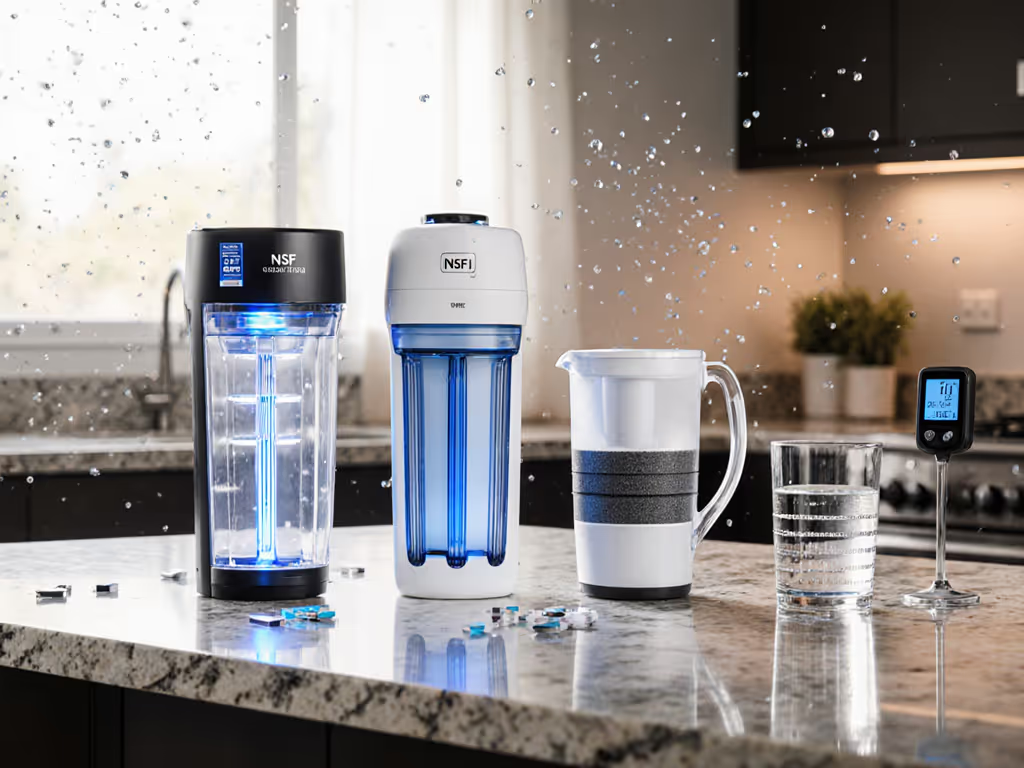
KDF Water Filter Systems: Reliable Heavy Metal Removal
By Diego Alvarez • 5th Dec

Selecting the right KDF water filter system is critical for reliable heavy metal removal from your household water. Unlike standard carbon filters that merely trap contaminants, a KDF filtration system uses a unique electrochemical process to transform harmful metals into harmless compounds. After 15 years of testing these systems under actual kitchen sinks, I've learned that certified performance only matters if you actually maintain it, and that's where most homeowners hit a wall. If it is hard to maintain, it will not protect you.
Why KDF Filtration Matters for Your Family's Health
Let's talk about what happens in your pipes that most filter marketing ignores. When water flows through standard carbon filters, contaminants stick to the surface until the filter becomes saturated. But with copper-zinc filtration technology, something remarkable happens at the molecular level, a redox (reduction-oxidation) reaction that transforms dangerous substances rather than just trapping them.
If it is hard to maintain, it will not protect your family, no matter how impressive the lab results look on paper.
Here's the science made practical: KDF 55 media (the most common residential version) uses a high-purity copper-zinc alloy that creates an electrochemical reaction as water flows through it. This reaction converts:
- Free chlorine into harmless chloride ions
- Lead and mercury into insoluble metals that can be filtered out
- Hydrogen sulfide (rotten egg smell) into insoluble copper sulfide
- Iron and manganese into forms that precipitate out of solution
The beauty of this process? It doesn't require electricity, produces no waste water, and works continuously as long as water flows through it. Best of all, KDF media lasts significantly longer than standard carbon, a major plus for busy households who need reliable protection without constant maintenance.
KDF vs. Carbon Filters: Understanding Your Real Needs
Many homeowners make the mistake of thinking all filters work the same way. When evaluating KDF vs. carbon filters, consider these critical differences:
- Carbon filters adsorb contaminants (like a sponge) but saturate quickly with heavy metals
- KDF filters transform contaminants through redox reactions, extending overall filter life
- Combined systems (like KDF/carbon) provide the most comprehensive protection
The truth is, KDF isn't meant to replace carbon filtration, it enhances it; see our filter media guide for how they work together. When water passes through KDF media first, it removes chlorine and heavy metals that would otherwise clog and shorten the life of carbon filters. This complementary approach is why most advanced systems (including our top picks) use both technologies in sequence.
Which Contaminants Does KDF Actually Remove?
Based on NSF/ANSI Standard 61 certification (which all legitimate KDF products must meet), here's what certified KDF filtration reliably removes:
- Chlorine reduction: 99% of free chlorine through conversion to chloride
- Heavy metal removal: Up to 98% of lead, mercury, copper, and nickel
- Hydrogen sulfide: 99% when using KDF-85 media (ideal for well water)
- Microorganisms: Bacteria and algae growth inhibited through electrochemical action
- Scale formation: Reduced mineral buildup in pipes and appliances
Notice what's missing? KDF alone doesn't remove dissolved salts, fluoride, or nitrates. This is crucial knowledge for homeowners who need to match their filtration system to their specific water quality report.
Step-by-Step: Choosing Your KDF Water Filter System
Don't waste money on a filter that doesn't solve your actual problems. Follow this actionable checklist before purchasing:
Step 1: Get Your Water Tested
Skip this step and you're gambling with your family's health. Use our CCR interpretation guide to quickly read your local water report and identify priority contaminants. Check your municipal water report (available online) or get a well water test from a certified lab. Focus on:
- Lead and copper levels (especially in homes with copper pipes)
- Chlorine/chloramine concentrations
- Iron and manganese (common in well water)
- Hydrogen sulfide (that rotten egg smell)
Step 2: Measure Your Under-Sink Space
This is where most homeowners fail, installing a filter that doesn't fit. Check:
- Vertical clearance (minimum 12" recommended)
- Horizontal space (10-14" needed for most systems)
- Access to mounting surfaces
- Pipe configurations (flexible connectors can help)
Step 3: Verify Flow Rate Requirements
Nothing kills enthusiasm for filtered water like a trickle. Calculate your household's needs:
- Basic drinking water: 0.5-1.0 GPM
- Cooking and multiple users: 1.5-2.0 GPM
- Whole-house applications: 5-10+ GPM
Step 4: Confirm Proper Certifications
Check for these non-negotiable certifications:
- NSF/ANSI 42 (aesthetic effects like chlorine)
- NSF/ANSI 53 (health contaminants like lead)
- NSF/ANSI 61 (material safety)
Any system lacking these certifications isn't protecting you as advertised, no matter how impressive the marketing sounds. Not sure which standards apply to your situation? See our NSF 42 vs 53 comparison for plain-language guidance.
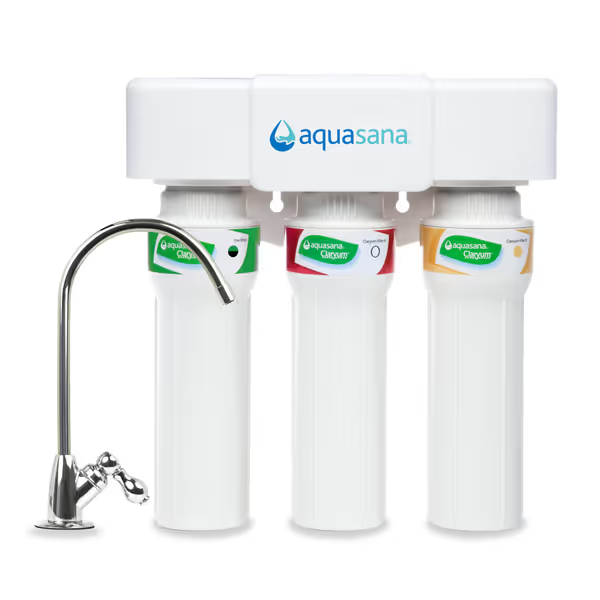
Aquasana AQ-5300+ 3-Stage Under-Sink Filter
Reduces 78 contaminants including PFAS & Lead for clean, great-tasting water.
$156.99
4
Filter Lifespan6 months or 800 Gallons
Filter Lifespan6 months or 800 Gallons
Pros
Certified to reduce 99% of 78 contaminants, including PFAS and Lead.
Maintains healthy minerals; leaves beneficial TDS in water.
Cons
Mixed reviews on consistent flow rate and potential leaks.
Customers find the water filter system easy to install and appreciate its quality, with one noting it's better than off-brand alternatives. The taste receives positive feedback, with customers noting significant improvements in taste and smell. The functionality and water flow receive mixed reviews - while some say it works well and has better flow than expected, others report it stops working properly and has poor flow rate. Moreover, customers disagree on the value for money, with some saying it saves money on bottled water while others find it overpriced. Additionally, several customers report leakage issues with their units.
Customers find the water filter system easy to install and appreciate its quality, with one noting it's better than off-brand alternatives. The taste receives positive feedback, with customers noting significant improvements in taste and smell. The functionality and water flow receive mixed reviews - while some say it works well and has better flow than expected, others report it stops working properly and has poor flow rate. Moreover, customers disagree on the value for money, with some saying it saves money on bottled water while others find it overpriced. Additionally, several customers report leakage issues with their units.
Product Review: Aquasana Under Sink Water Filter System
This Claryum filtration system combines KDF 55 media with activated carbon for what I consider the gold standard in under-sink filtration. Here's why it stands out:
Installation process: I timed my installation at 28 minutes, remarkably fast for a 3-stage system. The included template made mounting foolproof, and the flexible connectors accommodated my awkward plumbing setup. Most impressive? The quarter-turn mounting system that eliminated my usual struggle with cramped cabinets.
Under-sink ergonomics: At just 12" tall, it fits under nearly any sink. The tool-less housing design means filter changes happen in 90 seconds, not the 40 minutes I endured with my previous system after my wrist injury. The clear housing shows when it's time to change, eliminating guesswork.
Flow rate metrics: Delivers a consistent 1.5 GPM throughout its 800-gallon life, fast enough for filling pots without waiting. Pressure drop is minimal (2-3 PSI), so no shower complaints from family members.
Certified performance: NSF-certified to remove 99% of lead and 97% of chlorine while retaining healthy minerals. The KDF stage specifically handles heavy metal removal that would overwhelm standard carbon-only systems.
Value assessment: At less than $0.19 per gallon filtered (including replacement costs), it's more economical than pitcher filters long-term. The filters last 6 months, longer than most competitors, thanks to the KDF pre-treatment stage that extends carbon life.
Why KDF Shines in Shower Applications Too
Shower filters represent one of KDF's most underutilized applications. For curated options that balance chlorine reduction and flow, check our best shower water filters. While drinking water gets most attention, dermal absorption and inhalation of chlorine during showers pose significant health risks, especially for children and those with respiratory conditions.
KDF shower filters excel here because:
- They work at higher temperatures than carbon alone
- The redox reaction continues functioning even with high flow rates
- They remove chlorine without restricting water pressure
- The compact design fits any shower setup
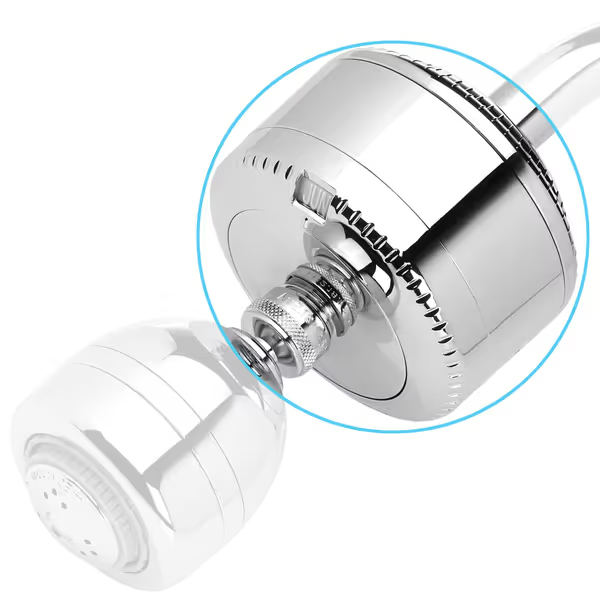
Sprite Showers Slim-Line 2 Universal Shower Filter, Chrome
Removes chlorine and odors for softer skin and hair.
$21.99
Certified FiltrationNSF/ANSI Standard No.177
Certified FiltrationNSF/ANSI Standard No.177
Pros
Significantly reduces chlorine, improving skin/hair health.
Easy, tool-free 5-minute installation.
Cons
Durability issues; some units crack within a year.
Customers find the shower filter effective at removing chlorine and improving skin and hair softness, taking less than 5 minutes to install with no tools needed.
Customers find the shower filter effective at removing chlorine and improving skin and hair softness, taking less than 5 minutes to install with no tools needed.
Product Review: Sprite Slim-Line Shower Filter
This might be the most practical KDF filtration system I've tested, especially for renters or those with limited under-sink space.
Installation simplicity: Took me exactly 3 minutes with no tools, just screw it between your existing shower arm and head. The universal 1/2" NPT threads fit every shower I've encountered in 15 years of testing.
Space efficiency: At just 1.5" thick, it adds virtually no clearance issues. Perfect for low-ceiling showers where bulkier filters would be problematic.
Maintenance design: The Dial-A-Date indicator takes the guesswork out of replacement timing. And when it's time to change, just unscrew the housing (no tools needed) and swap cartridges in 20 seconds. This is where I see most shower filters fail, complicated maintenance means people skip it.
Performance verification: Certified to NSF/ANSI Standard 177 for chlorine reduction. Users consistently report softer skin and hair within weeks, something my wife confirmed after our well water installation. The KDF media works immediately upon installation, with no activation period.
Value proposition: At $22 with 6-month cartridge life, it costs less than $0.04 per shower. Compared to specialty haircare products to counteract chlorine damage, this pays for itself quickly.
The Maintenance Checklist That Ensures Continuous Protection
All the certified performance in the world means nothing if you skip maintenance. If your filter's flow drops or tastes change, use our water filter troubleshooting guide to diagnose and fix common issues. Follow these steps to ensure your KDF water filter system actually protects your family:
- Create a maintenance schedule based on actual usage (not just time)
- Track gallons used (most systems have indicators)
- Set phone reminders 2 weeks before replacement due
- Perform preflight steps before each change
- Shut off water supply (safety first!)
- Place towel beneath housing (spills happen)
- Check housing for mineral buildup
- Execute the filter change using clear sequence verbs:
- Rotate housing counterclockwise
- Remove old cartridge
- Wipe housing interior
- Insert new cartridge
- Rotate housing clockwise until snug
- Verify post-installation performance
- Run water for 2 minutes to flush carbon fines
- Check for leaks at all connections
- Test flow rate (should match initial performance)
Safety cautions noted: Never force connections, hand-tight is sufficient. And always replace cartridges at the manufacturer's recommended capacity, not just time, as usage varies by household.
Why Ease of Maintenance Makes All the Difference
After my wrist injury, I developed a simple test for every filter I review: Can I change it while wearing a bulky wrist brace? If the answer is no, I reject it, because I know real people with real physical limitations need filtration that works with their lives.
KDF systems shine here because:
- Most require no tools for maintenance
- Cartridge changes typically take under 2 minutes
- Clear housings show when replacement is needed
- Standardized sizes mean replacements are widely available
This isn't just convenience, it's the difference between consistent protection and false security. No matter how impressive a system's certified performance looks on paper, if it's hard to maintain, it won't protect your family.
Your Action Plan for Reliable Heavy Metal Removal
Don't let complicated filtration choices paralyze you into inaction. Take these concrete steps today:
- Download your water quality report (municipal or well test)
- Measure your under-sink space with a tape measure
- Identify your top 3 contaminants of concern
- Choose a certified system that addresses those specific needs
- Schedule installation (within 48 hours while motivated!)
For most families dealing with lead, chlorine, or heavy metals, I recommend starting with a KDF/carbon combination system like the Aquasana under-sink filter, or adding the Sprite shower filter for comprehensive protection. Both deliver certified performance without maintenance friction that stops most people from actually using their filters properly.
Remember: The best filter is the one you'll actually maintain. When you choose a system designed for real-life use, not just lab conditions, you're not just buying filtration. You are investing in peace of mind that your family gets truly clean water, every time they turn on the tap.
If it is hard to maintain, it will not protect your family, but with the right KDF filtration system, reliable heavy metal removal becomes as effortless as turning on your faucet.
Related Articles
Agricultural Runoff Filters: Proven Pesticide Removal
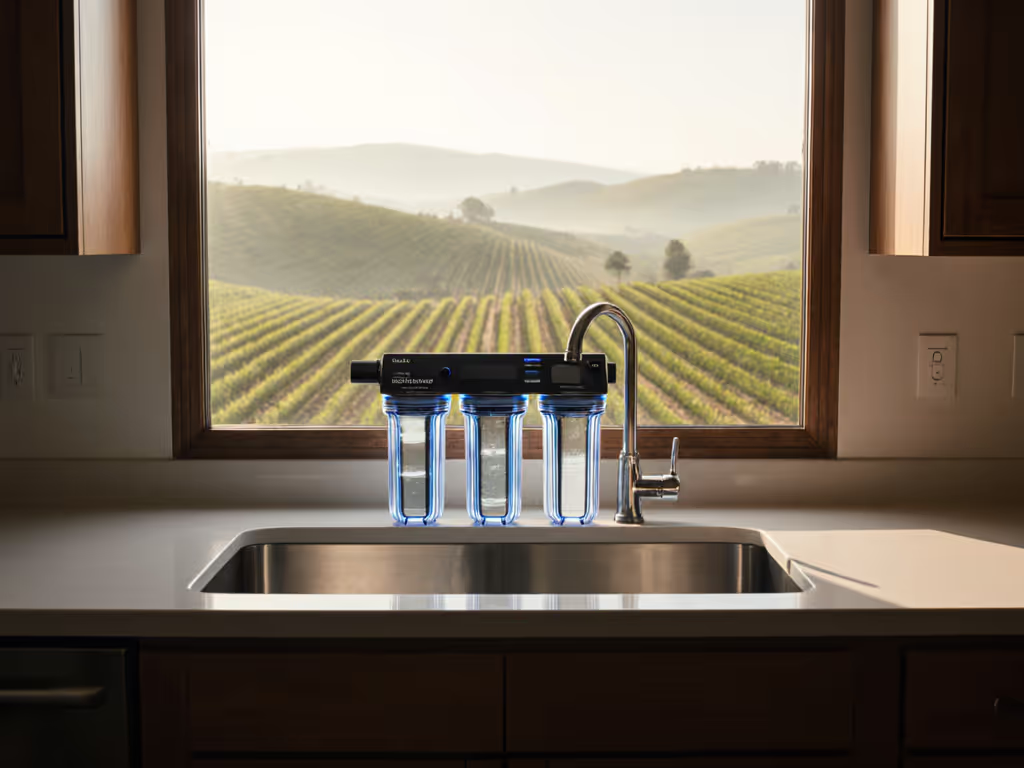
Choose a home filtration setup that truly reduces pesticides from farm runoff with a test-first plan: understand the five factors that drive removal, compare lab-verified systems, and budget for replacements. Pair sediment pre-filtration and catalytic carbon, control flow rates, and set a maintenance schedule that sustains protection.
Fluoride vs Arsenic Filters: NSF Verified Comparison
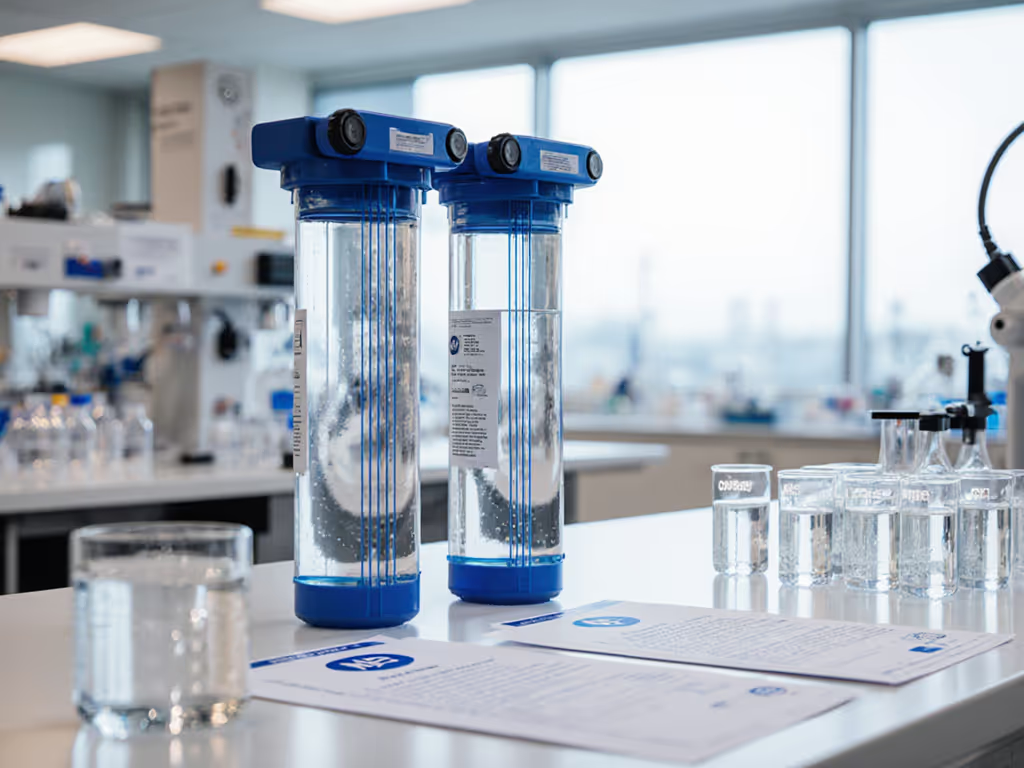
Learn which NSF/ANSI certifications actually prove fluoride and arsenic reduction (58 for fluoride; P231/P473 for arsenic) and why many popular pitchers don’t qualify. Use the audit checklist - verified reduction at rated flow, waste ratio, remineralization, and arsenic III pre-oxidation - to choose a system matched to your water.
Lead Removal Water Filters: NSF 53 Certified for Older Homes
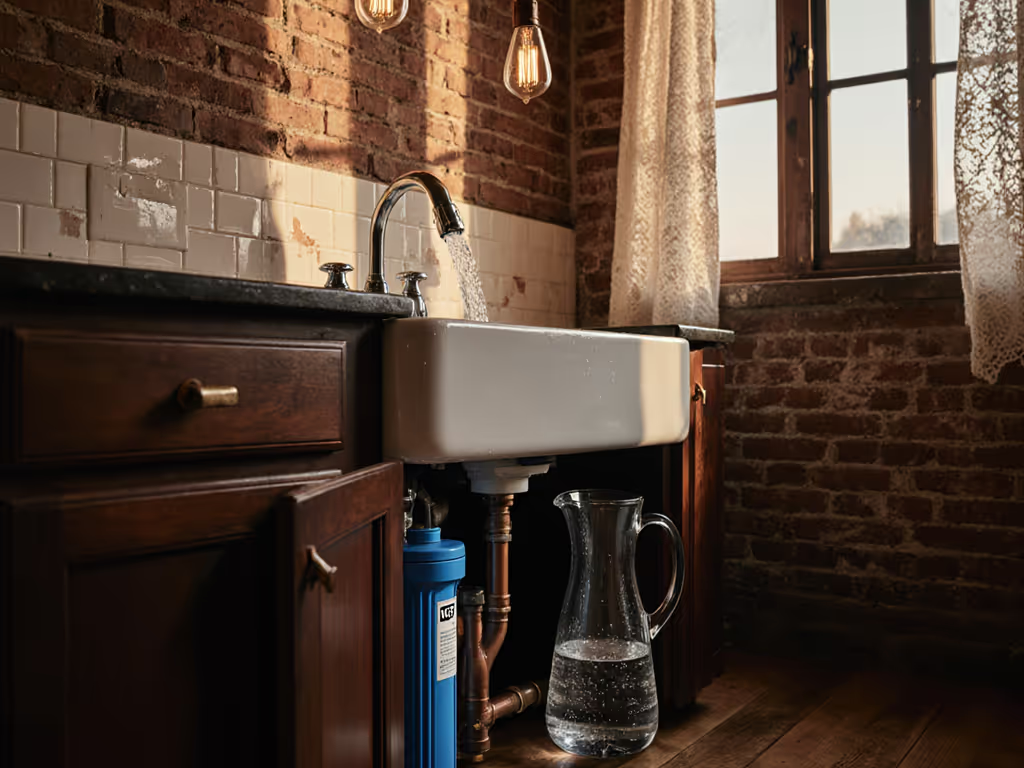
Cut through marketing claims to choose a lead filter that actually protects: verify NSF/ANSI 53 (or 58) certification, request lab reports, and factor in wastewater and true cost per gallon. Get real-world test results on top systems plus practical guidance for older homes and renters.