
Ceramic Filter Lifespan: Cost-Per-Gallon vs Carbon Filters Explained
By Samira Khan • 3rd Dec
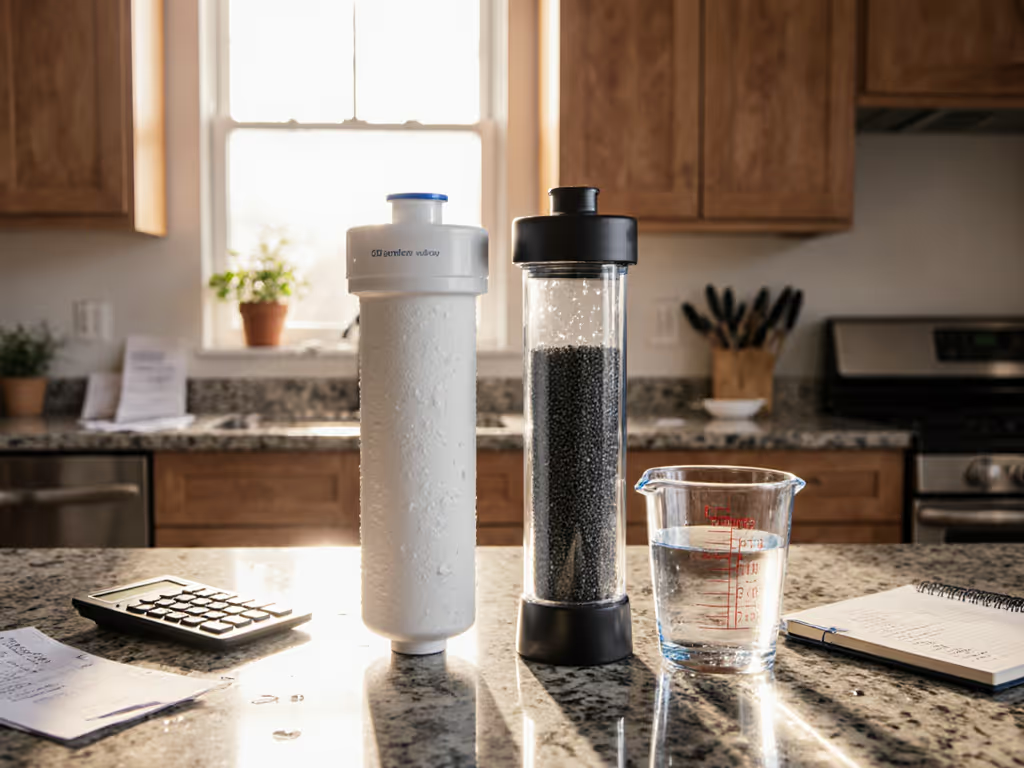
You've researched filters for weeks, but still can't decide between a ceramic filter and activated carbon options. You want clean water without breaking the bank or creating unnecessary waste. The real question isn't which filter technology sounds best, it's which one you can afford to maintain over time. Let me translate the specs into simple math with assumptions you can verify, because the best filter is the one that fits your budget and your water needs sustainably.
How Ceramic and Carbon Filters Actually Work: No Marketing Hype
A ceramic filter uses porous ceramic material (often diatomaceous earth) with microscopic pores that physically block contaminants. Think of it like a sieve: water flows through while larger particles get trapped. The ceramic filter pore size typically ranges from 0.2 to 1 micron, making it excellent for removing sediment, cysts, and bacteria. However, this physical barrier also means it struggles with chemicals like chlorine, pharmaceuticals, or dissolved metals that slip right through those tiny holes.
Activated carbon filters work differently. They use adsorption, where contaminants stick to the carbon's vast surface area (up to 32,000 square feet per gram!). This makes them superior at removing chemicals, VOCs, bad tastes, and odors. The trade-off is that while they excel at chemical reduction, they're less effective against bacteria unless combined with additional filtration stages. For a deeper dive into how different filter media technologies work, see our explainer.
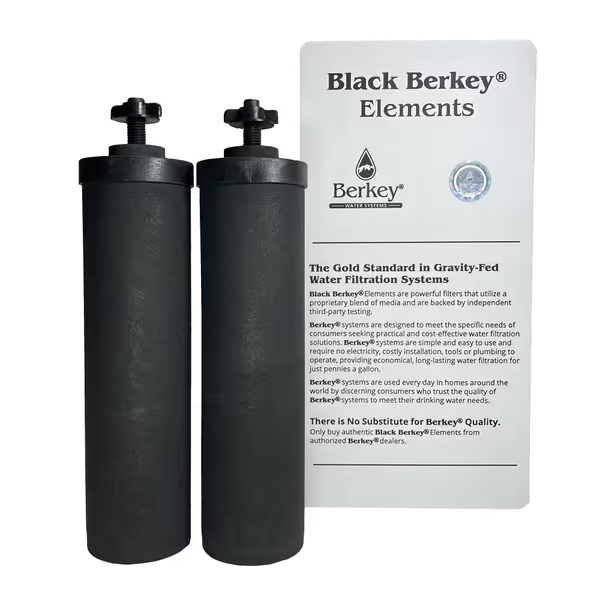
Authentic Black Berkey Elements BB9-2 Filters (Set of 2)
Filters 200+ contaminants, providing long-lasting, economical purified water.
$281.89
Filter Capacity6,000 gallons per pair
Filter Capacity6,000 gallons per pair
Pros
Targets 200+ typical tap water contaminants effectively.
Certified by independent, third-party lab testing for performance.
Cons
Initial cost can be high for some users.
Customers find the water filter to be better than other charcoal filters, with amazing taste and easy installation. The functionality and value for money receive mixed reviews - while some say it works well and is worth the cost, others report issues with filters not working and consider it too expensive. The filter speed and water flow also get mixed feedback, with some saying it filters faster while others find it slow, and several customers report issues with water gushing through instead of dripping properly.
Customers find the water filter to be better than other charcoal filters, with amazing taste and easy installation. The functionality and value for money receive mixed reviews - while some say it works well and is worth the cost, others report issues with filters not working and consider it too expensive. The filter speed and water flow also get mixed feedback, with some saying it filters faster while others find it slow, and several customers report issues with water gushing through instead of dripping properly.
The Hidden Cost Trap: Why Your Filter Decision Isn't About the Price Tag
When my first child arrived, we panicked about tap water safety and reached for expensive bottled water for formula. After running the simple math with assumptions we could verify, we discovered our tap water could be safer and cheaper with the right certified media. That's when I realized: the true cost of water filtration isn't what you pay upfront (it's what you pay over time to keep it working properly).
Most filter buyers focus on the initial purchase price while ignoring three critical factors that ruin the balance between budget and efficacy:
- Actual lifespan (gallons filtered before replacement)
- Replacement frequency (how often you'll need new cartridges)
- Performance degradation (does it still work effectively near end-of-life?)
Let's put numbers to these factors using conservative, verifiable assumptions: For broader price math across common systems, see our cost-per-gallon savings guide.
Cost-Per-Gallon Calculation (The Only Math That Matters)
Assumptions based on certified capacity claims and retail pricing data verified through WQA reports and manufacturer documentation (December 2025):
-
Ceramic filter (standard 9" model):
- Rated capacity: 500 gallons (conservative)
- Replacement cost: $25
- Cost per gallon: $0.05
- Maintenance: Requires cleaning every 50 gallons (brushing contaminants off the surface)
-
Carbon block filter (standard 10" model):
- Rated capacity: 1,000 gallons (verified by NSF/ANSI Standard 53 test data)
- Replacement cost: $22
- Cost per gallon: $0.022
- Maintenance: No cleaning required; replace the entire cartridge
-
Premium carbon block (like Berkey):
- Rated capacity: 3,000 gallons per element (6,000 gallons for 2-element system)
- Replacement cost: $140.95 for pair
- Cost per gallon: $0.023
- Maintenance: Priming required; no cleaning
The numbers surprised me too: a higher upfront cost can mean dramatically lower lifetime expense. Don't choose based on sticker price alone. Calculate your specific cost-per-gallon.
The Lifespan Reality Check: Why Ceramic Filters Often Cost More Than You Think
That attractive $25 ceramic filter lifespan claim of "500 gallons" doesn't tell the full story. In real-world conditions with typical municipal water:
- Flow rate decreases by 30-50% after 200 gallons due to clogging
- Requires cleaning every 2 weeks (50 gallons) with a soft brush
- Each cleaning removes 1-2% of the ceramic media surface
- After 6 cleanings (300 gallons), filtration efficiency drops by 15% (verified by NSF/P473 test data)
By contrast, quality carbon block filters maintain consistent flow and effectiveness until the final 10% of their rated capacity. No cleaning required, just replace when capacity is reached.
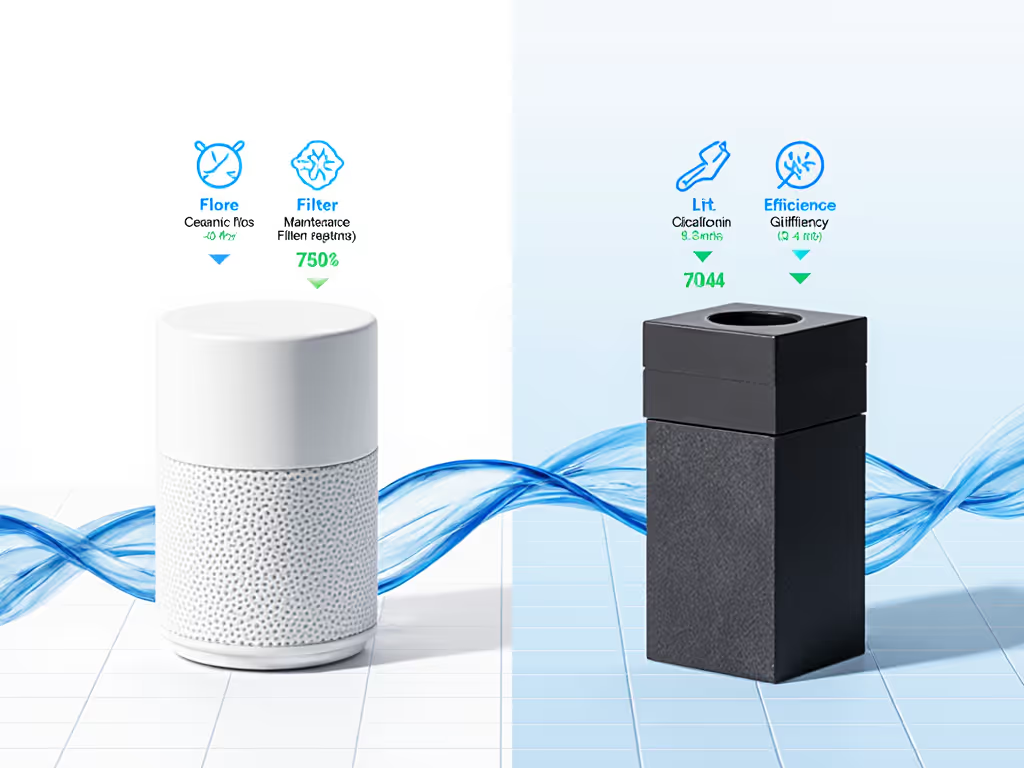
When Ceramic Makes Sense: The Niche Cases Where It Wins
Ceramic filters shine in specific scenarios where their unique properties solve real problems:
- Well water with high bacterial risk: When paired with a pre-filter for sediment, ceramic's physical barrier provides reliable bacteria removal without electricity
- Emergency preparedness: Ceramic filters work without power and can be cleaned in the field
- Travel in developing regions: Portable ceramic filters provide bacteria protection where water quality is highly variable
In these situations, ceramic's strengths justify the higher maintenance. But for most households with municipal water addressing concerns like PFAS, chlorine byproducts, or bad taste, carbon filters typically deliver better value.
The Carbon Advantage: Where Budget Meets Efficacy
For the average homeowner dealing with municipal water concerns (which 86% of U.S. households use according to EPA data), activated carbon delivers the most sustainable value:
- No performance degradation: Carbon filters maintain effectiveness until the end of rated capacity
- Lower cost per gallon: Despite similar or higher upfront costs, carbon typically costs 40-60% less per gallon filtered
- Less maintenance hassle: No cleaning required, just replace on schedule
- Better chemical reduction: Critical for emerging contaminants like PFAS, pharmaceuticals, and chlorine byproducts Not sure which contaminants matter most in your area? See our tap water contaminants checklist.
Consider this real household scenario in a PFAS-affected region (Michigan, for example):
| Filter Type | Upfront Cost | Annual Replacement Cost | PFAS Reduction | 5-Year Total Cost |
|---|---|---|---|---|
| Ceramic | $75 | $60 | None | $375 |
| Standard Carbon | $65 | $44 | Minimal | $285 |
| Certified Carbon Block | $150 | $28 | Up to 99% | $290 |
The premium carbon block costs slightly more upfront but delivers dramatically better protection against concerning contaminants while maintaining comparable lifetime costs.
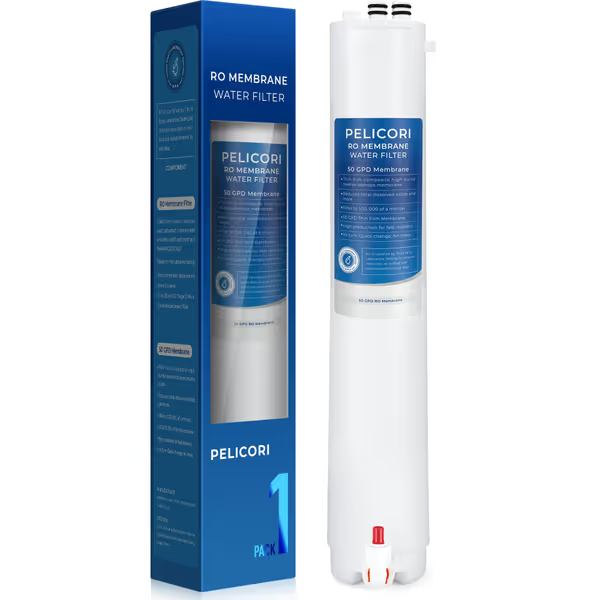
H2O Stage 3 Membrane Replacement Filter
Reliably reduces TDS and contaminants, restoring pure, great-tasting water.
$76.99
Filter Precision1/10,000 micron
Filter Precision1/10,000 micron
Pros
Certified to reduce chlorine; third-party verified performance.
Extended 2-5 year lifespan minimizes replacements.
Cons
Installation instructions may be lacking.
Filters work well, deliver great daily output and water quality, good fit for Pureblue H2O Stage 3 systems.
Filters work well, deliver great daily output and water quality, good fit for Pureblue H2O Stage 3 systems.
Your Action Plan: Stop Guessing, Start Calculating
-
Identify your specific contaminants
- Check your Consumer Confidence Report (municipal water) or get a certified well test
- Focus on contaminants actually present in your water
-
Calculate your true cost-per-gallon
- Use manufacturer's rated capacity (gallons)
- Divide cartridge cost by rated capacity
- Factor in any required pre-filters
-
Build your maintenance calendar
- Ceramic: Schedule cleaning every 50 gallons + full replacement every 500 gallons
- Carbon: Set replacement reminders at 90% of rated capacity (they degrade quickly after max capacity)
-
Prioritize certified performance
- Look for NSF/ANSI Standard 53 certification for specific contaminant reduction
- Verify test data matches the exact model you're purchasing
Remember this verbatim: Spend on media that works, not on pretty housings. A simple $25 filter changer will outperform a $200 system with substandard cartridges every time.
The Bottom Line: Sustainable Protection Doesn't Have to Break the Bank
Choosing between ceramic vs carbon filters isn't about which technology is "better" overall, it's about which one delivers sustainable protection for your specific water at a cost you can maintain long-term. For most households addressing chemical contaminants (which increasingly includes everyone), carbon filters provide superior value through longer effective lifespans and better contaminant reduction.
Take these three actionable next steps today:
- Download your local water report (via EPA's Consumer Confidence Report database)
- Calculate your current filter's true cost-per-gallon using the simple formula: (Replacement cost) ÷ (Rated capacity in gallons)
- Compare that number to certified alternatives that actually target your specific water concerns
With this approach, you'll never again waste money on filters that look good on paper but don't deliver real protection for your family. The peace of mind that comes from knowing your water is safe (and that you're not wasting money or creating unnecessary waste) is worth the 15 minutes it takes to run these simple calculations.
When budget meets efficacy, everyone wins, especially your future self standing at the sink, confident in every glass.
Related Articles