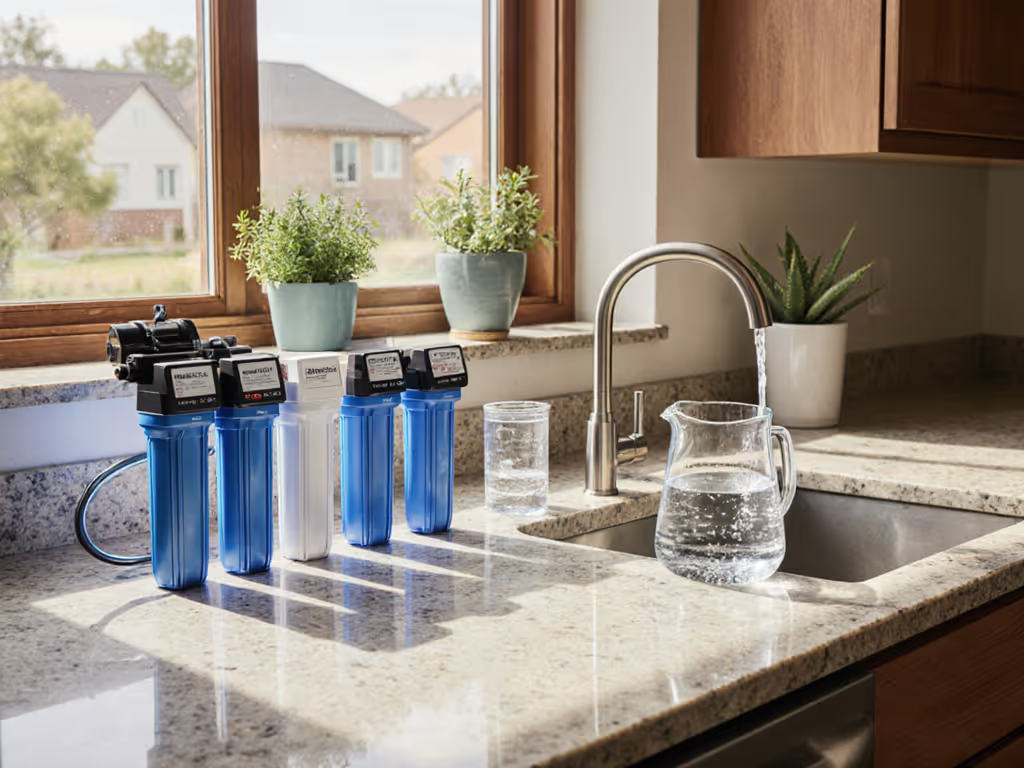
2025-11-11 Homeowner Checklist: 9 Certified, Low-Waste Water Filters That Save Money and Reduce Plastic Waste
By Nkechi Okafor • 11th Nov
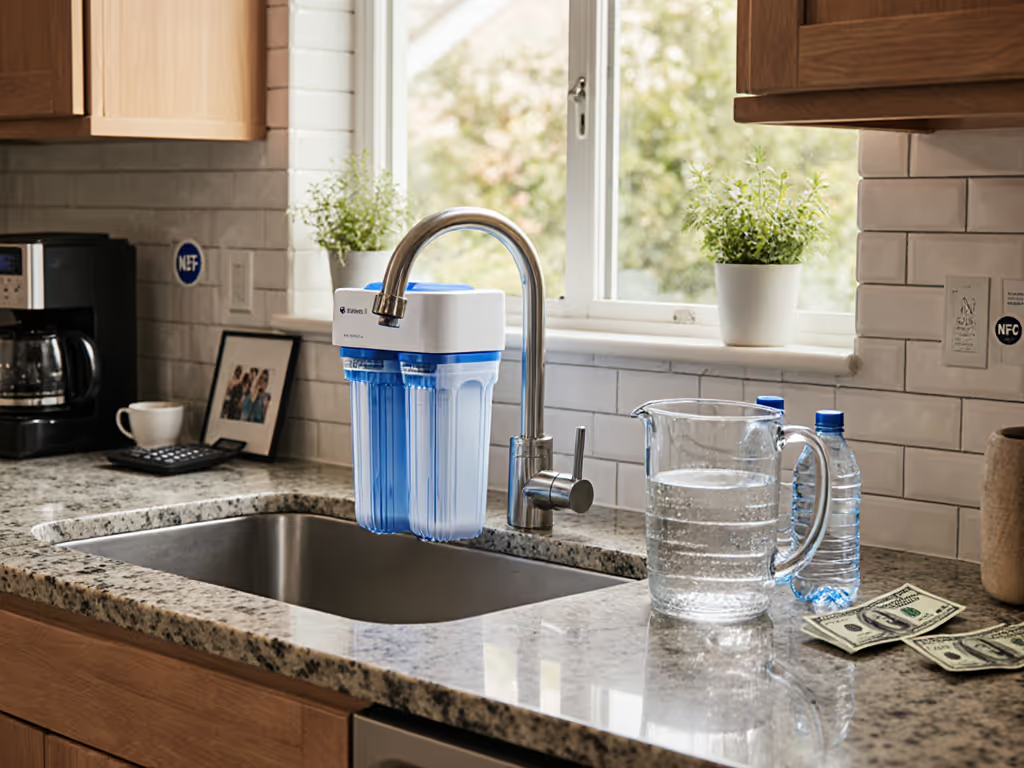
You are here because you want safer water, less plastic, and a smarter budget, and this blog post for 2025-11-11 was written to make those goals easy to reach. The typical household can slash bottled water spending and landfill waste with a single, well-chosen filter, yet the marketplace is crowded with vague claims and confusing specs. Certifications matter, filter capacity matters, and so do maintenance and the waste footprint over time. In the guide below, you will find plain-language explanations of certifications, a homeowner-ready checklist of nine certified, low-waste options, and practical comparisons of cost per gallon, performance, and plastic savings so you can make a confident, evidence-based choice.
Why This blog post for 2025-11-11 Matters: The Cost and Plastic Waste Problem
Americans buy billions of single-use bottles each year, and recycling rates for plastic beverage containers in the United States hover around one in four, which means most bottles still become trash or microplastics in the environment. Households that rely on bottled water often spend 200 to 600 dollars per person annually, a number that quickly outpaces a high-quality home filtration system after only a few months. For a side-by-side breakdown of costs and environmental impact, see Bottled Water vs Filtered. Meanwhile, concerns about chlorine byproducts, lead from aging plumbing, and persistent chemicals like PFAS [per- and polyfluoroalkyl substances] have pushed more families to seek reliable, at-home filtration. Where available, prefer products with third‑party testing and certification; Clean Water, Less Waste coordinates and references third‑party lab results when available and explains the test conditions. With standards from NSF [National Sanitation Foundation]/ANSI [American National Standards Institute] verifying claims and cost-per-gallon math tilting in favor of filtration, you can protect your wallet and the planet at the same time. Rather than defaulting to cases of plastic bottles or rolling the dice on unverified gadgets, a certified system with long-life cartridges, recyclable components, or refillable media can deliver great taste, fewer contaminants, and significantly less waste with minimal day-to-day effort.
Certification 101: NSF [National Sanitation Foundation]/ANSI [American National Standards Institute] Standards Demystified
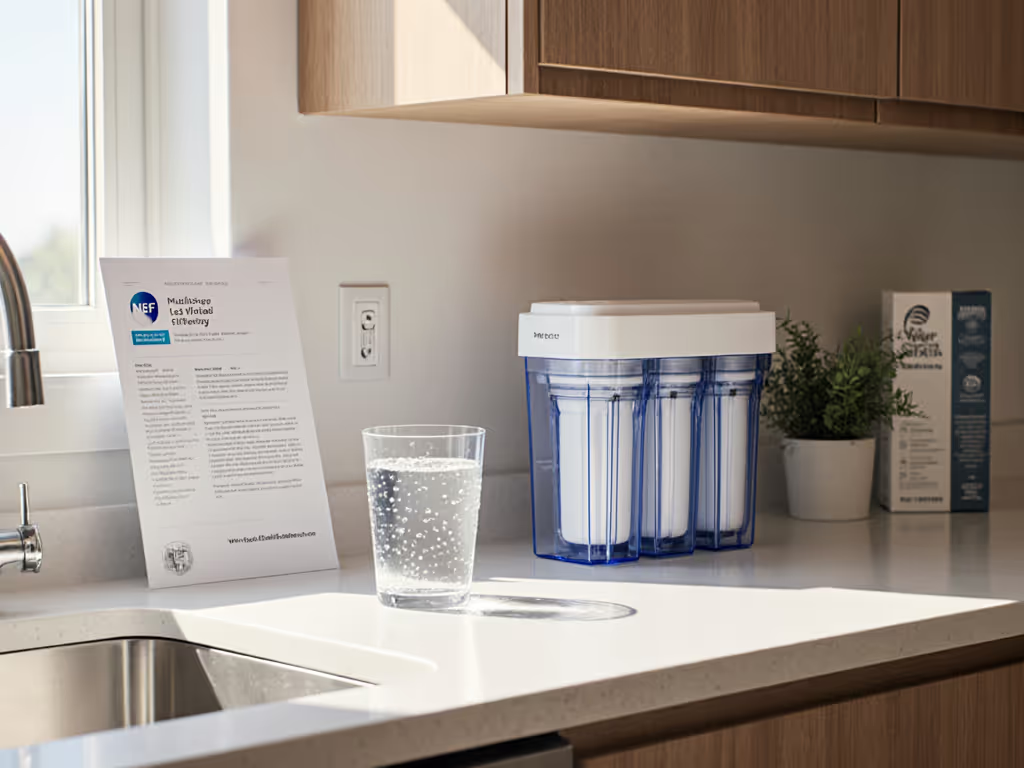
When a product lists certification, it means an independent lab tested it against a specific standard and verified its claims under controlled conditions, which is your best defense against marketing hype. NSF [National Sanitation Foundation]/ANSI [American National Standards Institute] standards are the most recognized benchmarks in North America and cover both aesthetic improvements and health-related contaminant reduction, as well as system performance. For example, NSF [National Sanitation Foundation]/ANSI [American National Standards Institute] 42 validates reduction of chlorine taste and odor and particulate matter, while NSF [National Sanitation Foundation]/ANSI [American National Standards Institute] 53 addresses health contaminants like lead, cysts, and some heavy metals, and NSF [National Sanitation Foundation]/ANSI [American National Standards Institute] 58 applies to RO [reverse osmosis] systems. If you're unsure which certification matters for your tap, start with our NSF 42 vs 53 guide. There is also NSF [National Sanitation Foundation]/ANSI [American National Standards Institute] 401 for so-called emerging contaminants such as pharmaceuticals and herbicides, P231 for microbiological purification, and P473 focused on PFOA [perfluorooctanoic acid] and PFOS [perfluorooctane sulfonate] in the PFAS [per- and polyfluoroalkyl substances] family. Beyond the seal, review the performance data sheet to confirm the exact contaminants claimed and the conditions of the test including influent levels, flow rate, and capacity.
| NSF [National Sanitation Foundation]/ANSI [American National Standards Institute] Standard | What It Verifies | Typical Contaminants Covered | Common Use Cases |
|---|---|---|---|
| 42 | Aesthetic effects | Chlorine taste and odor, particulate reduction | Pitchers, faucet-mounts, under-sink carbon blocks, refrigerator filters |
| 53 | Health effects | Lead, cysts, some heavy metals, volatile organic compounds [VOC] | Under-sink and faucet-mount filters with high-performance carbon blocks |
| 58 | RO [reverse osmosis] system performance | TDS [total dissolved solids], arsenic under certain conditions, some heavy metals | Under-sink RO [reverse osmosis] systems with storage tank or tankless designs |
| 401 | Emerging compounds | Pharmaceuticals, herbicides, pesticides, endocrine disruptors | Premium pitchers and under-sink systems |
| P231 | Microbiological purifier performance | Bacteria and viruses under specified challenge tests | Well water treatment and boil-advisory preparedness |
| P473 | PFAS [per- and polyfluoroalkyl substances] reduction | PFOA [perfluorooctanoic acid] and PFOS [perfluorooctane sulfonate] | Specialized carbon and ion-exchange systems |
- Always read the performance data sheet rather than relying on packaging icons or partial claims.
- Match standards to your contaminants; for instance, choose NSF [National Sanitation Foundation]/ANSI [American National Standards Institute] 53 for lead and NSF [National Sanitation Foundation]/ANSI [American National Standards Institute] P231 for microbiological risks.
- Confirm capacity, flow rate in GPM [gallons per minute], and replacement schedule before buying.
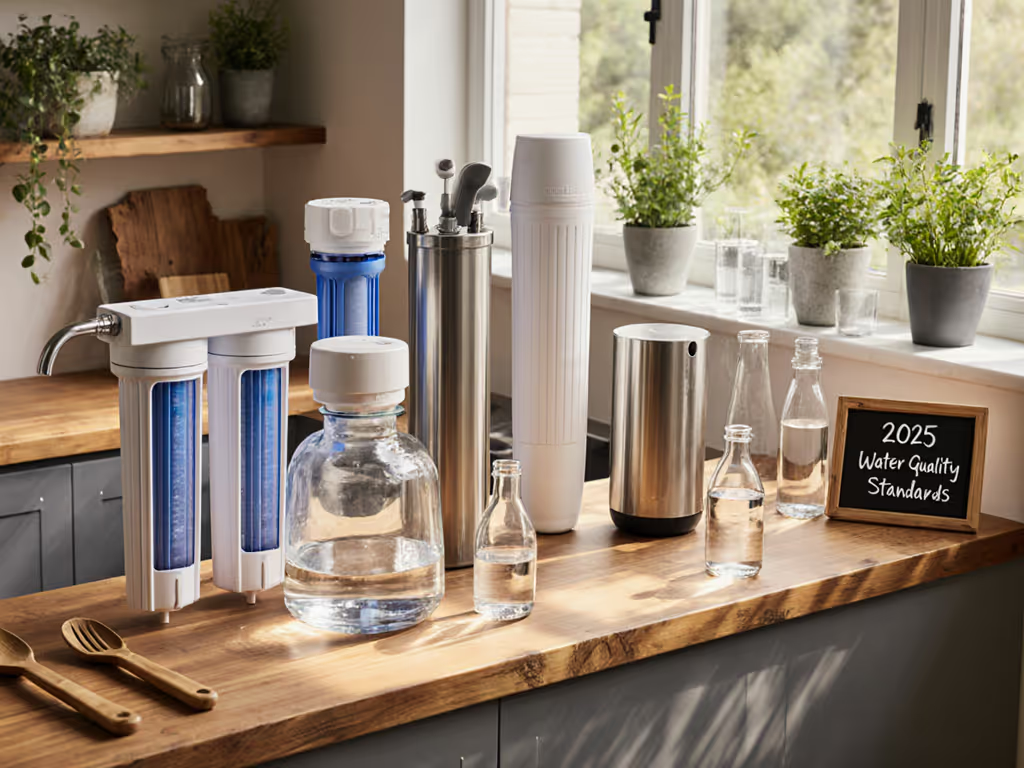
The Homeowner Checklist: 9 Certified, Low-Waste Filters Worth Considering
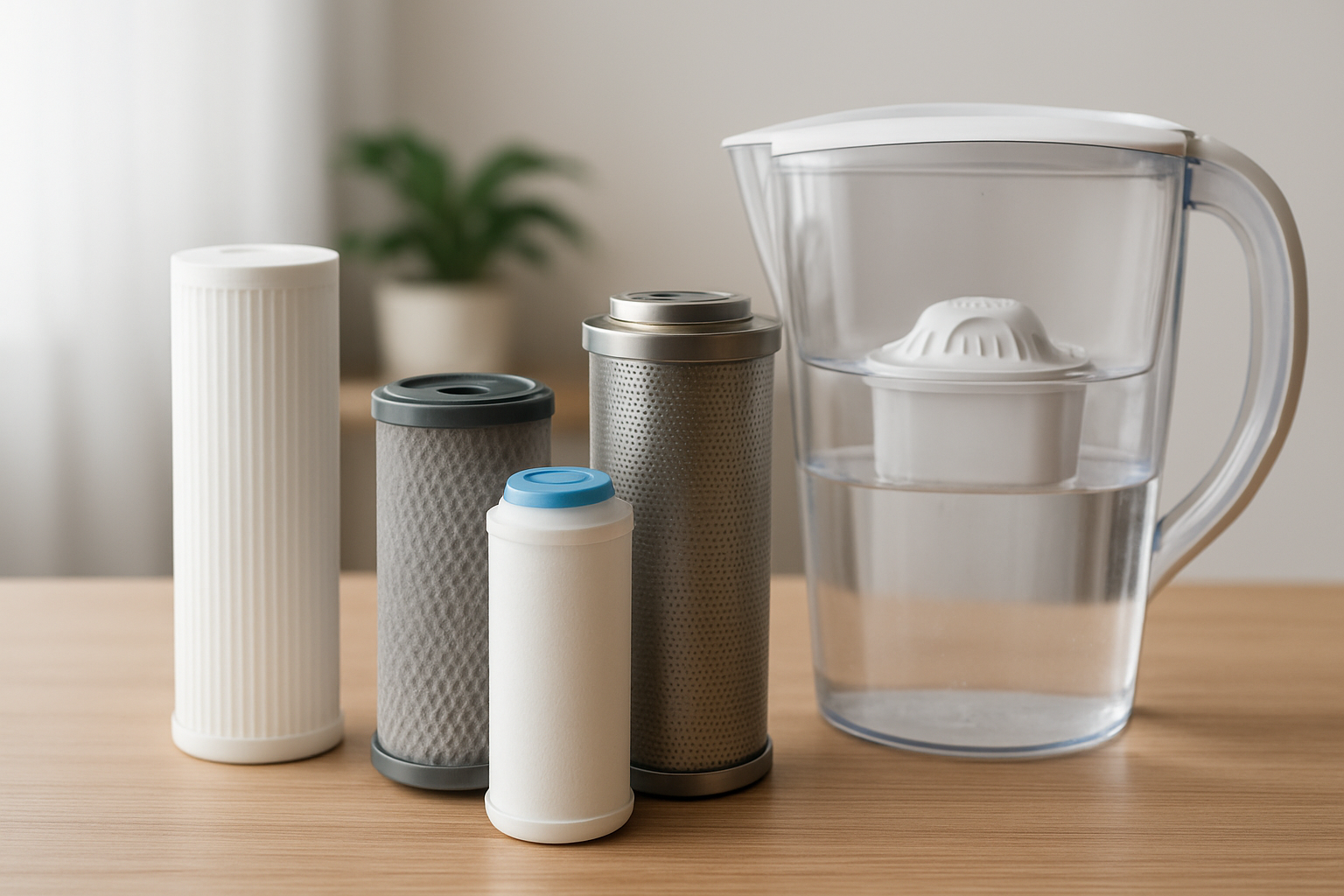
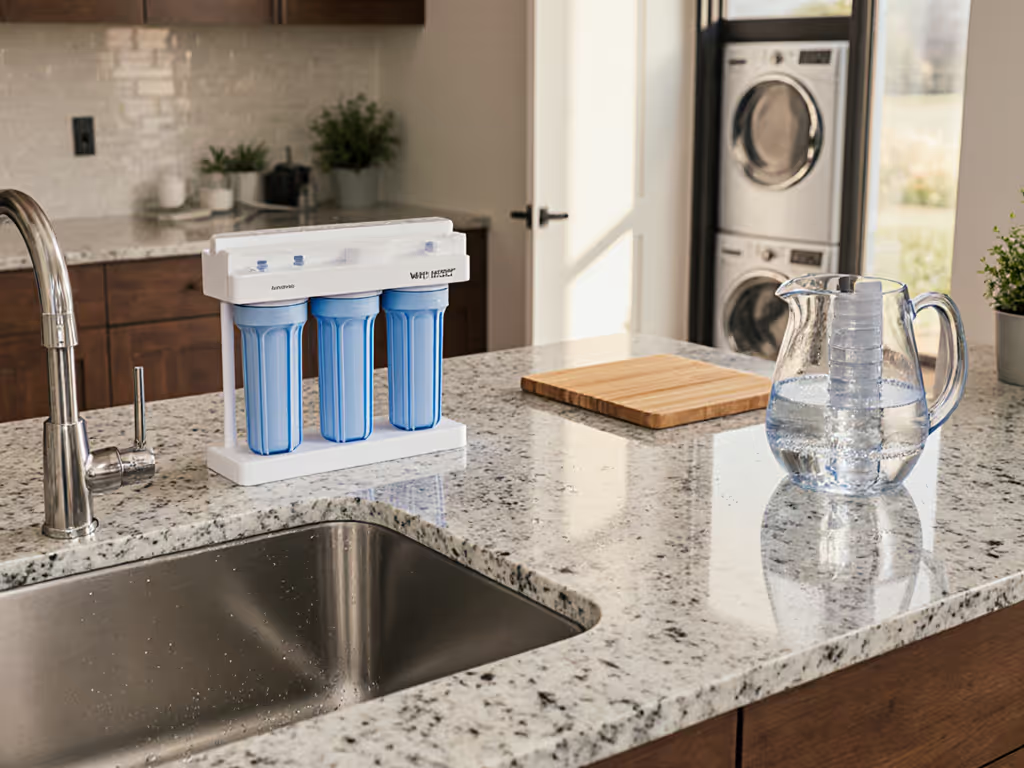
Choosing a filter is easier when you start with your water source, your target contaminants, and how much waste and maintenance you can accept over the next one to five years. A low-waste solution usually means long-life cartridges, refillable or recyclable elements, and durable housings that stay in service while only the core media changes. For families tackling both taste and health concerns, under-sink carbon blocks certified to NSF [National Sanitation Foundation]/ANSI [American National Standards Institute] 42 and 53 often strike the best balance between performance, cost per gallon, and plastic reduction, while homes with very high dissolved solids or specific inorganic contaminants may benefit from an efficient RO [reverse osmosis] system certified to NSF [National Sanitation Foundation]/ANSI [American National Standards Institute] 58. If you are off-grid, on a private well, or preparing for boil advisories, look for microbiological purifiers that meet NSF [National Sanitation Foundation]/ANSI [American National Standards Institute] P231, which validate performance against bacteria and viruses under rigorous test conditions. Use this checklist to shortlist a few candidates and then compare them on verified reduction claims, total capacity, and lifetime waste footprint.
- Under-sink carbon block, refillable cartridge
- Best for: Chlorine taste and odor, lead, and many VOC [volatile organic compounds].
- Look for: NSF [National Sanitation Foundation]/ANSI [American National Standards Institute] 42 and 53; long-life blocks 600 to 1,000 gallons per cartridge.
- Low-waste angle: Refillable or recyclable cartridges and durable metal or reinforced housings.
- Under-sink RO [reverse osmosis] with high recovery
- Best for: TDS [total dissolved solids] reduction and certain inorganic contaminants like arsenic.
- Look for: NSF [National Sanitation Foundation]/ANSI [American National Standards Institute] 58; recovery ratio near 1:1 to 2:1 rather than older 4:1 designs.
- Low-waste angle: Recyclable membranes and auto-flush to extend service life.
- Countertop gravity stainless system with certified elements
- Best for: Taste, sediments, and select heavy metals with slow-drip convenience.
- Look for: Element certifications to NSF [National Sanitation Foundation]/ANSI [American National Standards Institute] 42/53 and, for PFAS [per- and polyfluoroalkyl substances], P473.
- Low-waste angle: Stainless steel housing lasts for years; elements last thousands of gallons.
- Faucet-mount carbon block with flip diverter
- Best for: Renters and small kitchens needing easy install and removal.
- Look for: NSF [National Sanitation Foundation]/ANSI [American National Standards Institute] 42 and 53 on lead and cysts; adequate flow in GPM [gallons per minute].
- Low-waste angle: Compact cartridges reduce packaging and plastic versus bottled water.
- Certified pitcher with long-life cartridge
- Best for: Aesthetic improvements and some health contaminants at low upfront cost.
- Look for: NSF [National Sanitation Foundation]/ANSI [American National Standards Institute] 42/53/401 claims spelled out in the performance data sheet.
- Low-waste angle: Extended-life cartridges and take-back recycling programs.
- Inline refrigerator and ice-maker filter, reusable shell
- Best for: Point-of-use taste and lead reduction feeding fridge dispensers and ice.
- Look for: NSF [National Sanitation Foundation]/ANSI [American National Standards Institute] 42 and 53 certifications on the replacement core.
- Low-waste angle: Reusable outer shell reduces plastic compared with full-cartridge swaps.
- Bottleless water cooler (point-of-use)
- Best for: Offices and busy homes replacing delivered 5-gallon jugs and single-use bottles.
- Look for: Internal filters with NSF [National Sanitation Foundation]/ANSI [American National Standards Institute] 42/53 and, if applicable, 58 for RO [reverse osmosis].
- Low-waste angle: Eliminates delivered plastic jugs and truck miles; long-life internal cartridges.
- Whole-house catalytic carbon plus sediment stage
- Best for: Chlorine or chloramine control at every tap and appliance protection from grit.
- Look for: Components and media tested to NSF [National Sanitation Foundation]/ANSI [American National Standards Institute] 42; confirm flow rate in GPM [gallons per minute] suits your home.
- Low-waste angle: Media lasts years; minimal cartridge changes compared with many small filters.
- Microbiological purifier or ultrafiltration for well water
- Best for: Private wells or boil advisories where bacteria and viruses are concerns.
- Look for: NSF [National Sanitation Foundation]/ANSI [American National Standards Institute] P231 validation and maintenance steps that match your water quality.
- Low-waste angle: Long-life membranes with periodic sanitization instead of frequent disposables.
Compare Before You Buy: Cost, Capacity, and Waste Footprint
Cost per gallon and waste footprint are where certified filters often beat bottled water without sacrificing performance or convenience. Use our cost per gallon guide to estimate your true long-term savings. A typical under-sink carbon block runs about 5 to 12 cents per gallon when you account for the initial system plus replacement cartridges, while efficient RO [reverse osmosis] systems tend to land near 8 to 20 cents per gallon depending on water conditions, recovery ratio, and filter lifespans. By contrast, single-serve bottled water often costs 64 cents to more than 1 dollar per gallon and creates large amounts of plastic packaging, transport emissions, and storage hassles. The table below shows ballpark figures for nine low-waste categories to help you narrow your options, but remember that actual values depend on your incoming water quality, household size, and how diligently you swap filters at the rated capacity instead of letting performance drift.
| Filter Type | Verified Standards to Look For | Typical Upfront Cost (USD) | Typical Cost per Gallon (USD) | Typical Capacity | Waste Footprint |
|---|---|---|---|---|---|
| Under-sink carbon block | NSF [National Sanitation Foundation]/ANSI [American National Standards Institute] 42, 53 | 80 to 200 | 0.05 to 0.12 | 600 to 1,000 gallons per cartridge | Low, single cartridge every 6 to 12 months |
| Under-sink RO [reverse osmosis] | NSF [National Sanitation Foundation]/ANSI [American National Standards Institute] 58 | 200 to 600 | 0.08 to 0.20 | 50 to 75 GPD [gallons per day]; pre/post filters 6 to 12 months | Moderate; recyclable membranes reduce impact |
| Countertop gravity system | NSF [National Sanitation Foundation]/ANSI [American National Standards Institute] 42, 53, P473 | 100 to 300 | 0.05 to 0.10 | 2,000 to 6,000 gallons per set of elements | Low; stainless housing and long-life elements |
| Faucet-mount carbon | NSF [National Sanitation Foundation]/ANSI [American National Standards Institute] 42, 53 | 25 to 50 | 0.10 to 0.20 | 100 to 200 gallons per cartridge | Low; small cartridges |
| Certified pitcher | NSF [National Sanitation Foundation]/ANSI [American National Standards Institute] 42, 53, 401 | 30 to 80 | 0.10 to 0.25 | 40 to 120 gallons per cartridge | Low; small cartridges, some take-back programs |
| Inline fridge/ice filter | NSF [National Sanitation Foundation]/ANSI [American National Standards Institute] 42, 53 | 20 to 60 | 0.06 to 0.15 | 200 to 400 gallons per core | Very low with reusable shell |
| Bottleless water cooler | NSF [National Sanitation Foundation]/ANSI [American National Standards Institute] 42, 53, 58 (if RO [reverse osmosis]) | 250 to 800 | 0.07 to 0.18 | Depends on internal filters; often 500 to 1,500 gallons | Low; no delivered jugs |
| Whole-house carbon + sediment | NSF [National Sanitation Foundation]/ANSI [American National Standards Institute] 42 (components/media) | 500 to 1,500 | 0.02 to 0.05 | 300,000 to 1,000,000 gallons media life | Very low; infrequent media changes |
| Microbiological purifier/ultrafiltration | NSF [National Sanitation Foundation]/ANSI [American National Standards Institute] P231 | 150 to 500 | 0.06 to 0.15 | Varies; membrane backwash extends life | Low; long-life membranes |
Match Filter to Water Source: City, Well, and Multi-Unit Homes
Your water source determines your must-have features and certifications, so test first and shop second to avoid over- or under-buying. If you are on city water, start with your annual water quality report and focus on chlorine or chloramine control, lead from premise plumbing, and emerging contaminants; NSF [National Sanitation Foundation]/ANSI [American National Standards Institute] 42 and 53 address many of these concerns, while 401 covers select pharmaceuticals and herbicides. Use our CCR interpretation guide to decode your city's report. For private wells, test for coliform bacteria, nitrate and nitrite, arsenic, iron, manganese, hardness, and PFAS [per- and polyfluoroalkyl substances]; if microbes are a risk, a system validated to NSF [National Sanitation Foundation]/ANSI [American National Standards Institute] P231 is a smart addition. For iron-heavy well water, see our verified iron removal filters comparison. Renters and multi-unit residents often need compact, non-permanent solutions like faucet-mounts, countertop systems, or under-sink units that can be removed at move-out, paired with certified fridge filters for convenience and a whole-house option only when you control the main line.
- City water essentials:
- Prioritize NSF [National Sanitation Foundation]/ANSI [American National Standards Institute] 42 for taste and odor plus 53 for lead and cysts; add 401 if pharmaceuticals matter.
- Confirm flow in GPM [gallons per minute] to avoid pressure drops at peak demand.
- If chloramine is present, seek catalytic carbon or systems specifically rated for chloramine reduction.
- Well water essentials:
- Run a comprehensive lab test first; include PFAS [per- and polyfluoroalkyl substances] if near airports, landfills, or industrial sites.
- If microbes show up, look for NSF [National Sanitation Foundation]/ANSI [American National Standards Institute] P231 or add UV [ultraviolet] disinfection with proper prefiltration.
- Address iron and manganese with pre-treatment to protect downstream filters.
- Renters and multi-unit homes:
- Choose faucet-mount, countertop, or portable under-sink systems that do not require drilling.
- Use certified inline fridge filters to improve ice and dispenser water.
- Keep documentation for easy move-out and redeployment.
How Clean Water, Less Waste Makes Choosing Simple
Consumers struggle to identify and choose reliable water filters that effectively address their specific contaminants while also considering total cost and waste impact, and that is exactly the problem Clean Water, Less Waste was built to solve. By publishing verified, certification-based performance data and offering personalized guidance, the website enables users to compare filters on factors like verified contaminant reduction, capacity, maintenance, and long-term waste footprint, turning a confusing process into a confident choice. You get clear explanations of NSF [National Sanitation Foundation]/ANSI [American National Standards Institute] standards such as 42 vs 53 vs 58, deeper dives into 401, P231, and P473, and side-by-side comparison tables that translate lab claims into everyday implications like taste, safety, flow, and cost per gallon. We purchase retail units for hands-on testing, publish measurable test data (flow/pressure, sensory notes) when available, and include third‑party lab results and NSF/ANSI listing IDs where present. We disclose affiliate links on product pages and do not accept paid placements for ranking or inclusion. We do not operate a laboratory, but we will coordinate and interpret third‑party lab work when appropriate.
- Personalized filtration recommendations after you share your city report or well test results - email your CCR or lab panel using the contact form on our Contact page for tailored suggestions and help interpreting lab tests.
- Product reviews with buying links (affiliate links) organized by NSF [National Sanitation Foundation]/ANSI [American National Standards Institute] standards and real-world capacity.
- Cost and waste footprint calculators to estimate dollars and plastic saved over one to five years.
- Guides for various water sources, including well water, with step-by-step checklists.
- Expert best practices for sizing, installation, and maintenance schedules.
Consider a quick real-world example: a family of four replaced 1,200 one-liter bottles per year by installing an under-sink carbon block certified to NSF [National Sanitation Foundation]/ANSI [American National Standards Institute] 42 and 53, dropping their drinking water cost to about 8 cents per gallon while reducing lead and improving taste. When they later moved to a home on a private well, Clean Water, Less Waste helped them add a bacteria-rated purifier meeting NSF [National Sanitation Foundation]/ANSI [American National Standards Institute] P231 and a sediment prefilter, preserving flow and extending the life of the downstream cartridges. With a simple maintenance log and timely replacement reminders, they sustained performance and kept plastic waste near zero without sacrificing convenience or their budget.
Pro Tips for Long Life, Low Waste, and Peak Performance
Small installation and maintenance choices can double filter life, improve taste, and cut waste. Use a dedicated faucet for under-sink systems so you do not waste precious capacity on dish rinsing, and measure your actual flow in GPM [gallons per minute] to ensure you do not exceed the filter’s rated throughput, which can reduce contact time and performance. Keep a one-page maintenance plan that lists replacement intervals, capacity counters, and part numbers, and schedule filter swaps by capacity rather than simply by months, because households vary widely in water use and contaminants. Finally, store spare cartridges in a cool, dry, dark place and flush replacements per the performance data sheet, and if you choose RO [reverse osmosis], verify the recovery ratio and consider a permeate pump or recirculation feature to minimize wastewater without compromising contaminant reduction.
Quick checklist:
- Test first, buy second; confirm target contaminants and flow needs.
- Match certifications to risks: 42/53 for taste and health; 58 for RO [reverse osmosis]; 401 for emerging compounds; P231 for microbes; P473 for PFAS [per- and polyfluoroalkyl substances].
- Estimate cost per gallon and total plastic avoided over one to five years.
- Choose durable housings with recyclable or refillable cartridges.
- Log replacements by capacity and keep receipts for warranty support.
Bottom line: the right certified filter, sized to your water and your home, will save money, cut plastic, and turn uncertain tap water into a reliable daily habit that you can trust.
Note: For regulated contaminants, always consult your local utility and the EPA [United States Environmental Protection Agency] guidance, and remember that no single system removes all contaminants. Combining properly certified stages tailored to your water source delivers the best results with the least waste.
Closing Thoughts
Certified, low-waste filtration swaps uncertainty and plastic clutter for verified performance and predictable savings.
In the next 12 months, a well-matched system can pay for itself while shrinking your family’s footprint and freeing you from weekly bottle runs. Which simple step from this guide will you act on today to turn insight into daily peace of mind with your water? And which pick from this blog post for 2025-11-11 now feels like the best fit for your home?
Upgrade Your Blog Post For 2025-11-11 With Clean Water, Less Waste
Explore guides for city and well water with verified, certification-based insights to compare reduction, capacity, maintenance, and long-term waste from Clean Water, Less Waste. Our product pages include buying links (affiliate links) and we disclose those relationships; for personalized recommendations, email your CCR or well test results via the contact form on our Contact page.
Related Articles