11 Certified Low-Waste Home Water Filter Types That Cut Costs: Updated November 10, 2025
By Samira Khan • 10th Nov
11 Certified Low-Waste Home Water Filters That Cut Costs: Updated November 10, 2025
You want cleaner water, fewer cartridges in the trash, and a bill that shrinks, not swells, and this blog post for 2025-11-10 shows you how to get there with confidence. Instead of wading through marketing jargon, you will learn which certifications matter, how to calculate true cost per gallon, and where waste really hides in the lifecycle of a filter. If certifications feel confusing, start with our NSF 42 vs 53 guide to understand which claims actually matter. Along the way, you will see which low-waste systems work best for city apartments, suburban homes, and well water, plus how to match a filter to your specific contaminants. Most importantly, you will discover how Clean Water, Less Waste interprets third-party certifications and publishes audit-style reviews that turn confusing specs into clear decisions.
Why Certified, Low-Waste Filtration Matters in 2025
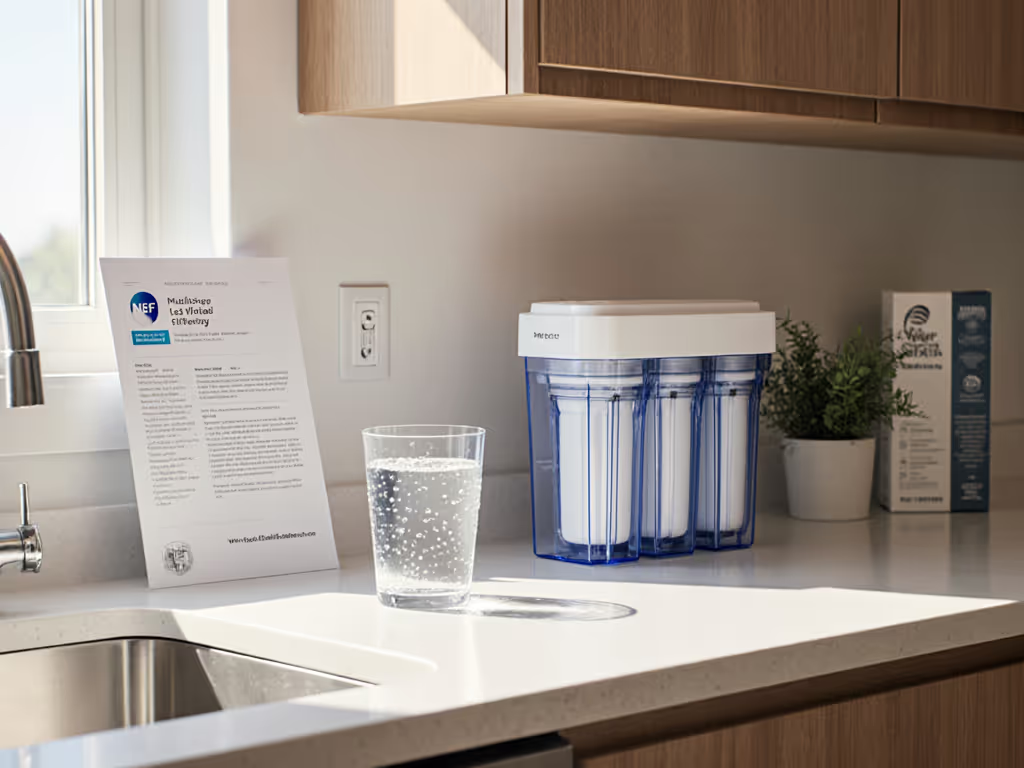
Certification is not window dressing; it is third-party proof that a filter does what it claims, under defined testing protocols and flow rates. The most common marks you will see are NSF/ANSI [National Sanitation Foundation/American National Standards Institute] Standard 42 for aesthetic chlorine and taste reduction, NSF/ANSI [National Sanitation Foundation/American National Standards Institute] Standard 53 for health contaminants like lead and cysts, and NSF/ANSI [National Sanitation Foundation/American National Standards Institute] Standard 401 for select pharmaceuticals and micro-contaminants. For systems that remove dissolved salts and nitrates, NSF/ANSI [National Sanitation Foundation/American National Standards Institute] Standard 58 governs reverse osmosis, while NSF/ANSI [National Sanitation Foundation/American National Standards Institute] Standard 55 covers ultraviolet disinfection against bacteria and viruses. For RO-specific details (and how NSF 401 covers emerging contaminants), see Decoding NSF 58. When you see a clear standard, you can compare apples to apples rather than rely on vague marketing phrases like “lab tested” or “up to”; check for third-party certifications and test reports. Clean Water, Less Waste coordinates third-party lab work and interprets results for readers, but does not operate its own laboratory.
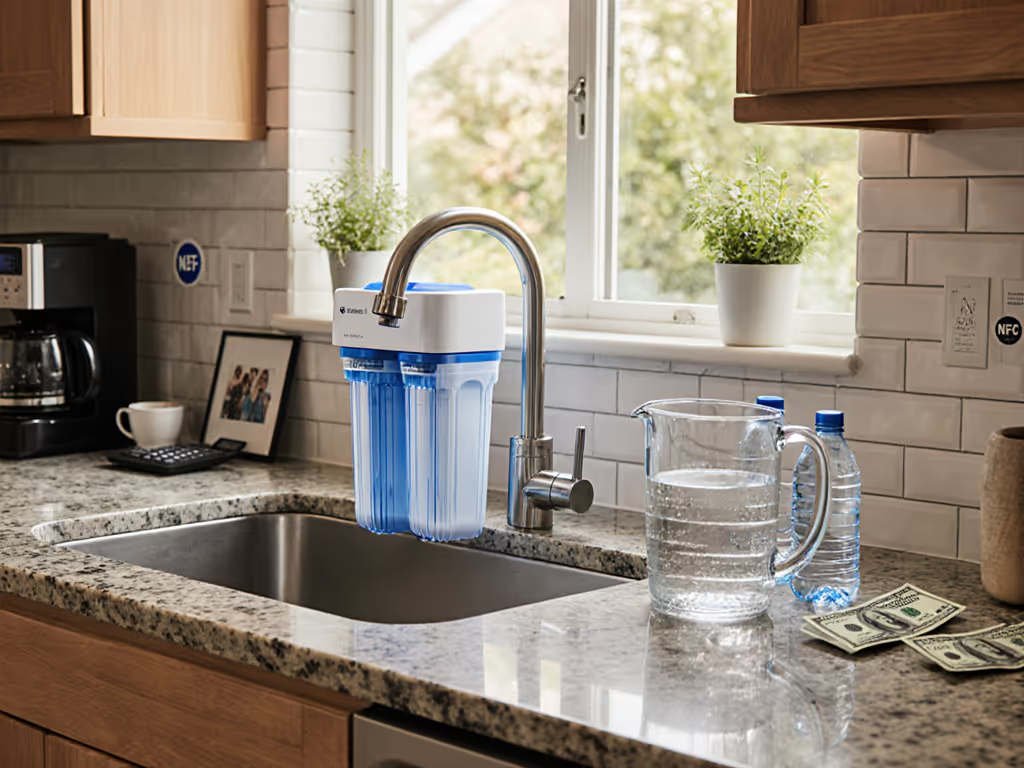
Waste is not only the cartridge you toss; it is also hidden in reject water, excess plastic, short lifespans, and shipping-heavy replacements. Industry analyses and United States Environmental Protection Agency [United States Environmental Protection Agency] guidance estimate that shifting one household from bottled water to an efficient, certified point-of-use filter can avoid hundreds of single-use bottles per year, while cutting annual costs by hundreds of dollars. The biggest offenders are high-bleed reverse osmosis units without efficiency features and pitcher filters with tiny capacities that encourage frequent replacements. Fortunately, smart design choices like long-life carbon blocks, recyclable cartridges, and high-recovery reverse osmosis dramatically reduce both trash and total cost of ownership, without compromising safety.
11 Certified Low-Waste Home Water Filters That Cut Costs
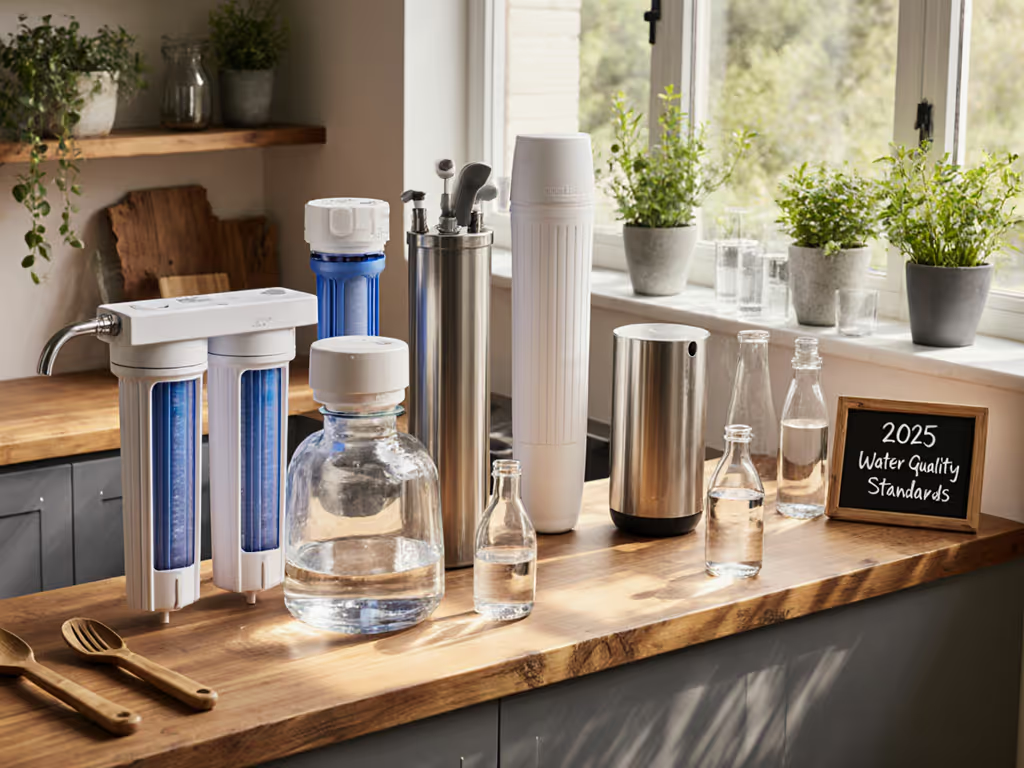
The best low-waste filter is the one that targets your actual contaminants, lasts a long time, and minimizes reject water or disposable media. Below you will find eleven certified categories to consider in 2025, each with a low-waste angle and the certification numbers to look for on packaging and product pages. Where relevant, our editorial content points to complementary prefilters or add-ons and links to manufacturers/retailers that can extend lifespan and reduce landfill impact; we do not supply parts or process sales. Use this section to shortlist by type first, then verify specific model certifications before you buy.
Watch This Helpful Video
To help you better understand blog post for 2025-11-10, we've included this informative video from 김학중 목사_꿈의교회 미디어교회. It provides valuable insights and visual demonstrations that complement the written content.
- Under-Sink Solid Carbon Block - Low waste thanks to dense media and long service life; look for NSF/ANSI [National Sanitation Foundation/American National Standards Institute] 42 and 53. Great for chlorine, lead, and many volatile organic compounds [volatile organic compounds], with no reject water.
- Whole-House Sediment + Carbon Block Combo - Certified under NSF/ANSI [National Sanitation Foundation/American National Standards Institute] 42 for chlorine and taste; excellent for protecting plumbing and downstream filters, minimizing cartridge changes by trapping grit early.
- Faucet-Mounted Carbon Filter - Space-saving and easy to install; look for NSF/ANSI [National Sanitation Foundation/American National Standards Institute] 42 and 53 claims. Choose models with longer capacities to cut plastic and cost per gallon.
- High-Recovery RO [reverse osmosis] with Permeate Pump - Verified under NSF/ANSI [National Sanitation Foundation/American National Standards Institute] 58; high-recovery designs can reduce reject water by half or more while removing dissolved salts and nitrates.
- Countertop Gravity-Fed Carbon Block - No electricity or plumbing; look for NSF/ANSI [National Sanitation Foundation/American National Standards Institute] 42 and 53, and optionally NSF/ANSI [National Sanitation Foundation/American National Standards Institute] 401. Refillable designs keep plastic waste low.
- Inline Refrigerator Filter - Verify NSF/ANSI [National Sanitation Foundation/American National Standards Institute] 42 and, when available, 53. Choose external inline cartridges with higher capacities to reduce frequent OEM plastic replacements.
- Shower Dechlorination Filter - For skin and hair comfort, seek NSF/ANSI [National Sanitation Foundation/American National Standards Institute] 177 for shower performance and NSF/ANSI [National Sanitation Foundation/American National Standards Institute] 42 for chlorine reduction.
- UV [ultraviolet] Disinfection With Certified Prefilter - Pair an NSF/ANSI [National Sanitation Foundation/American National Standards Institute] 55 Class B or Class A ultraviolet reactor with an NSF/ANSI [National Sanitation Foundation/American National Standards Institute] 42 sediment filter to control turbidity and extend lamp life on wells.
- Pitcher With Long-Life Cartridge - Look for NSF/ANSI [National Sanitation Foundation/American National Standards Institute] 42, 53, and 401 claims; choose extended-capacity cartridges and recycling programs to cap plastic waste.
- Whole-House Iron/Manganese Media for Wells - For ferrous iron and manganese, look for material safety under NSF/ANSI [National Sanitation Foundation/American National Standards Institute] 61 and performance data from reputable labs; backwashing media lasts years, minimizing disposables.
- Travel/At-Home Bottle With Certified Filter - For on-the-go or backup, seek NSF/ANSI [National Sanitation Foundation/American National Standards Institute] 42 or 53, and for microbiological claims look for NSF P231 [National Sanitation Foundation Protocol 231] certification.
Quick Comparison of 11 Low-Waste Filter Types
| Filter Type | Core Certifications | Waste Profile | Best For | Typical Cost per Gallon | Notes on Footprint |
|---|---|---|---|---|---|
| Under-Sink Carbon Block | NSF/ANSI [National Sanitation Foundation/American National Standards Institute] 42, 53 | Low cartridge turnover | Chlorine, lead, volatile organic compounds [volatile organic compounds] | 0.05–0.15 USD | No reject water; long-life cartridges reduce plastic |
| Whole-House Sediment + Carbon | NSF/ANSI [National Sanitation Foundation/American National Standards Institute] 42 | Moderate, but infrequent | Scale, chlorine, taste, prefiltration | 0.02–0.08 USD | Protects fixtures and downstream filters |
| Faucet-Mounted | NSF/ANSI [National Sanitation Foundation/American National Standards Institute] 42, 53 | Moderate cartridge count | Rentals and small kitchens | 0.10–0.25 USD | Choose extended-capacity models |
| High-Recovery RO [reverse osmosis] | NSF/ANSI [National Sanitation Foundation/American National Standards Institute] 58 | Lower reject water | Dissolved salts, nitrates, fluoride | 0.08–0.20 USD | Permeate pump improves recovery rates |
| Countertop Gravity | NSF/ANSI [National Sanitation Foundation/American National Standards Institute] 42, 53, 401 | Low, long-life elements | Off-grid, renters, emergencies | 0.05–0.12 USD | No power; reusable housings |
| Inline Refrigerator | NSF/ANSI [National Sanitation Foundation/American National Standards Institute] 42, 53 | Lower with bigger inline units | Ice and cold water lines | 0.05–0.18 USD | Skip small proprietary cartridges |
| Shower Filter | NSF/ANSI [National Sanitation Foundation/American National Standards Institute] 177, 42 | Low to moderate | Chlorine in showers | 0.03–0.09 USD | Improves comfort; simple maintenance |
| UV [ultraviolet] + Prefilter | NSF/ANSI [National Sanitation Foundation/American National Standards Institute] 55, 42 | Lamp yearly; minimal media | Wells with microbes | 0.03–0.07 USD | Zero chemical residuals |
| Pitcher Long-Life | NSF/ANSI [National Sanitation Foundation/American National Standards Institute] 42, 53, 401 | Moderate; choose extended | Entry-level taste and odor | 0.08–0.30 USD | Pick recycling programs |
| Whole-House Iron/Manganese | NSF/ANSI [National Sanitation Foundation/American National Standards Institute] 61 (materials), verified lab data | Low; media lasts years | Well water metals | 0.02–0.06 USD | Backwashing reduces disposables |
| Travel Bottle Filter | NSF/ANSI [National Sanitation Foundation/American National Standards Institute] 42, 53 or NSF P231 [National Sanitation Foundation Protocol 231] | Low; replaceable core | On-the-go and emergencies | 0.10–0.40 USD | Reduces single-use bottles |
Certification Deep Dive: NSF/ANSI [National Sanitation Foundation/American National Standards Institute] Standards That Matter
If you have ever wondered whether two filters with similar marketing are truly comparable, the answer sits in the standard number printed on the box. NSF/ANSI [National Sanitation Foundation/American National Standards Institute] 42 verifies chlorine, taste, and particulate reduction, while NSF/ANSI [National Sanitation Foundation/American National Standards Institute] 53 covers health-related contaminants like lead, arsenic V, and cysts with specific reduction performance. NSF/ANSI [National Sanitation Foundation/American National Standards Institute] 401, introduced for “emerging contaminants,” can include select pharmaceuticals and chemical residues, and NSF/ANSI [National Sanitation Foundation/American National Standards Institute] 372 confirms low lead content in wetted materials. When you see NSF/ANSI [National Sanitation Foundation/American National Standards Institute] 58 on a reverse osmosis system, it indicates validated performance for total dissolved salts and key ions, and NSF/ANSI [National Sanitation Foundation/American National Standards Institute] 55 for ultraviolet disinfection confirms microbial inactivation under specified conditions.
Pay attention to the scope of each certification and the exact claims listed on the data sheet, because a product might carry multiple standards but only certify to particular contaminants under each one. For example, a carbon block may be certified to NSF/ANSI [National Sanitation Foundation/American National Standards Institute] 53 for lead yet only carry NSF/ANSI [National Sanitation Foundation/American National Standards Institute] 42 for chlorine taste and odor, which is perfectly appropriate and transparent. If you are concerned about PFAS [per- and polyfluoroalkyl substances], check for explicit PFAS reduction claims under NSF/ANSI [National Sanitation Foundation/American National Standards Institute] 53 or NSF/ANSI [National Sanitation Foundation/American National Standards Institute] 58 depending on the technology. For microbe risk on well water, NSF/ANSI [National Sanitation Foundation/American National Standards Institute] 55 ultraviolet or NSF P231 [National Sanitation Foundation Protocol 231] microbiological purifier status is the spec to look for.
NSF/ANSI [National Sanitation Foundation/American National Standards Institute] Certification Quick Guide
| Standard | Covers | Examples of Verified Claims |
|---|---|---|
| NSF/ANSI 42 | Aesthetic effects | Chlorine taste and odor, particulates |
| NSF/ANSI 53 | Health effects | Lead, cysts, arsenic V, select volatile organic compounds [volatile organic compounds] |
| NSF/ANSI 58 | Reverse osmosis systems | Total dissolved salts, nitrate, fluoride reduction |
| NSF/ANSI 55 | Ultraviolet systems | Microbial inactivation under Class A or Class B |
| NSF/ANSI 401 | Emerging compounds | Pharmaceuticals and micro-contaminants |
| NSF/ANSI 372 | Lead content in materials | Low-lead wetted surfaces |
| NSF P231 | Microbiological purifiers | Bacteria, virus, and protozoa removal claims |
Cost and Waste Math: How to Compare Like a Pro

The simplest way to compare systems is to compute cost per gallon and annual waste. For a step-by-step breakdown of savings, use our cost-per-gallon calculator guide. Start by dividing the replacement cartridge price by its certified capacity, then add any periodic parts like ultraviolet lamps or reverse osmosis membranes amortized over their lifespan. Next, estimate waste by counting cartridges per year plus any reject water for reverse osmosis, based on published recovery rates; high-recovery designs and permeate pumps materially improve that picture. Finally, factor in your local water quality, because a sediment prefilter can extend a carbon block’s life dramatically, reducing costs while maintaining performance.
Consider a household that drinks and cooks with 2 gallons per day, or about 730 gallons per year. A 1,500-gallon under-sink carbon block at 75 USD costs roughly 0.05 USD per gallon, and the waste footprint is a single cartridge. A high-recovery reverse osmosis with 2:1 product-to-waste ratio delivering the same 730 gallons discards roughly 365 gallons, a modest amount compared to older 1:4 designs, and may cost 0.10–0.15 USD per gallon including prefilters. A long-life pitcher might cost 0.12 USD per gallon if you are diligent about replacing on time, but can generate more plastic if the capacity is small, which is why extended-capacity designs are worth the slightly higher sticker price.
Example Cost and Waste Comparison (Illustrative)
| System | Assumed Capacity | Annual Use | Parts Cost/Year | Cost per Gallon | Waste Profile |
|---|---|---|---|---|---|
| Under-Sink Carbon Block | 1,500 gallons | 730 gallons | 75 USD | 0.05 USD | 1 cartridge/year, no reject water |
| High-Recovery RO [reverse osmosis] | 2,000 gallons product | 730 gallons | 90–110 USD | 0.10–0.15 USD | 365 gallons reject/year, 2–3 small prefilters |
| Pitcher Long-Life | 300 gallons | 730 gallons | 90 USD | 0.12 USD | 2–3 cartridges/year, no reject water |
blog post for 2025-11-10: Personalized Picks for City, Suburban, and Well Water
Your water source shapes the smartest low-waste choice, which is why Clean Water, Less Waste builds guidance around utility reports, local water quality, and household habits. For city water with chlorine and potential PFAS [per- and polyfluoroalkyl substances], a certified under-sink carbon block covering NSF/ANSI [National Sanitation Foundation/American National Standards Institute] 42 and 53 is often the most frugal, with long cartridges and no reject water. If your utility uses chloramine or you have specific concerns like lead service lines, verifying the exact reduction claims under NSF/ANSI [National Sanitation Foundation/American National Standards Institute] 53 and 401 narrows the field to proven performers. For taste-sensitive palates or high dissolved solids, a high-recovery RO [reverse osmosis] unit balances purity with better water-use efficiency.
On suburban homes with moderate sediment, adding an NSF/ANSI [National Sanitation Foundation/American National Standards Institute] 42 whole-house sediment stage protects fixtures and extends the life of your kitchen filter. For well water, the menu depends on testing: iron and manganese point toward backwashing media certified to NSF/ANSI [National Sanitation Foundation/American National Standards Institute] 61 for materials plus performance data, while microbial risk points to NSF/ANSI [National Sanitation Foundation/American National Standards Institute] 55 ultraviolet paired with a sediment prefilter. For iron-heavy wells, see our verified iron removal systems comparison with lab-tested options. The Clean Water, Less Waste Guides for various water sources, including well water, lay out step-by-step configurations so you can avoid overbuying and underperforming setups. If you want a personalized recommendation, Clean Water, Less Waste offers certification-first, individualized filter suggestions by email: send a copy of your most recent Consumer Confidence Report (CCR) or private well test PDF via the contact form or the address listed on our Contact page, and the team will propose specific models and shortlists tailored to owner/renter/RV constraints. Need help reading your local report? Use our CCR interpretation guide to decode the numbers before you choose. We publish independent reviews and link to manufacturers/retailers; we do not sell filters or process orders. If you want to sketch the plan visually, imagine a simple flow chart moving from source and contaminants to technology and certification, ending with a short list of low-waste models.
- City Water: Under-sink carbon block, NSF/ANSI [National Sanitation Foundation/American National Standards Institute] 42 and 53; consider NSF/ANSI [National Sanitation Foundation/American National Standards Institute] 401 for emerging compounds.
- Suburban With Sediment: Whole-house NSF/ANSI [National Sanitation Foundation/American National Standards Institute] 42 sediment + kitchen under-sink carbon block to extend lifespan.
- Well Water: Test first; use NSF/ANSI [National Sanitation Foundation/American National Standards Institute] 55 ultraviolet for microbes and backwashing media for iron/manganese with NSF/ANSI [National Sanitation Foundation/American National Standards Institute] 61 materials safety.
How Clean Water, Less Waste Guides Your Choice
Clean Water, Less Waste exists to solve a quiet but expensive problem: Consumers struggle to identify and choose reliable water filters that effectively address their specific contaminants while also considering total cost and waste impact. By publishing certification‑based reviews, editorial analysis, and offering personalized guidance by email, the website enables users to compare filters on factors like verified contaminant reduction, capacity, maintenance, and long-term waste footprint. We interpret third-party certifications, coordinate third-party lab work when needed, and share lifecycle assumptions and calculations; we do not issue certifications or sell products. You get side-by-side tables showing which models are certified to NSF/ANSI [National Sanitation Foundation/American National Standards Institute] 42 vs NSF/ANSI [National Sanitation Foundation/American National Standards Institute] 53, where NSF/ANSI [National Sanitation Foundation/American National Standards Institute] 401 applies, and how whole-house prefiltration can reduce cartridge replacements by 30–60 percent in moderate sediment situations. Instead of guessing, you choose deliberately, and your bin and budget both breathe easier.
Consider a family of four on a shallow well with seasonal turbidity who keeps buying short-lived pitcher filters. After reviewing the Clean Water, Less Waste guides, they switch to a staged configuration: NSF/ANSI [National Sanitation Foundation/American National Standards Institute] 42 sediment prefilter, NSF/ANSI [National Sanitation Foundation/American National Standards Institute] 55 ultraviolet reactor, and an under-sink carbon block certified to NSF/ANSI [National Sanitation Foundation/American National Standards Institute] 42 and 53. Their annual cartridge count drops from eight to three, reject water remains zero, and cooking water tastes consistently clean. That is the power of matching certifications to contaminants and building for longevity, not just first-cost.
Expert Tips to Shrink Cost and Waste Without Sacrificing Safety

A few small decisions have outsized impact on both trash and dollars. Choose larger-capacity carbon blocks with clear NSF/ANSI [National Sanitation Foundation/American National Standards Institute] listings and keep sediment out with an inexpensive prefilter, because suspended solids clog pores and shorten life. If you need RO [reverse osmosis] for dissolved minerals, prioritize systems with recovery enhancers like permeate pumps and auto shutoff valves, and route the reject water to non-potable uses when practical. For well water, pair ultraviolet disinfection under NSF/ANSI [National Sanitation Foundation/American National Standards Institute] 55 with accurate pretreatment so the lamp remains effective and efficient over its full rated life.
Maintenance is where many waste footprints expand quietly, so set a calendar reminder for capacity-based changes rather than guessing. Keep a simple log of gallons dispensed or days in service, and inspect housings and O-rings to prevent drips that waste water and cause callbacks. Whenever possible, select cartridges compatible with recycling take-back programs, and consolidate orders to reduce shipping emissions. Finally, verify performance claims by reading the official data sheet, because the right certification saves you from unnecessary multi-stage stacks that cost more, waste more, and add little benefit.
FAQs: Straight Answers to Common Low-Waste Filter Questions
Do carbon blocks remove PFAS [per- and polyfluoroalkyl substances]? Some do, but only if they are engineered for it and list explicit PFAS reduction claims under NSF/ANSI [National Sanitation Foundation/American National Standards Institute] 53 or NSF/ANSI [National Sanitation Foundation/American National Standards Institute] 58 depending on technology, so always check the data sheet. Is RO [reverse osmosis] too wasteful? Not when you choose a high-recovery, NSF/ANSI [National Sanitation Foundation/American National Standards Institute] 58-certified unit with a permeate pump and use it only where it is needed, like cooking and drinking lines. What about microplastics? While test methods evolve, many certified carbon blocks under NSF/ANSI [National Sanitation Foundation/American National Standards Institute] 42 and 53 also reduce particulates at fine micron ratings, which can help; always verify the particle class on the spec sheet.
How often should I replace filters? Follow capacity or time limits stated in the certification file, because performance is validated within those bounds and not beyond. Can I install this myself? Faucet-mounted and under-sink carbon blocks are typically DIY-friendly, while whole-house media and ultraviolet disinfection for wells may require a plumber and an electrician for code-compliant installations. Where should I start? With a recent water quality report or lab test, then match contaminants to technologies and certifications using the Clean Water, Less Waste comparison guides.
Key Takeaways
- Match contaminants to certifications first, then optimize cost and waste footprint.
- Prefer long-life carbon blocks and high-recovery RO [reverse osmosis] if salts are an issue.
- Add sediment prefiltration to extend downstream filter life and save money.
- For wells, use NSF/ANSI [National Sanitation Foundation/American National Standards Institute] 55 ultraviolet plus targeted media based on lab testing.
Ready to pick from the eleven low-waste options above? The tables and checklists here are a starting point, and Clean Water, Less Waste publishes certified product reviews, step-by-step build guides, and offers personalized, certification-first recommendations by email (see the Contact page for how to request). We link to manufacturers and retailers for purchases; we do not sell filters or process orders. With a clear plan, you will spend less, waste less, and get demonstrably safer water at the tap.
Closing Thoughts
Here is the promise delivered: safer water, lower bills, and less trash through certified choices that fit your home. In the next 12 months, expect faster certification transparency and broader PFAS [per- and polyfluoroalkyl substances] claims as manufacturers compete on verified performance and durability. What would it feel like to look back a year from now and know this blog post for 2025-11-10 helped you build a leaner, cleaner filtration setup?
Choose Smarter Filtration with Clean Water, Less Waste
Use Guides for various water sources, including well water, to compare certified filters by contaminant reduction, capacity, upkeep, and long-term waste footprint. Expert, personalized direction is available by email or the contact form (see Contact page).
Related Articles