Water Softener vs Filter: When to Use Which System
By Nkechi Okafor • 17th Dec
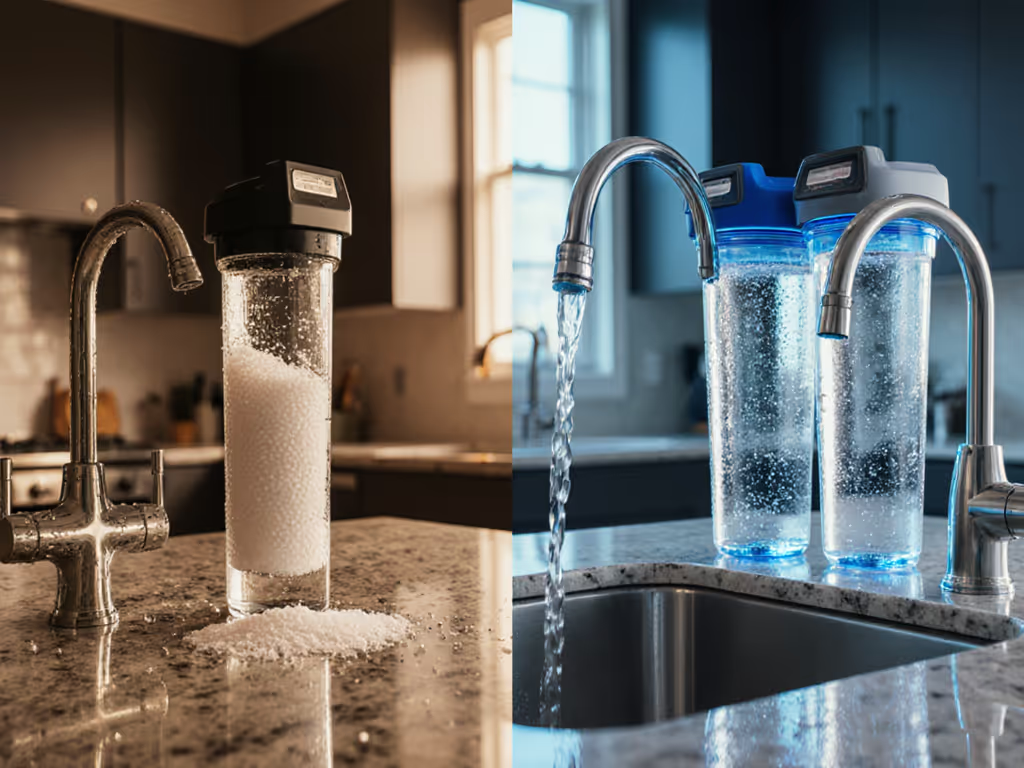
Understanding whether you need a water softener filter system or a specific hard water softener depends entirely on your water's actual composition (not assumptions). This analytical comparison examines the water treatment differences between these technologies, grounded in certified performance standards rather than marketing claims. As a water quality specialist who maps contaminants to certified media, I see consistent confusion between these systems, often leading to misapplied solutions that fail to address actual household risks.
Understanding Water Softening: Addressing Mineral Hardness
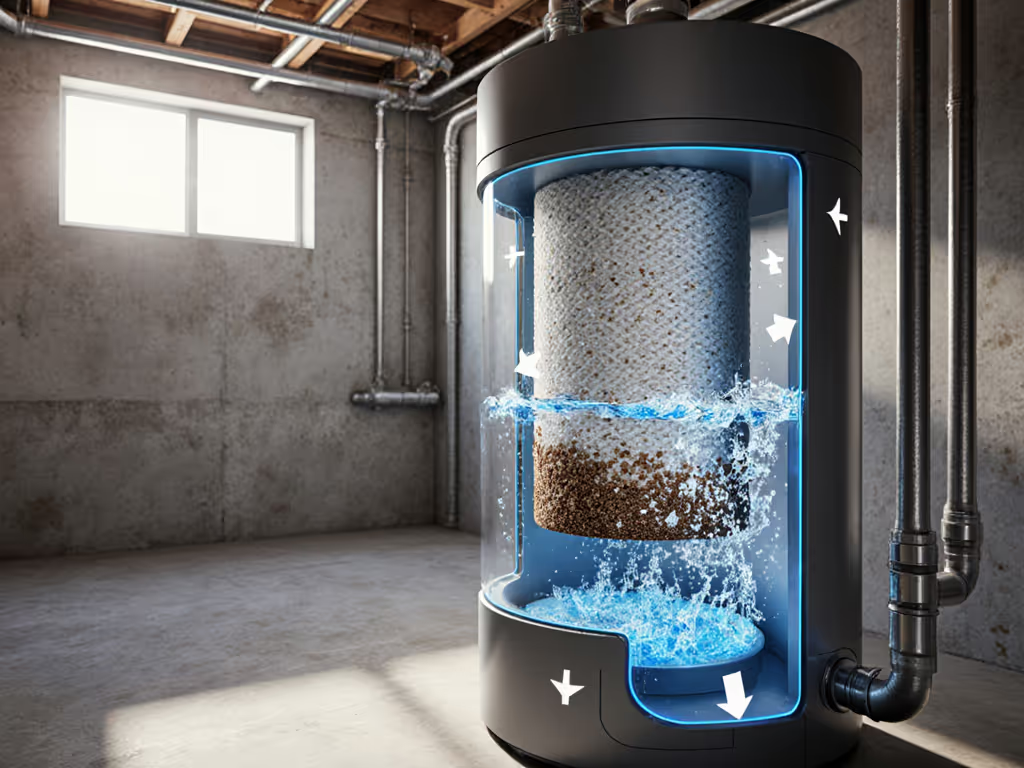
Water softeners target dissolved minerals that cause scaling, primarily calcium and magnesium, through an ion exchange vs filtration process. Unlike filtration, softeners don't remove particles or chemicals; they chemically replace hardness minerals with sodium or potassium ions. The resin beads inside a softener tank attract calcium and magnesium ions as water flows through, releasing sodium ions in exchange. This process, standardized under NSF/ANSI 44, effectively reduces limescale formation in pipes and appliances but does nothing for health-related contaminants.
Hard water manifests as spotted dishes, stiff laundry, and mineral buildup on fixtures. While not a health risk, scaling can reduce appliance efficiency by up to 30% according to Department of Energy studies. Importantly, softeners increase sodium content slightly, a consideration for those on sodium-restricted diets, though typically below CDC health thresholds unless water hardness exceeds 15 gpg.
How Filtration Systems Target Contaminants
Water filtration employs physical, chemical, or biological processes to remove specific contaminants, with effectiveness dictated by the filter media type and certification standard:
- Activated carbon filters (NSF/ANSI 42): Reduce chlorine, taste/odor compounds, and some VOCs
- Reverse osmosis (NSF/ANSI 58): Removes dissolved salts, heavy metals (lead, arsenic), and nitrate
- Specialty media filters: Target specific issues like iron (manganese greensand) or cysts (1-micron absolute)
Unlike softeners, filtration systems address health-related concerns. A certified lead-reducing filter (NSF/ANSI 53) provides critical protection in homes with aging plumbing, while UV systems (NSF/ANSI 55) inactivate microbiological threats during boil advisories. If lead is your primary concern, see our lead removal filters. Crucially, filtration performance degrades as media becomes saturated, and you cannot "set and forget" these systems without verification. See our lab-tested filter performance decay data to time replacements.
Critical Water Treatment Differences: Purpose vs. Process
| Criteria | Water Softener | Water Filter |
|---|---|---|
| Primary Function | Mineral removal (calcium/magnesium) | Contaminant removal (chemicals, metals, microbes) |
| Mechanism | Ion exchange | Physical/chemical filtration |
| Certification Standard | NSF/ANSI 44 | Varies by contaminant (42, 53, 58, etc.) |
| Health Impact | Addresses scaling, not health risks | Directly reduces health-related contaminants |
| Water Changes | Increases sodium, reduces hardness minerals | Reduces specific contaminants, may lower TDS |
These fundamental water treatment differences explain why softeners alone won't remove lead, and filters alone won't stop scaling. Softened water may feel slippery due to reduced mineral content, while properly filtered water should maintain healthy mineral balance unless using high-rejection RO.
When Hard Water Softeners Are Appropriate
A dedicated hard water softener makes sense when:
- Your water hardness exceeds 7 gpg (confirmed by lab test)
- You experience visible scaling on fixtures or appliances
- You want to reduce soap usage (soft water requires 50-75% less detergent)
However, softeners become counterproductive when installed before certain filtration stages. Hard water can prematurely clog carbon block filters and increase RO membrane fouling. This sequencing challenge underscores why testing must precede system selection, a lesson reinforced during flood-related boil advisories where neighbors applied softeners to address turbidity, worsening outcomes until we verified actual hazards.
Strategic Integration: The Multi-Barrier Mindset
Test first, then layer certified barriers with intent.
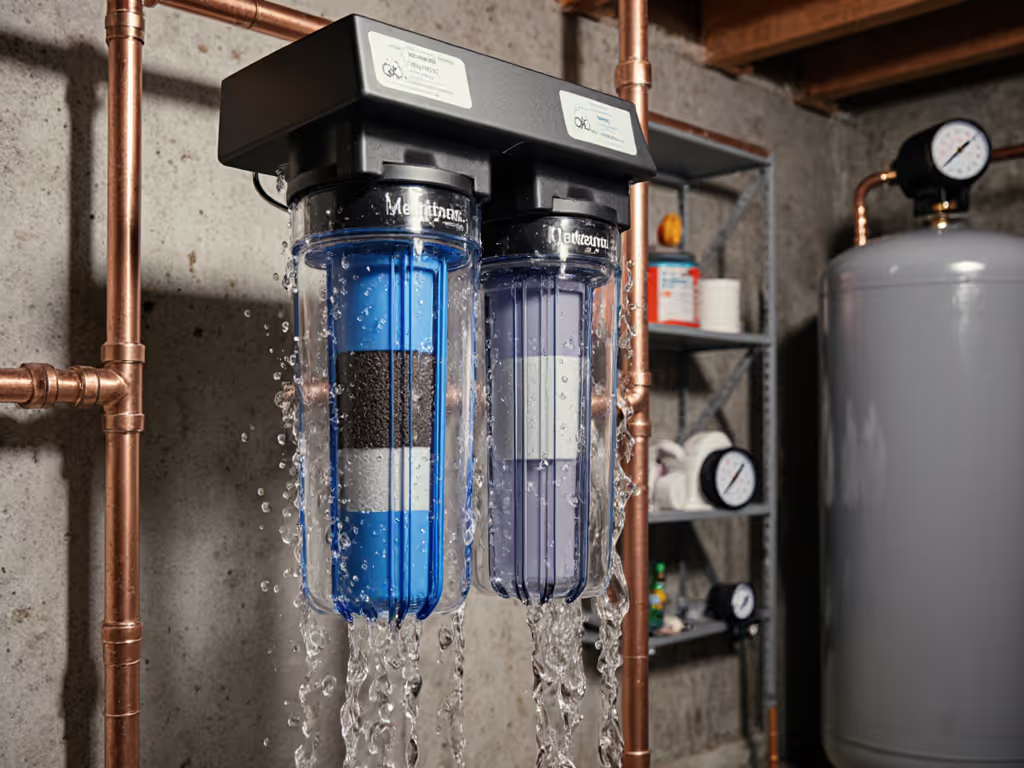
For comprehensive protection, many households benefit from combining both technologies, but with proper sequencing. In municipal water systems, I typically recommend: Before you pick components, see our sediment pre-filter guide to size the first stage correctly.
- Whole-house sediment pre-filter (5-micron)
- Water softener (to protect downstream filters from scaling)
- Point-of-use carbon filter or RO system for drinking water
This multi-barrier mindset addresses both scaling concerns and health-related contaminants. For well owners facing iron and bacteria, the sequence might include oxidizing filter → sediment filter → UV disinfection → softener, depending on the specific contaminant profile. Never install a softener before a carbon filter when targeting VOCs, since the sodium can interfere with adsorption efficiency.
Making Your Evidence-Based Decision
Follow this decision framework:
- Test first: Obtain a comprehensive water analysis. Municipal users should review their Consumer Confidence Report; well owners need certified lab testing for hardness, TDS, and local contaminants. For help reading it, use our CCR interpretation guide.
- Identify actual hazards: Match results to relevant standards. Hardness above 7 gpg warrants mineral removal consideration; lead above 5 ppb requires NSF 53-certified filtration.
- Sequence systems logically: Softeners before carbon filters (to prevent scaling), but after sediment pre-filters (to prevent resin fouling).
- Verify certifications: Confirm specific contaminant reduction claims with NSF or WQA documentation, not marketing brochures.
Many homeowners mistakenly install softeners for taste issues caused by chlorine, which requires activated carbon instead. Conversely, relying solely on pitcher filters for hard water leads to ongoing appliance damage despite "cleaner" tasting water.
Conclusion: Precision Over Assumption
The distinction between water treatment technologies matters because misapplication wastes resources while leaving hazards unaddressed. A water softener solves scaling; it doesn't make water safer to drink. Filtration removes contaminants but won't prevent limescale. Your solution must reflect your water's actual profile (not neighbor anecdotes or sales pitches).
Before investing in any system, validate your water quality through certified testing. When turbidity spiked after recent flooding in our neighborhood, immediate testing revealed elevated iron but intact disinfection residuals, which guided us to deploy sediment filters before softeners, not after. This precision prevented unnecessary system damage during the emergency.
For further exploration, consult EPA's Water Testing Guide for Private Wells or EPA Document 816-F-09-004 for municipal system contaminants. Remember: effective water treatment begins not with purchasing equipment, but with understanding what's actually in your water. Test first, then layer certified barriers with intent, and your multi-barrier mindset starts with data, not assumptions.
Related Articles