Water Chemistry Basics: What's in Your Water
By Diego Alvarez • 15th Feb
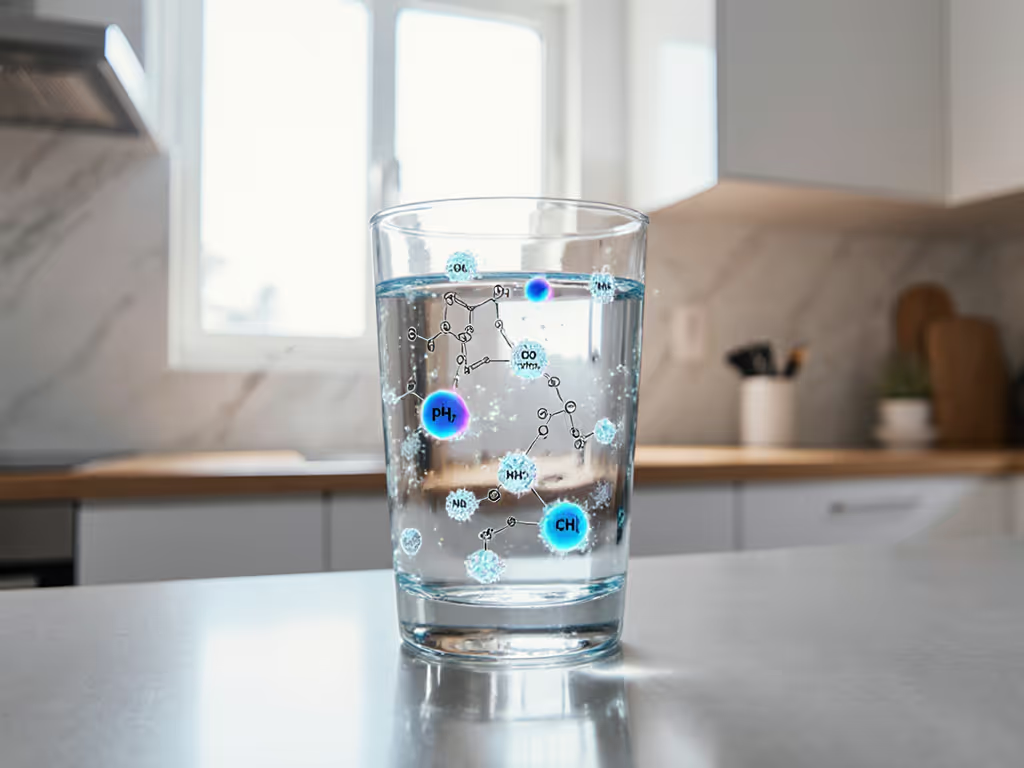
Water chemistry basics start with a simple fact: the water coming from your tap is far more complex than the H₂O formula suggests. Understanding water composition matters because what's dissolved in or suspended in your water directly affects which filter stack actually protects your household, and how much maintenance friction you'll face to keep it working.
Before diving into filters or certifications, let's talk about what you're actually treating, because if it's hard to maintain, it will not protect you.
What Is Water Made of?
The Basic Chemistry
Pure water is composed of two hydrogen atoms and one oxygen atom bonded together by covalent bonds, forming H₂O. At room temperature and pressure, water exists as a liquid with a density of roughly 1 g/cm³; it boils at 100°C (212°F) and freezes at 0°C (32°F). The oxygen atom is more electronegative than the hydrogen atoms, meaning it pulls electron density toward itself, creating what chemists call polar regions (a partial negative charge on the oxygen side and partial positive charges on the hydrogen side).
That polarity is why water dissolves so many other things. It's the universal solvent. And that's also why real-world water is never truly pure.
What Actually Comes Out of Your Tap
In nature and in municipal systems, water carries dissolved substances and suspended particles. These fall into broad categories:
Dissolved Gases: Oxygen (O₂) is essential for aquatic life metabolism and is often present in tap water; carbon dioxide (CO₂) dissolves in water and forms carbonic acid, which affects pH; nitrogen (N₂) is typically passive but contributes to dissolved-gas load.
Minerals and Salts: Calcium (Ca²⁺) and magnesium (Mg²⁺) are often associated with limestone regions and are the primary drivers of water mineral content and hardness; sodium (Na⁺) and potassium (K⁺) may be present in varying amounts; chloride (Cl⁻) and sulfate (SO₄²⁻) can influence both taste and water quality.
Organic Matter: Natural organic matter (NOM) (including humic substances, plant residues, and microorganisms) affects water color and can create disinfection byproducts when chlorine is added.
Anthropogenic Contaminants: Pesticides, pharmaceuticals, industrial chemicals, and salts from road treatments can enter water through drainage and sewage.
Your specific water profile depends on whether you're on municipal supply (which relies on source water, treatment processes, and aging pipe infrastructure) or a private well (which reflects local geology and contamination risk). For a breakdown of common pollutants and health risks, see our tap contaminants checklist.
FAQ: Water Chemistry Questions That Matter to Your Filter Choice
What Does "Hard Water" Actually Mean?
Water hardness is primarily the concentration of dissolved calcium and magnesium minerals. Hard water isn't a safety hazard in most cases, but it causes scale buildup on fixtures, reduces soap effectiveness, and can shorten appliance life (particularly water heaters and dishwashers).
If you're experiencing white crusty deposits on faucet aerators or seeing low flow after a few months, hardness is likely your culprit. This drives many households toward water mineral content testing first, because the visible nuisance spotlights a real maintenance problem.
Why Does pH Matter, and What Does It Actually Do?
pH measures how acidic or basic water is on a scale from 0 to 14, with 7 being neutral. Municipal water is typically maintained between 6.5 and 8.5 to prevent corrosion of pipes and leaching of lead.
Water with a pH below 6.5 tends to be acidic and may leach copper and lead from plumbing. Water above 8.5 may taste bitter or soapy and can cause scaling. Why is this relevant to filters? Because some treatment methods (particularly reverse osmosis) lower pH, and if you don't remineralize or adjust downstream, you may end up with acidic water that corrodes your own home's fixtures. The chemistry doesn't end at the filter (it flows into your pipes).
What Is TDS, and Should I Use It to Judge My Filter?
TDS is one of the most misunderstood metrics in home water treatment. TDS stands for "total dissolved solids," measured in parts per million (ppm), and it's simply a count of dissolved minerals and salts (it tells you quantity, not identity or safety).
This is critical: a TDS meter cannot tell you if your water contains lead, PFAS, bacteria, or pesticides. It only tells you mineral load. Many people buy a reverse osmosis filter, see the TDS drop from 300 ppm to 10 ppm, and assume all contaminants are gone. But TDS reduction and pathogen removal are entirely different chemistry. This misconception drives incorrect product choices and unmet protection expectations.
The right approach: test your specific water with a certified lab (often free from your municipal supplier, or low-cost through NSF or WQA-listed private labs), identify your actual contaminant interactions and presence, and select a filter certified to remove those contaminants, not just lower TDS. If you're not using a lab, our DIY water test kits guide shows how to interpret results and match them to the right filters.
How Do Hydrogen Bonds Affect Water Behavior?
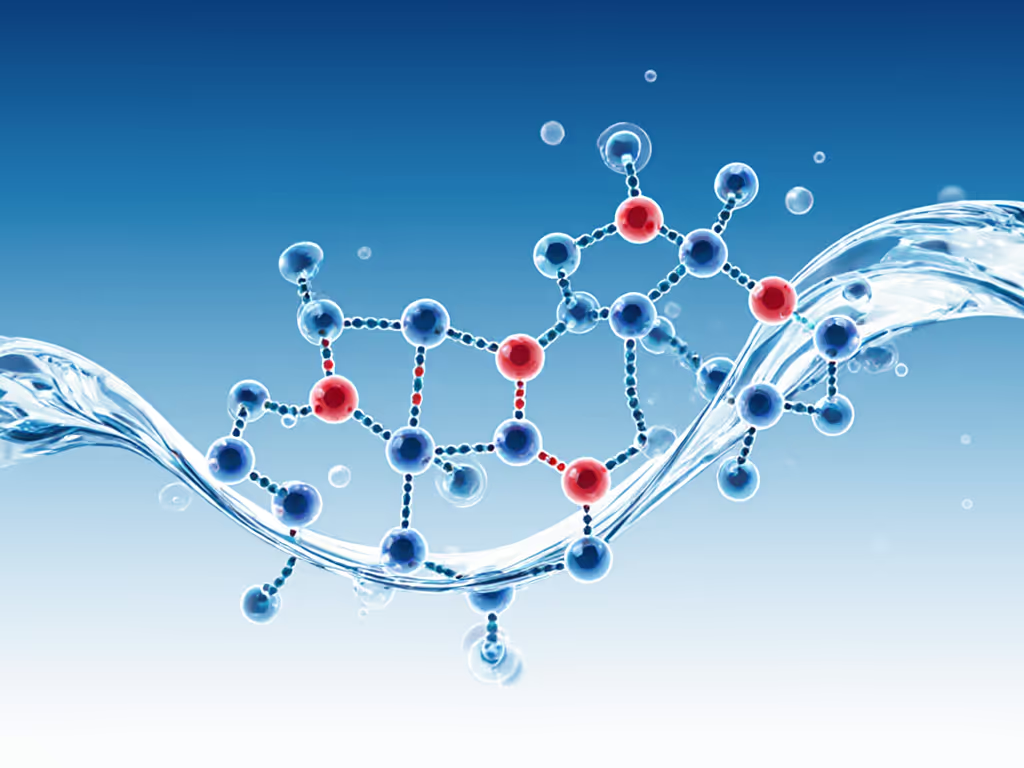
Hydrogen atoms in one water molecule are attracted to the oxygen atoms of adjacent water molecules, forming weak hydrogen bonds. These bonds explain why water has unusually high surface tension, high viscosity, and why ice floats (a rare property, since most solids are denser than their liquid form).
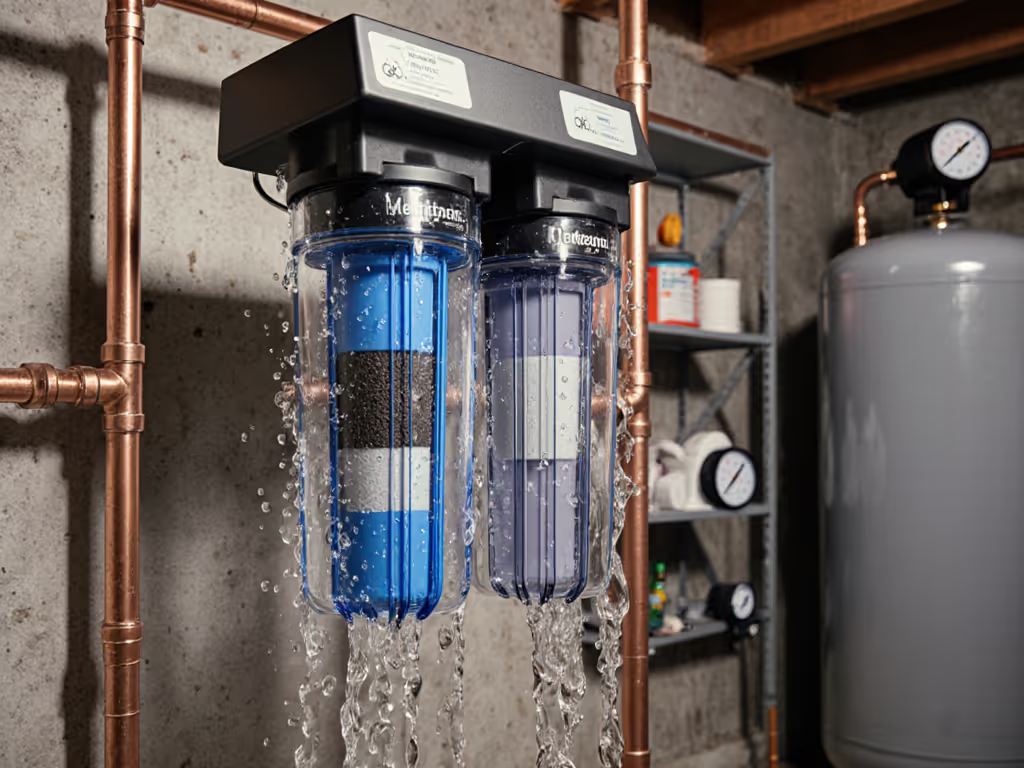
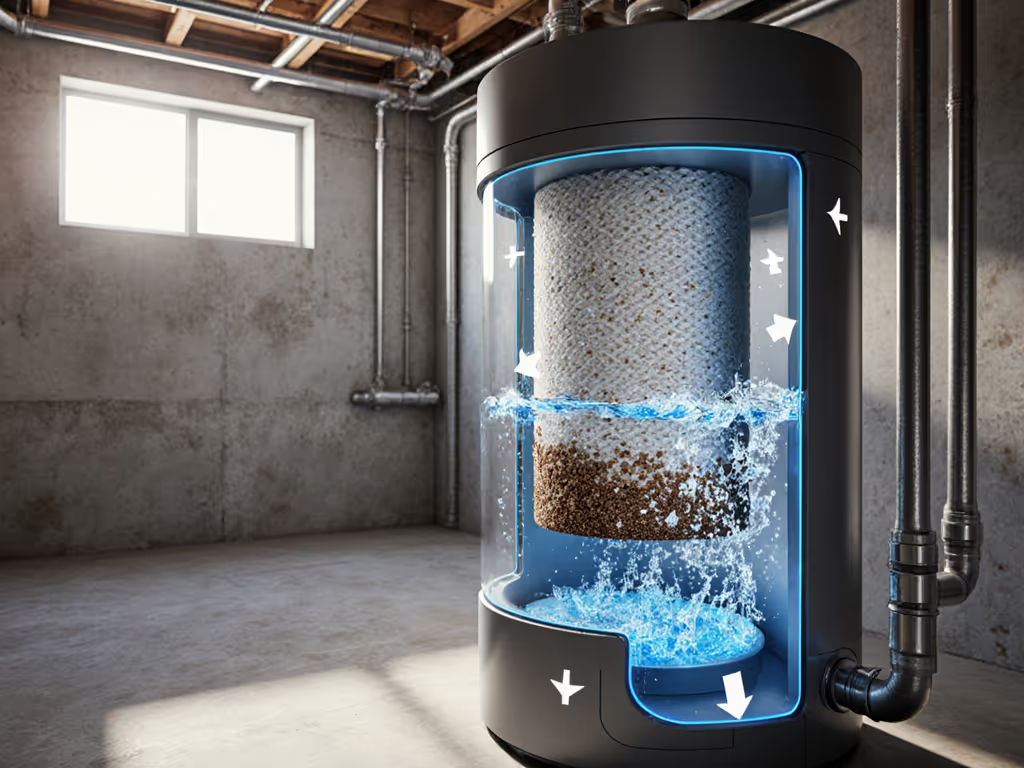
For homeowners, this matters in one practical way: these hydrogen bonds make water "sticky" and allow it to readily dissolve polar substances. That's why untreated water can hold onto chlorine, sediment, and minerals so effectively. It's also why filters designed with a clear sequence for staged treatment (sediment first, then activated carbon, then ion exchange) work: you're leveraging water's chemistry to grab specific contaminants at each step.
What's the Difference Between Filtered and Treated Water?
Filtering typically means physically removing suspended particles (sediment, rust, turbidity) or using a sorptive medium like activated carbon to trap dissolved chemicals.
Treating can mean adjusting pH, softening (ion exchange to remove hardness), remineralizing, adding UV or ozone (oxidation), or other chemical adjustments. Some water issues require both: a household with hard water and chlorine taste might use a sediment prefilter, a carbon stage, an ion-exchange softener, and a post-filter for final polishing.
This modular thinking is where maintenance friction often hides. If you choose a single-stage cartridge when your water chemistry demands three stages, you'll either replace that cartridge far sooner than rated (because it's exhausted faster), or you'll have continued taste/odor issues and lose confidence in the system. Neither path leads to consistent daily protection.
Why Water Chemistry Matters for Your Decision
Certified performance only protects if the system is easy to live with. A five-stage RO system with proprietary housings and fittings, buried in a cramped cabinet with no access panel, certified to remove PFAS and lead perfectly will eventually be skipped during cartridge swaps; backflush cycles will be deprioritized, and maintenance in minutes, not hours, becomes an impossible promise.
Conversely, understanding your specific water's mineral content, pH, hardness, and documented contaminants lets you choose a system that:
- Targets your water, not generic fears
- Uses standard fittings and accessible housings
- Has a realistic changeout schedule you can actually follow
- Comes with checklists and preflight steps so you know when to replace cartridges and how to confirm the swap is correct
Actionable Next Steps
Get a water test. Many municipal suppliers provide free annual reports; well owners need private testing (contact your local health department for approved labs). Request results that detail:
- Hardness (mg/L as CaCO₃)
- pH
- Chlorine, chloramine, or chlorine dioxide residual
- Any detected PFAS, lead, nitrates, bacteria, or odor/taste compounds
Cross-reference your contaminants against NSF/ANSI certifications (42 for aesthetics like taste/odor; 53 for health claims like lead removal; 58 for reverse osmosis; 401 for emerging contaminants like PFAS). Not sure which standard applies? Start with our NSF 42 vs 53 guide for plain-English differences and use cases. Make sure the filter you're considering is certified for your specific contaminants, not just the brand's top-line claim.
Assess your household's maintenance tolerance. Be honest: will you remember to swap cartridges on schedule? Do you have access to the filter housing? Are you willing to document performance, or do you want a smart reminder system? If maintaining a multi-stage system feels like friction, a simpler, single-point-of-use filter with longer-life cartridges may serve you better than an underused whole-home stack.
Your water chemistry is local, specific, and discoverable. Start there, and the right filter becomes obvious.
Related Articles