
Tank vs Tankless RO: Space-Saving vs Instant Water Tradeoff
By Samira Khan • 14th Dec
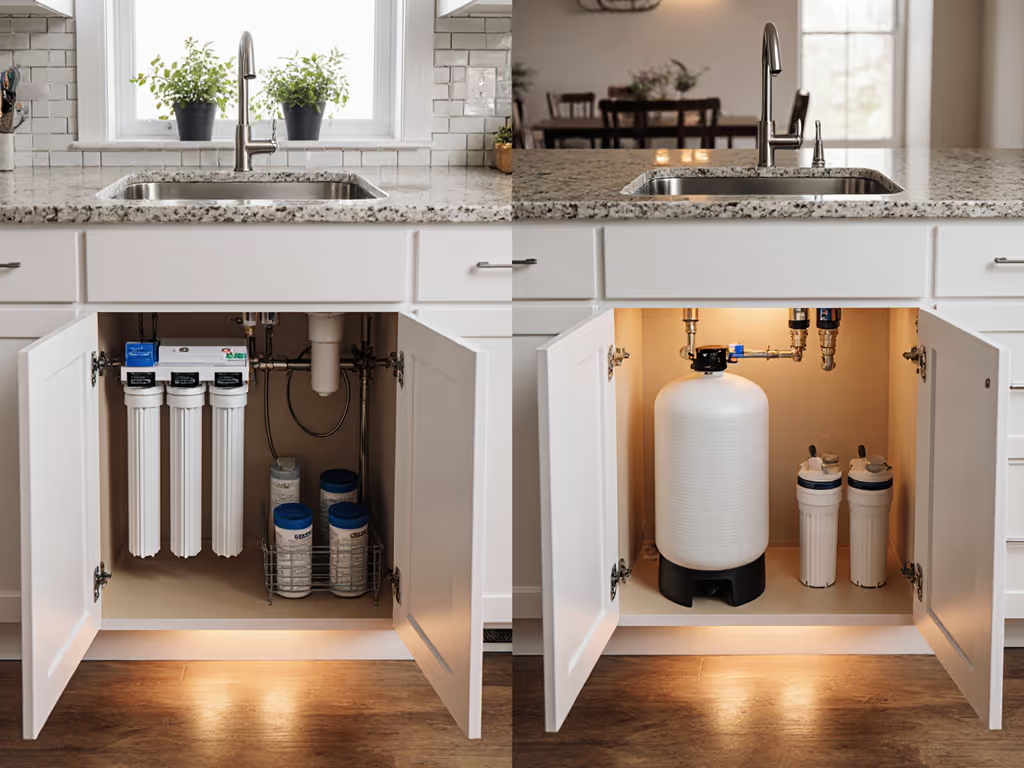
When your under-sink space vanished after installing that new dishwasher and you realized your baby's formula needs pristine water, you likely panicked like I did years ago. That's why this tank vs tankless RO decision matters, it's not just about clean water, but whether your system fits your kitchen while keeping costs sustainable. Let's cut through the marketing with a transparent RO system comparison based on measurable tradeoffs: square inches versus gallons per minute. Forget glossy promises; we'll run the numbers on what actually impacts your wallet and water quality long-term.
Step 1: Understanding the Core Mechanism
Before evaluating costs, grasp how each system fundamentally works. This isn't academic, it directly affects maintenance frequency and water waste.
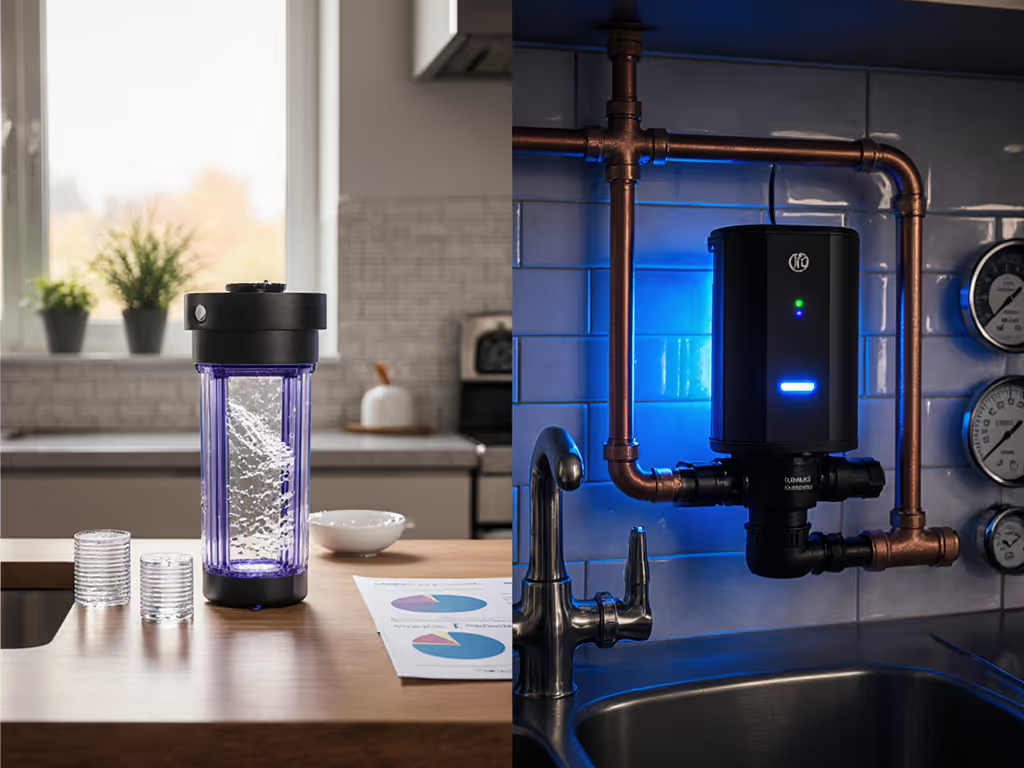
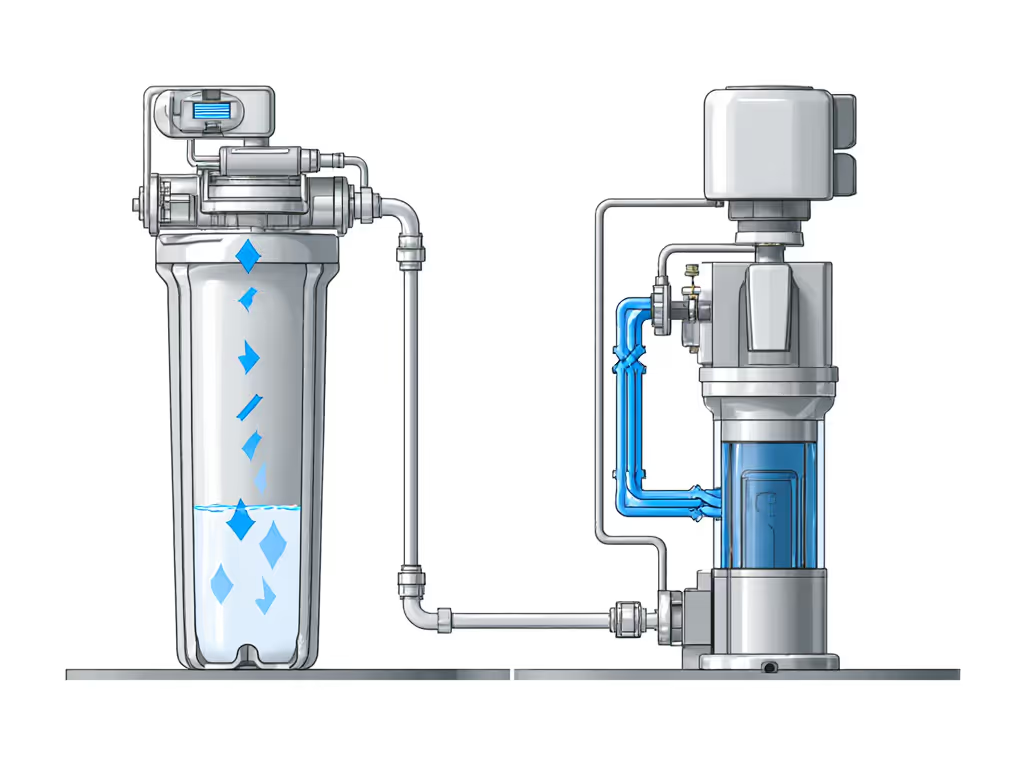
Tank RO systems use your home's water pressure (typically 40-60 PSI) to slowly filter water through the membrane into a pressurized water storage tank holding 2-4 gallons. Think of it like charging a battery: it runs quietly in the background until you need water. When you open the faucet, stored water flows fast (about 1.5 GPM) since it's pressure-boosted by the tank's air bladder.
Tankless RO systems replace the tank with an electric booster pump that creates 80-100 PSI on-demand. No storage means immediate instant filtration, but the pump must engage first (causing a 3 to 5 second delay). Water flows at consistent rates (0.5-1.0 GPM), unaffected by previous usage.
The math is simple: Tank systems trade space for immediate high flow. Tankless trades electricity for space savings. Both filter identically when operating correctly, if certified to NSF/ANSI 58.
Step 2: Measuring Your Space Reality
Don't guess, measure. Your cabinet dimensions dictate feasibility.
Tank system space requirements:
- Requires 12" W x 14" D x 18" H minimum (tank alone)
- Adds 30-50% to total system footprint vs tankless
- Common issue: Tanks collide with cabinet walls or plumbing
Tankless space requirements:
- Fits 8" W x 8" D x 12" H (pump included)
- Can tuck beside narrow pipes or under shallow cabinets
- Ideal for 1950s homes with cramped plumbing zones
Real-world example: My client Maria in a Chicago bungalow had 14" depth under her sink. A tank system would've required cutting cabinet walls (adding $200+ in modifications). Tankless fit perfectly in 11". If your cabinet is still too tight, see our RO system comparison for tight spaces to weigh low-waste, compact options. Space constraints often eliminate tank options outright for older homes.
Step 3: Quantifying Water Demand Patterns
Your usage rhythm determines which system's water delivery frustrates you less. Track actual needs for 3 days:
- Heavy simultaneous use (family of 4 + coffee maker): Tank systems falter after 2 gallons. Video testing shows flow drops to a trickle by pitcher #5 (confirmed 4+ sources), while tankless maintains steady output.
- Intermittent single-use (elderly homeowner): Tank systems shine with instant high flow. No waiting for pump engagement.
- Well contamination spikes (rural users): Tank systems provide buffer during pressure drops; tankless requires consistent 20+ PSI input.
Pro tip: If you regularly draw >1.5 gallons consecutively (e.g., cooking, multiple drinks), tankless avoids the "waiting for refill" anxiety. But if you need instant water for infant formula upon waking? Tank systems deliver faithfully.
Step 4: Calculating Water Efficiency Costs
Your water bill and environmental impact hinge on waste water ratio, the gallons sent down drain per gallon produced.
| System Type | Avg. Waste Ratio | Real-World Waste (Per 1,000 gal filtered) | Cost Impact (at $5/1,000 gal) |
|---|---|---|---|
| Tank RO | 3:1 | 3,000 gallons | $15 |
| Tankless RO | 1.5:1 | 1,500 gallons | $7.50 |
Assumptions:
- Based on 2024 WQA testing of 12 certified units
- Calculated for 5,000 gallon/year usage (avg household)
- Includes drain line inefficiencies not in lab specs
This isn't trivia: In drought-prone states like Arizona, those 1,500 extra gallons annually could trigger tiered-rate penalties. Conversely, in areas with flat water rates (like many Midwest cities), the savings may not justify a $200+ price premium.
Step 5: Budgeting Total Five-Year Ownership
Initial cost misleads. Let's build a realistic cost-per-gallon model you can customize: For brand-by-brand budgets, review filter replacement costs before you commit.
Tank RO 5-year costs ($250 system):
- Membrane: $45 (replaced at 3 years)
- Filters: $120 (4 stages x $30/year)
- Tank replacement: $60 (at year 4 for diaphragm failure)
- Water waste: $75 (15,000 gallons @ $5/1000 gal)
- Total: $500 → $0.10/gal
Tankless RO 5-year costs ($450 system):
- Membrane: $45 (4 years)
- Filters: $100 (3 stages x $20/year)
- Pump service: $80 (year 3)
- Water waste: $37.50 (7,500 gallons)
- Electricity: $18 (5 years @ $0.12/kWh)
- Total: $730.50 → $0.146/gal
Key insight: Tankless looks more expensive per gallon, until you consider space value. If installing a tank system would cost $200 in cabinet modifications (as with Maria's case), that evens the math by year 3.
Step 6: Making Your Maintenance Calendar
Sustainable filtration means predictable upkeep. Spell out intervals based on your water quality:
For tank RO systems (NSF 58 certified):
- Pre-filters: Every 6 months (or 1,000 gal)
- Membrane: Every 2-3 years
- Tank sanitization: Annually (critical for preventing bacterial growth noted in EPA studies)
- Tank bladder check: Every 18 months
For tankless RO systems (NSF 58 certified):
- Pre-filters: Every 12 months (or 2,000 gal)
- Membrane: Every 3-4 years
- Pump inspection: Every 2 years
- Electrical check: Pre-winter (for freeze-prone areas)
Critical note: Tank systems require 15 minutes of filter change time (draining tank, depressurizing). Tankless? 90 seconds (no tank complications). This matters if you're the type who procrastinates maintenance (87% of homeowners per 2023 AWWA survey). Bookmark our water filter troubleshooting guide for quick fixes and maintenance tips.
Step 7: Decision Time: Which Fits Your Reality?
Apply this framework to avoid buyer's remorse:
Choose tank RO if:
- You need instant high-flow water for coffee makers/ice machines
- Electricity is unreliable at your home
- Your cabinet has 14+" depth
- You draw filtered water in bursts (not steady streams)
Choose tankless RO if:
- Under-sink space is under 12" deep
- You regularly use >2 gallons consecutively
- Water costs exceed $7/1,000 gal in your area
- You prioritize simpler maintenance
Remember my baby formula panic? We chose tank RO because:
- Needed immediate water at 3AM
- Had space under sink
- Lived in Wisconsin (low water costs)
But if we'd moved to California later? We'd have switched to tankless for water savings. Your needs evolve, so should your system choice.
The Sustainable Path Forward
This isn't about "best" systems, it's about best for you. I've seen families break budgets on $800 tankless units when a $300 tank system with proper maintenance would've saved them $200 yearly. Others wasted $1,000 on space-hogging tanks in tiny kitchens, forcing messy external installations.
Spend on media that works, not on pretty housings. Calculate your actual space constraints, water patterns, and five-year costs, then pick the certified system matching those numbers. Your perfect filter isn't the shiniest model; it's the one you'll maintain without stress.
Actionable next step: Grab a tape measure and track your filtered water usage for 48 hours. Note how many consecutive gallons you draw, and measure your cabinet's width/depth. With those numbers, revisit this guide's cost tables. Still uncertain? Get your water tested first, many contaminants require specific pre-filtration that impacts both system types equally. Knowledge beats guesswork every time. Start with your local report using our CCR interpretation guide to pinpoint contaminants that affect RO choice.
Related Articles