
Gravity vs Electric Pump Filters: Performance Data
By Arjun Mehta • 24th Apr
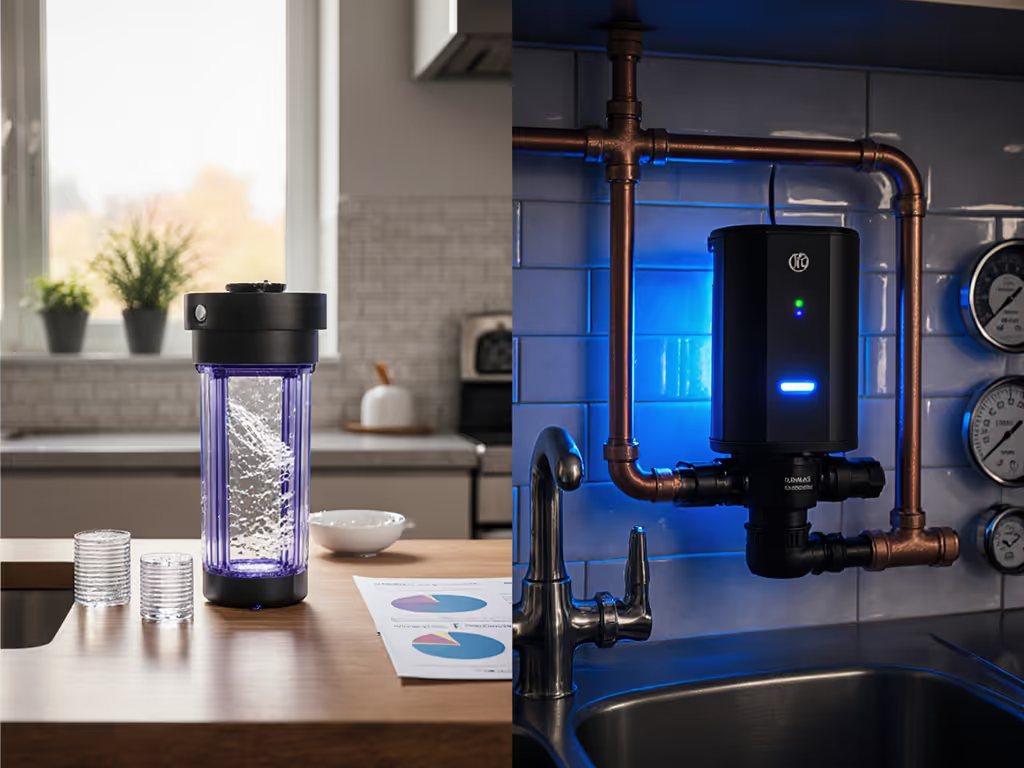
Gravity filters operate passively without electricity, relying on water pressure and physics to move water through media at lower flow rates, while electric pump filters use active pressurization to force water through cartridges or membranes at higher speeds and often with greater contaminant reduction. The choice between them hinges on your specific water profile, performance requirements, budget, and tolerance for ongoing energy use, not on marketing claims or brand loyalty.
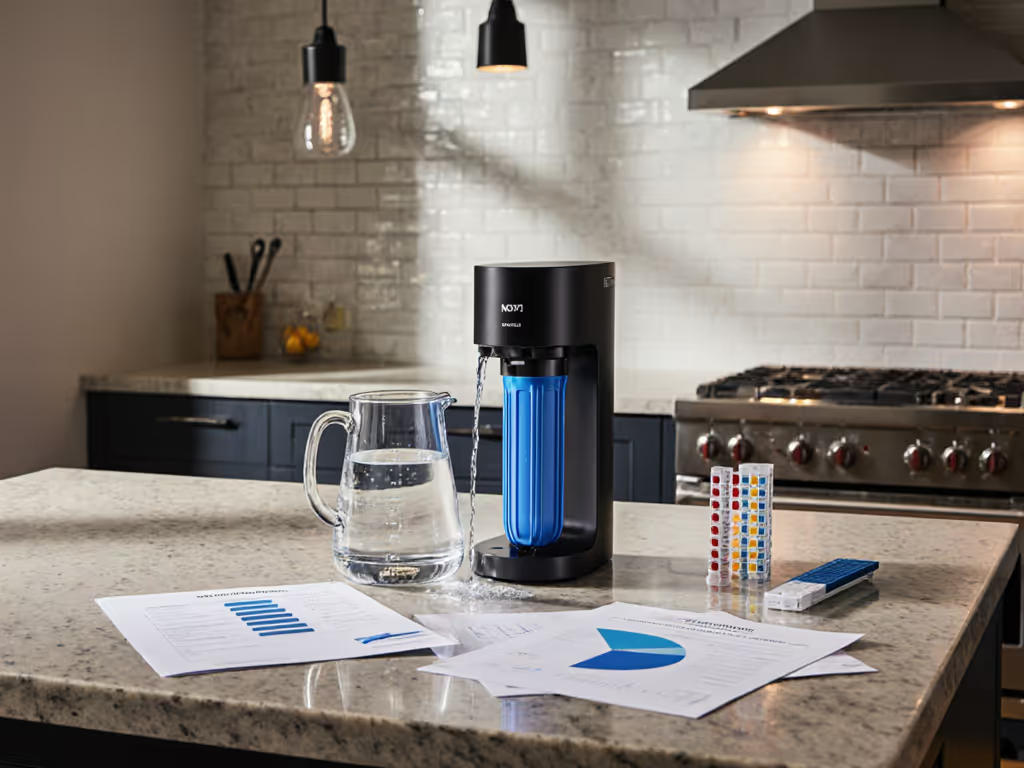
After moving into a high-rise, I learned this the hard way. Apartment water arrived with chlorine spikes and visible scale that my kettle couldn't handle in silence. I pulled the Consumer Confidence Report, cross-checked the lab results against certified reduction claims, and built a spreadsheet comparing true cartridge yields and cost-per-gallon of gravity versus pump systems. The process transformed skepticism into confidence. Map your water, then let certifications drive the filter choice, not the other way around.
How Gravity Filters Perform
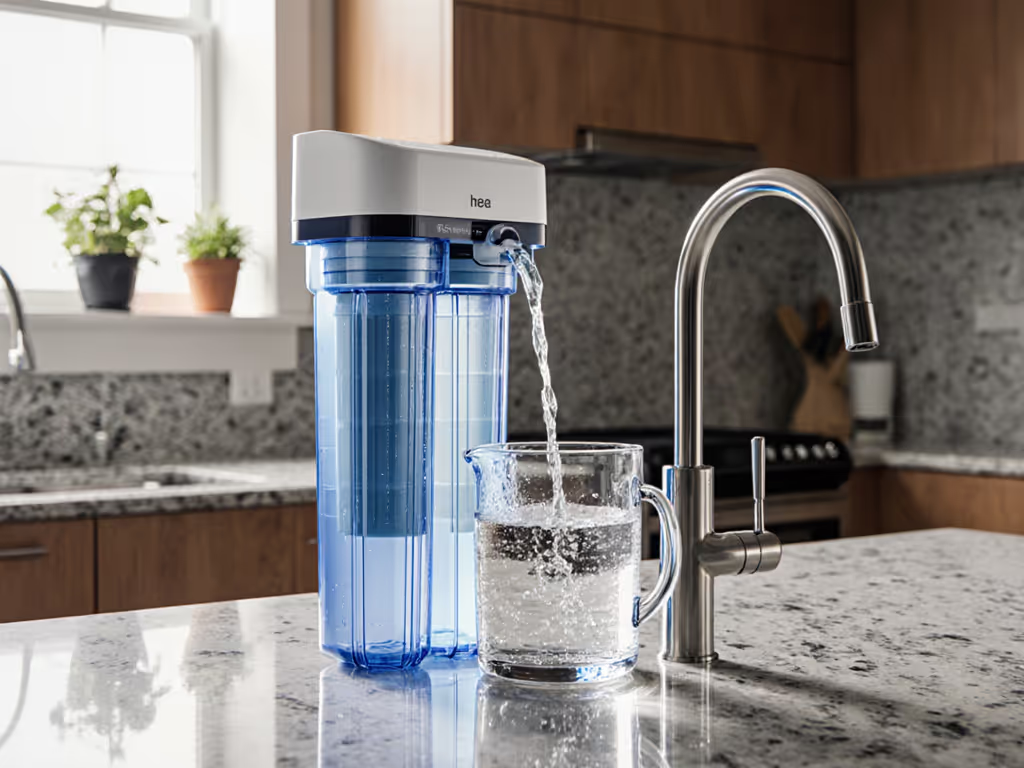
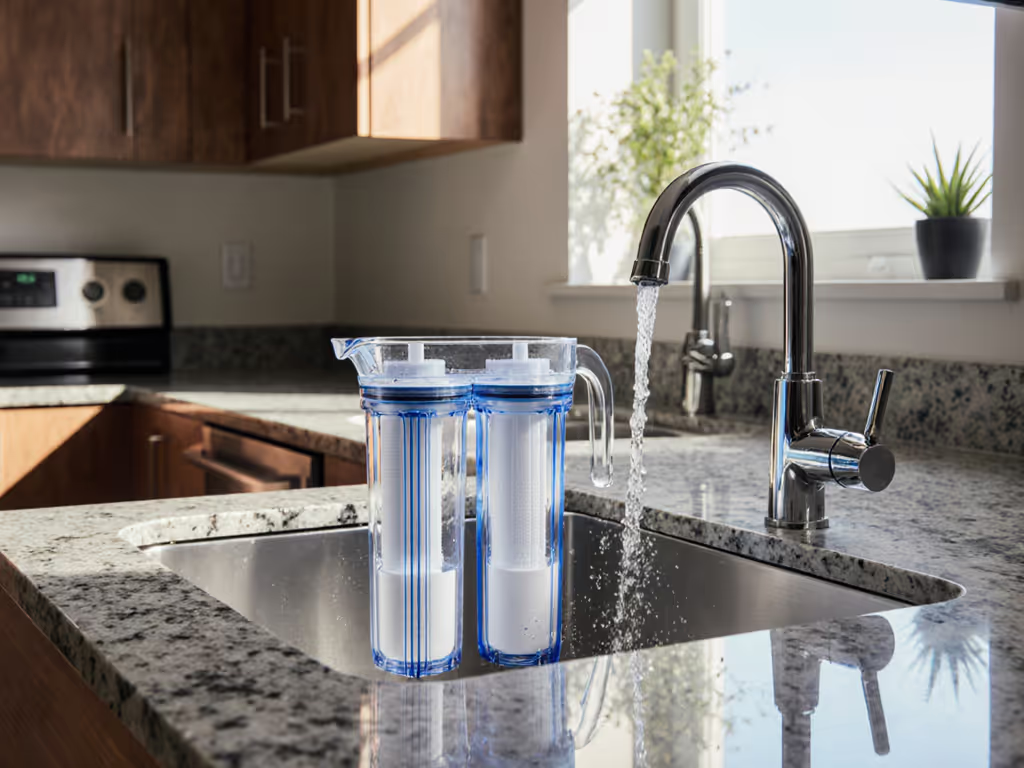
Gravity-fed systems (typically best gravity fed water filter systems like unpressurized countertop or under-sink models) work by relying on municipal water pressure or elevation differences to pull untreated water down through ceramic, carbon, or mineral media into a lower chamber[1][2]. No electricity powers the filtration stage itself; a separate pump may return treated water to the source, but filtration is passive.
Flow characteristics: Gravity filters typically deliver 0.5-1.5 gallons per minute (1.9-5.7 liters/minute), depending on media density and pressure. For context, a standard kitchen faucet flows 2-4 gpm (7.6-15.1 liters/minute), so flow reduction is noticeable[2].
Contaminant reduction: Gravity systems excel at sediment, taste, and odor removal, particularly when paired with NSF/ANSI 42-certified activated carbon media. Reduction percentages for chlorine typically range from 95-99% under lab conditions[1]. However, gravity filters alone rarely remove dissolved solids, bacteria, viruses, or most chemical contaminants to the degree that NSF/ANSI 53 (health-related) or NSF/ANSI 401 (emerging contaminants, including PFAS) require[3]. This distinction matters; marketing often conflates taste improvement with health protection. If you're unsure which standard applies, start with our NSF 42 vs 53 guide for clear, health-vs-taste distinctions.
Energy and noise: Zero operational electricity means no pump noise, no running costs beyond cartridge replacement, and no dependency on power during outages. This appeals to renters, off-grid users, and households skeptical of ongoing expenses.
Maintenance: Gravity filters require periodic cartridge replacement, typically every 3-6 months for carbon, or annually for ceramic, depending on water volume and contamination load. Replacement cost ranges from $40-$150 per cartridge[1][2].
How Electric Pump Filters Perform
Electric pump filters (including reverse osmosis (RO), cartridge systems with booster pumps, and multi-stage combinations) use active pressurization (typically 40-100 psi / 2.8-6.9 bar) to force water through fine media or semipermeable membranes[2]. This pressure enables deeper contaminant rejection and faster flow.
Flow characteristics: Under-sink RO systems produce 10-20 gallons per day (38-76 liters/day) at standard household pressure, though booster-pump versions reach 50-75 gpd (189-284 liters/day). Cartridge filters with assist pumps deliver 1-3 gpm (3.8-11.4 liters/minute), maintaining pressure even on low-pressure lines.
Contaminant reduction: Pump-fed systems, especially RO, achieve NSF/ANSI 53 certification for dissolved solids, microbes, and many chemical contaminants. RO systems reduce total dissolved solids (TDS) by 85-95%, bacteria by 99.99%, and viruses by 99.99% under tested conditions[2][3]. Multi-stage units (sediment pre-filter, carbon, RO membrane, remineralization) stack certified reductions: each stage addresses a layer of your water profile. Advanced models include NSF/ANSI 401 certification, targeting perfluorooctanoic acid (PFOA) and perfluorooctane sulfonate (PFOS) with documented reduction rates of 90%+. See which systems excel in our PFAS filters ranked comparison.
Energy and operating costs: A standard RO system draws 30-60 watts during membrane flushing cycles, translating to approximately 0.5-1.0 kWh per day if the system cycles continuously. Annual electricity cost: $20-$50 at U.S. average rates (~$0.12/kWh). Wastewater is higher: RO systems typically recover 15-25% of inlet water as purified product, sending 75-85% down the drain. For every gallon of treated water, 3-5 gallons of concentrate flows to sewer (or septic)[2].
Performance Data Comparison
| Metric | Gravity Filter | Electric Pump Filter |
|---|---|---|
| Flow Rate (gpm) | 0.5-1.5 | 1-3 (cartridge); 0.02-0.1 (RO) |
| Typical Contaminant Certifications | NSF/ANSI 42 (taste/odor) | NSF/ANSI 53 (health); NSF/ANSI 401 (PFAS/emerging) |
| Electricity Required | None | 30-60W (ongoing) |
| Installation Complexity | Low | Medium-High |
| Cartridge Cost per Replacement | $40-$150 | $40-$250 |
| Replacement Frequency | 3-6 months | 6-12 months (cartridge); 2-3 years (RO membrane) |
| True Cost-per-Gallon (5-year estimate) | $0.04-$0.08 | $0.08-$0.15 (with energy) |
| Waste (reject water or cartridges) | Low (cartridge waste only) | High (RO reject water; multi-stage cartridge volume) |
A concrete example: Assume 2 gallons per day of filtered water for a household.
Gravity system: 1 carbon cartridge ($80) lasts 4 months at that usage -> 3 cartridges/year. Annual cost = $240 + $0 electricity = $240/year / 730 gallons = $0.33/gallon.
RO system with energy: 1 RO membrane ($200) lasts 2 years; 1 pre-filter ($60) and 1 carbon cartridge ($70) yearly. Annual cost = $130 (membrane amortized) + $65 (yearly cartridges) + $30 (electricity) = $225/year / 730 gallons = $0.31/gallon. But wastewater sent to sewer: 8-10 gallons per 2 gallons treated -> net water footprint far higher.
For health-related contaminants (lead, bacteria, PFAS), only pump-fed systems typically achieve certified removal. Gravity alone rarely meets NSF/ANSI 53 or 401 standards.
Installation and Maintenance Trade-Offs
Gravity filters are renter-friendly: no drilling, no pressure connections, no power cord. Countertop units sit on the counter; under-sink models require only sink-mounted pour-through or basic saddle-tap connection. Maintenance is simple: swap cartridges, clean housing as needed. No technician required[1][2].
Electric pump filters demand higher setup friction. RO systems require dedicated faucet installation, under-sink valve manifold assembly, and electrical outlet proximity. Some jurisdictions prohibit connection to municipal supply without a check valve. Repairs require familiarity with pressure gauges, flow shutoff, and cartridge seating. Professional installation often costs $200-$500, adding to initial investment[2].
Water pressure requirements: Gravity filters tolerate low pressure (1-20 psi / 0.07-1.4 bar). RO systems require minimum 40 psi (2.8 bar); low-pressure lines trigger slow recovery and higher wastewater ratios. Booster pumps ($300-$800) solve this but add cost and complexity. For homes with marginal pressure, explore our low-pressure house water filters tested to maintain flow and performance.
Certification and Verification: The Math That Matters
This is where pump-assisted filtration and electric vs non-electric filtration diverge sharply in terms of evidence.
Gravity filters certified to NSF/ANSI 42 demonstrate chlorine, taste, and odor reduction at specific flow rates and capacity (e.g., "99% chlorine reduction at 1 gpm, rated for 5,000 gallons"). That certification applies only under those exact conditions. Higher flow or contaminated source water shortens cartridge life and reduces effectiveness[1].
Electric pump filters certified to NSF/ANSI 53 and NSF/ANSI 401 test at higher rigor, including reduction of lead (90%+), arsenic (95%+), bacteria (99.99%), viruses (99.99%), and, for 401, PFOA/PFOS (90%+). These are health-related claims, not taste claims, and third-party labs verify them reproducibly[2][3].
The critical step: Map your water profile first. Pull your municipal Consumer Confidence Report (CCR) or, for wells, request a lab test for the specific contaminants present in your address. Cross-reference the CCR contaminants against the certified reduction list of the filter you're considering. If your water contains PFAS and your filter lacks NSF/ANSI 401 certification, no amount of marketing will remove it.
Example: A household in Michigan with PFAS-contaminated well water needs NSF/ANSI 401 certification. A gravity filter rated only for NSF/ANSI 42 will improve taste but leave PFAS untouched, $240/year down the drain without health benefit.
Choosing Based on Water Profile
Choose gravity if:
- Your municipal or well report shows only taste, odor, or sediment concerns (chlorine, THMs).
- You prioritize simplicity, zero electricity, and renter flexibility.
- Water pressure requirements are low or unstable.
- You accept periodic flow reduction in exchange for silent operation.
- Budget constraints require minimal upfront cost, and you're willing to replace cartridges frequently.
Choose electric pump filtration if:
- Your water profile includes dissolved solids, microbes, or chemical contaminants (lead, arsenic, PFAS, nitrates).
- You require NSF/ANSI 53 or NSF/ANSI 401 certification matched to your specific contaminants.
- Flow rate and convenience outweigh electricity cost.
- You can absorb installation complexity and wastewater (RO systems).
- You value stacked, multi-stage filtration to address layered contamination.
Next Steps and Further Exploration
The decision is not gravity versus electric, it is your water profile versus certified performance. Before comparing products, take three steps:
-
Obtain and document your water data. Request your municipal CCR from your water provider (legal requirement; often online). For wells, commission a lab test ($100-$300) covering microbes, nitrates, heavy metals, and, if in a PFAS alert area, fluorinated compounds.
-
List the contaminants you need to remove based on that data. Write them down. This becomes your filter specification sheet.
-
Cross-reference each contaminant against NSF/ANSI certifications for systems you're considering. Look for the official NSF Product Listing database, not brand websites. Verify reduction percentages at your likely flow rate and usage volume.
Once you've mapped your water, the choice between gravity and pump-fed systems becomes transparent. You'll know whether a $200 gravity filter meets your needs or whether a $600-$1,200 pump-fed system is the only option that delivers certified protection. No guessing, no regret, only data and confidence. That's how you move forward: map your water, then let certifications drive the filter choice.
Related Articles