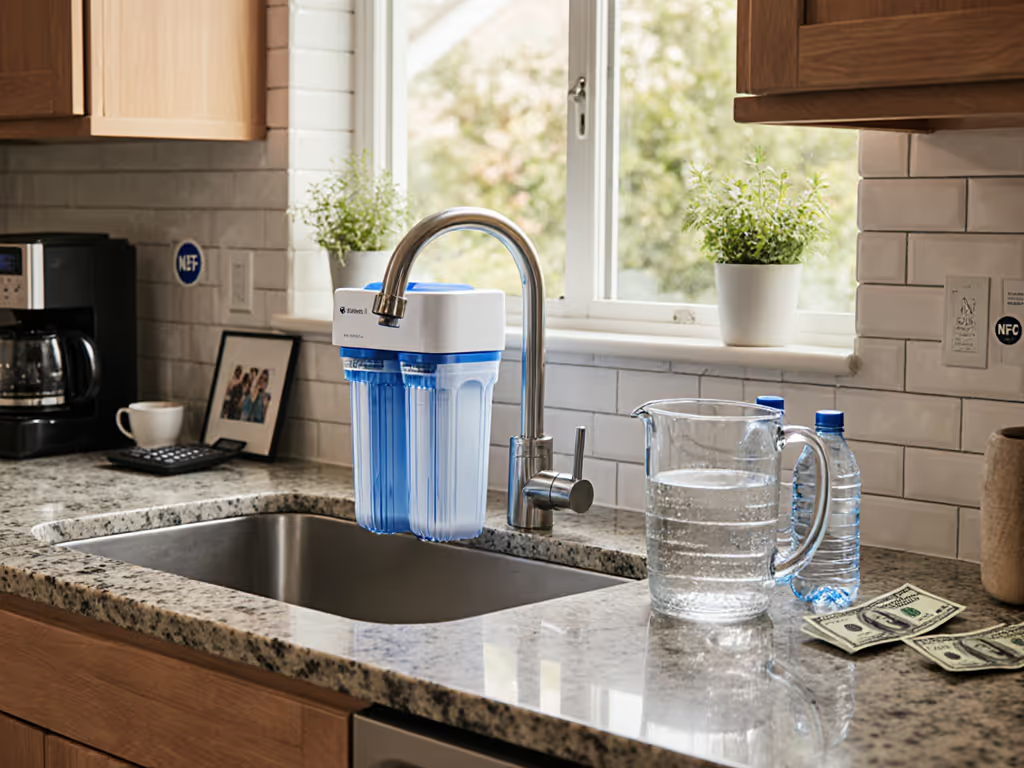
Updated 2025-11-12: Top 7 Certified Low-Waste Home Water Filters to Cut Costs and Reduce Waste
By Arjun Mehta • 12th Nov
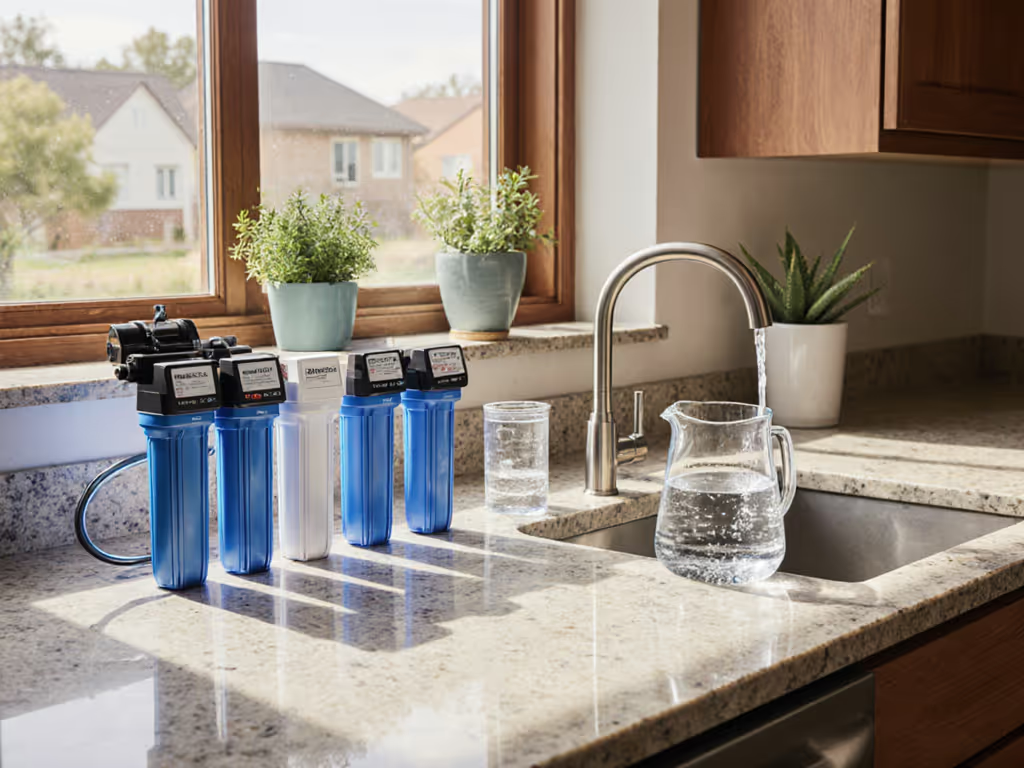
If you are tired of guessing which filter truly works, this blog post for 2025-11-12 lays out a clear, certification-first roadmap to safer water with less plastic and lower lifetime costs. You will learn how to match proven standards to your contaminants, understand waste footprints, and pick maintenance schedules that fit real life. Throughout, we reference relevant National Sanitation Foundation/American National Standards Institute [NSF/ANSI (National Sanitation Foundation/American National Standards Institute)] benchmarks alongside practical tips for city, rural, and well supplies. And because many households juggle health, budget, and sustainability at once, we emphasize how Clean Water, Less Waste uses verified test data and personalized guidance to turn complicated choices into simple, confident decisions.
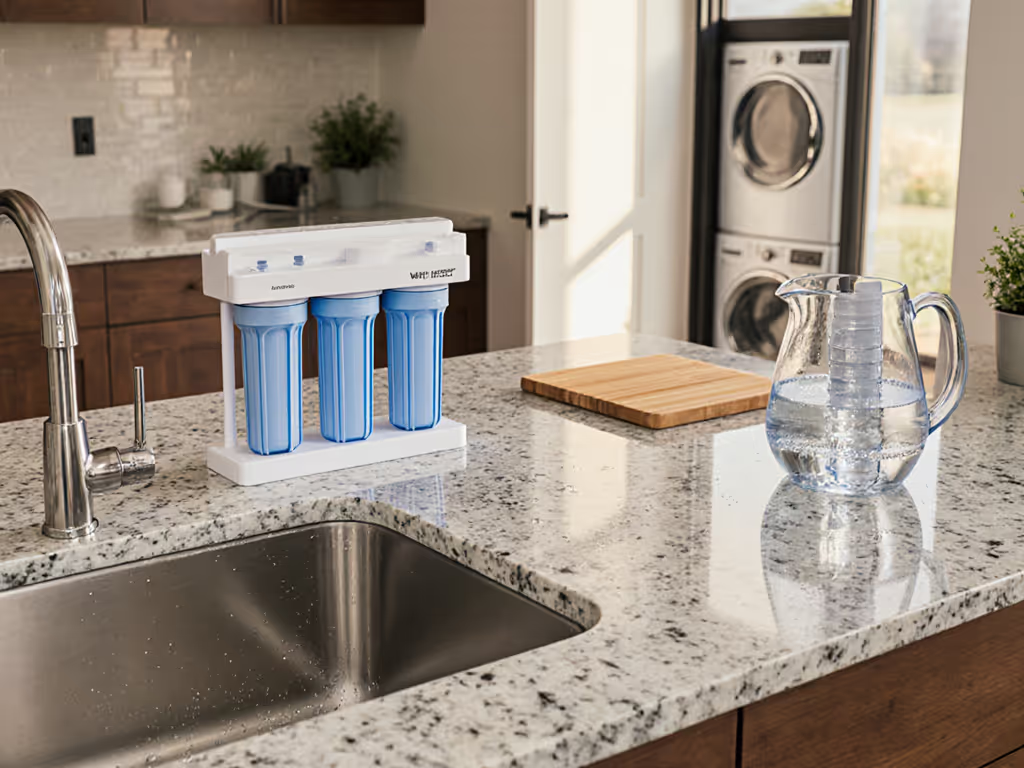
Before we dive into the top seven options, consider this: the average family that replaces bottled water with a long-life under-sink filter can avoid hundreds of single-use bottles each year while saving hundreds of dollars. For a data-backed look at the tradeoffs, read our bottled water vs filtered comparison. Yet not every filter tackles the same problem. Chlorine taste, lead, microplastics, PFAS [PFAS (per- and polyfluoroalkyl substances)], and microbes each call for specific solutions validated by recognized standards. That is why we focus on systems with robust certifications, longer capacities, and designs that reduce wasted water or frequent cartridge swaps. Ready to see which path fits your home and your waste goals?
Why Certified, Low-Waste Filters Matter in 2025
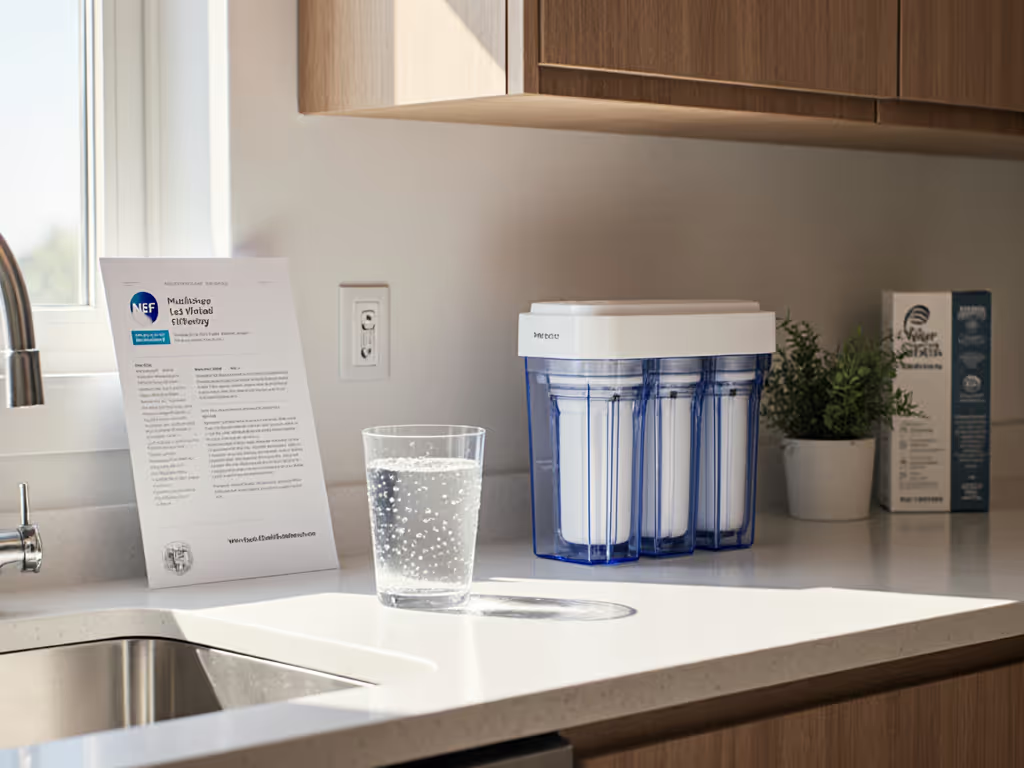
Certifications are more than stickers; they are independent proof that a filter does what it claims under standardized conditions. NSF/ANSI [NSF/ANSI (National Sanitation Foundation/American National Standards Institute)] 42 addresses aesthetic reduction like chlorine taste and odor, while NSF/ANSI [NSF/ANSI (National Sanitation Foundation/American National Standards Institute)] 53 covers health effects such as lead, cysts, and certain volatile organic compounds [VOC (volatile organic compounds)] reduction. For pharmaceuticals and emerging contaminants, NSF/ANSI [NSF/ANSI (National Sanitation Foundation/American National Standards Institute)] 401 is relevant, and for reverse osmosis [RO (reverse osmosis)] systems, NSF/ANSI [NSF/ANSI (National Sanitation Foundation/American National Standards Institute)] 58 applies. Microbiological performance is handled by NSF/ANSI [NSF/ANSI (National Sanitation Foundation/American National Standards Institute)] P231, with PFAS [PFAS (per- and polyfluoroalkyl substances)] reduction covered by NSF/ANSI [NSF/ANSI (National Sanitation Foundation/American National Standards Institute)] P473 and microplastics by NSF/ANSI [NSF/ANSI (National Sanitation Foundation/American National Standards Institute)] P477. These labels translate complex lab results into practical choices you can rely on.
Waste matters just as much. A common pitcher with modest capacity can require monthly changes, generating small but frequent plastic waste and recurring costs. By contrast, long-life carbon block cartridges and efficient RO [RO (reverse osmosis)] systems with permeate pumps can stretch service intervals to six to twelve months, reducing plastic and packaging trips to the trash. Add in the cost side and the picture sharpens: many point-of-use systems deliver water at a few cents per gallon, far below bottled alternatives. As a result, a smart, certified, low-waste setup can save money, minimize environmental impact, and offer consistent quality. Clean Water, Less Waste evaluates all three dimensions so you can track verified reduction, total cost of ownership, and material waste over time.
How We Ranked the Top 7: A Certification Deep Dive You Can Trust
We evaluated filters using four pillars: verified performance, cost per gallon, waste footprint, and suitability for different water sources. Verified performance means a primary reliance on NSF/ANSI [NSF/ANSI (National Sanitation Foundation/American National Standards Institute)] certifications that map to your likely contaminants. Cost per gallon is computed from the upfront price, replacement schedule, and rated capacity under typical home use. Waste footprint covers the mass and frequency of spent cartridges or membranes, the presence of recyclable components, and, for RO [RO (reverse osmosis)] systems, the waste-to-product water ratio with features like permeate pumps or recirculation. Suitability addresses city versus well water needs, including sediment, hardness, iron, manganese, and microbiological risks clarified by the Centers for Disease Control and Prevention [CDC (Centers for Disease Control and Prevention)] and local testing.
Watch This Helpful Video
To help you better understand blog post for 2025-11-12, we've included this informative video from Shivani kumari shorts unofficial. It provides valuable insights and visual demonstrations that complement the written content.
Because standards can feel alphabet-soupy, here is a quick map. For help deciding which standards actually matter for your home, see our NSF 42 vs 53 guide. NSF/ANSI [NSF/ANSI (National Sanitation Foundation/American National Standards Institute)] 42 is for chlorine taste/odor and particulates, NSF/ANSI [NSF/ANSI (National Sanitation Foundation/American National Standards Institute)] 53 targets health contaminants such as lead and cysts, NSF/ANSI [NSF/ANSI (National Sanitation Foundation/American National Standards Institute)] 58 applies to RO [RO (reverse osmosis)], NSF/ANSI [NSF/ANSI (National Sanitation Foundation/American National Standards Institute)] 401 covers pharmaceuticals and emerging compounds, NSF/ANSI [NSF/ANSI (National Sanitation Foundation/American National Standards Institute)] 55 covers ultraviolet [UV (ultraviolet)] microbiological treatment, NSF/ANSI [NSF/ANSI (National Sanitation Foundation/American National Standards Institute)] P231 covers microbiological purifiers, NSF/ANSI [NSF/ANSI (National Sanitation Foundation/American National Standards Institute)] P473 addresses PFAS [PFAS (per- and polyfluoroalkyl substances)] such as PFOA [PFOA (perfluorooctanoic acid)] and PFOS [PFOS (perfluorooctane sulfonate)], and NSF/ANSI [NSF/ANSI (National Sanitation Foundation/American National Standards Institute)] P477 is for microplastics. If you are considering reverse osmosis, start with our plain-English explainer on NSF 58 and emerging contaminant standards. When a product is certified, you can verify the listing on a public database to ensure the model and claims match. Clean Water, Less Waste includes direct links and screenshots in our reviews so you never have to rely on vague marketing language.
Common Standards and What They Mean
| Standard | Focus | Typical Use | Notes |
|---|---|---|---|
| NSF/ANSI (National Sanitation Foundation/American National Standards Institute) 42 | Aesthetic: chlorine, taste, odor, particulates | Pitchers, under-sink carbon, refrigerator filters | Great for taste but not a health standard |
| NSF/ANSI (National Sanitation Foundation/American National Standards Institute) 53 | Health: lead, cysts, VOC (volatile organic compounds) | Carbon block under-sink, some whole-house | Validates reduction of specific harmful contaminants |
| NSF/ANSI (National Sanitation Foundation/American National Standards Institute) 58 | RO (reverse osmosis) systems | Under-sink RO (reverse osmosis) | Includes structural integrity, performance, TDS (total dissolved solids) reduction |
| NSF/ANSI (National Sanitation Foundation/American National Standards Institute) 55 | UV (ultraviolet) microbiological treatment | Point-of-entry for well water, point-of-use | Requires proper dosage and lamp maintenance |
| NSF/ANSI (National Sanitation Foundation/American National Standards Institute) 401 | Emerging contaminants | Pitchers, under-sink | Pharmaceuticals, personal care products, and more |
| NSF/ANSI (National Sanitation Foundation/American National Standards Institute) P231 | Microbiological purifiers | Portable and some home systems | Targets bacteria, viruses, protozoan cysts |
| NSF/ANSI (National Sanitation Foundation/American National Standards Institute) P473 | PFAS (per- and polyfluoroalkyl substances) | Carbon and RO (reverse osmosis) | Specifically PFOA (perfluorooctanoic acid) and PFOS (perfluorooctane sulfonate) |
| NSF/ANSI (National Sanitation Foundation/American National Standards Institute) P477 | Microplastics | Various point-of-use systems | Addresses particles smaller than a human hair |
The Top 7 Certified Low-Waste Home Water Filters for Different Homes
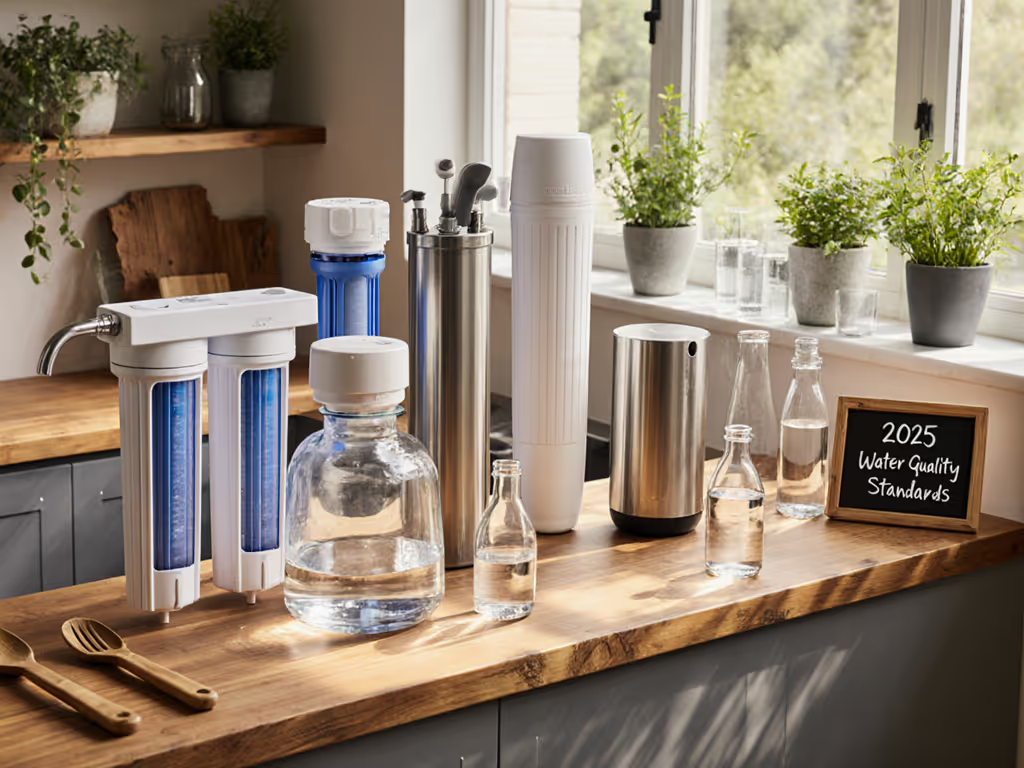
Each pick below prioritizes verified performance and a lighter waste footprint. Because every household is different, we highlight the certifications to confirm, the waste pattern to expect, and the scenarios where the system shines. Imagine this as a menu you can customize: choose the item that addresses your contaminants first, then dial in convenience and sustainability. If you are unsure which contaminants to target, Clean Water, Less Waste provides step-by-step testing guidance and personalized product shortlists based on your water source and goals.
1) Long-Life Under-Sink Carbon Block (Aesthetic plus Health)
- Certifications to confirm: NSF/ANSI (National Sanitation Foundation/American National Standards Institute) 42 for chlorine; NSF/ANSI (National Sanitation Foundation/American National Standards Institute) 53 for lead, cysts, and VOC (volatile organic compounds); optionally NSF/ANSI (National Sanitation Foundation/American National Standards Institute) 401 for emerging contaminants; NSF/ANSI (National Sanitation Foundation/American National Standards Institute) P473 for PFAS (per- and polyfluoroalkyl substances).
- Why it is low-waste: High-capacity cartridges last 6 to 12 months or thousands of gallons, reducing plastic changes and packaging. Some models offer recyclable housings or mail-back programs.
- Best for: City water with chlorine or chloramine taste and known lead risks. Works well upstream of a refrigerator or dedicated drinking tap.
- Pro tip: Pair with a sediment prefilter if your water has visible particles to extend cartridge life and maintain flow.
2) Countertop RO (reverse osmosis) With Permeate Pump (High Removal, Lower Waste)
- Certifications to confirm: NSF/ANSI (National Sanitation Foundation/American National Standards Institute) 58 for RO (reverse osmosis) performance; NSF/ANSI (National Sanitation Foundation/American National Standards Institute) P473 for PFAS (per- and polyfluoroalkyl substances) reduction claims.
- Why it is low-waste: A permeate pump and smart auto-shutoff reduce the waste-to-product ratio, and refillable post-filters minimize cartridge trash.
- Best for: Mixed contaminants, including high TDS (total dissolved solids), PFAS (per- and polyfluoroalkyl substances), and problematic taste or odor. Great if you cannot drill your sink.
- Pro tip: Capture RO (reverse osmosis) brine for non-potable uses like mopping or toilet flushing where permitted, following local codes and manufacturer guidance.
3) Whole-House Backwashing Catalytic Carbon (Minimal Consumables)
- Certifications to confirm: NSF/ANSI (National Sanitation Foundation/American National Standards Institute) 42 for chlorine reduction and structural integrity, with system components tested for safety.
- Why it is low-waste: No disposable cartridges; media lasts years and backwashes automatically to maintain performance, drastically cutting plastic waste.
- Best for: Chlorinated municipal water, removing taste and odor at every tap, and protecting downstream fixtures and appliances.
- Pro tip: If you have chloramine, ensure the media is rated for it, and verify flow sizing to prevent channeling.
4) Pitcher With Plant-Based GAC (granular activated carbon) Media (Eco-Focused Convenience)
- Certifications to confirm: NSF/ANSI (National Sanitation Foundation/American National Standards Institute) 42 for taste and odor; NSF/ANSI (National Sanitation Foundation/American National Standards Institute) 53 or 401 for specific claims; NSF/ANSI (National Sanitation Foundation/American National Standards Institute) P477 for microplastics if offered.
- Why it is low-waste: Extended-life cartridges and bio-based media reduce plastic mass and change frequency compared to standard monthly filters.
- Best for: Renters and dorms where plumbing access is limited and quick improvements in taste are the priority.
- Pro tip: Store in the refrigerator to discourage microbial growth and follow the rated capacity rather than waiting for a taste change.
5) Inline Refrigerator/Ice Maker Carbon (High-Capacity Taste and Lead Control)
- Certifications to confirm: NSF/ANSI (National Sanitation Foundation/American National Standards Institute) 42 for taste and odor; NSF/ANSI (National Sanitation Foundation/American National Standards Institute) 53 for lead where applicable.
- Why it is low-waste: One long inline cartridge can replace multiple proprietary fridge filters, curbing plastic and cost.
- Best for: Households that drink lots of cold water or make ice frequently and want a simple annual change.
- Pro tip: If you use both a sink filter and the fridge, route the fridge line from your under-sink system to avoid redundant cartridges.
6) UV (ultraviolet) Point-of-Entry With Prefiltration (Well Water Safety)
- Certifications to confirm: NSF/ANSI (National Sanitation Foundation/American National Standards Institute) 55 for UV (ultraviolet) systems; pair with sediment filters tested for particle reduction.
- Why it is low-waste: No chemical dosing, long lamp life, and limited consumables. Lamps are replaced annually and many manufacturers offer recycling programs.
- Best for: Well water where microbiological safety is a concern or where seasonal storms impact water quality.
- Pro tip: UV (ultraviolet) requires low turbidity and adequate UV (ultraviolet) transmittance, so stage sediment and carbon upstream to ensure dosing is effective. Get the science, maintenance tips, and use cases in our UV water purifier guide.
7) Dual-Stage Under-Sink: Catalytic Carbon plus Specialty Media (Targeted PFAS and Lead)
- Certifications to confirm: NSF/ANSI (National Sanitation Foundation/American National Standards Institute) 53 for lead; NSF/ANSI (National Sanitation Foundation/American National Standards Institute) P473 for PFAS (per- and polyfluoroalkyl substances); NSF/ANSI (National Sanitation Foundation/American National Standards Institute) 401 as applicable.
- Why it is low-waste: Two high-capacity cartridges changed semiannually or annually, with some brands offering bulk media refills to reuse housings.
- Best for: Areas with PFAS (per- and polyfluoroalkyl substances) advisories or older infrastructure with potential lead issues.
- Pro tip: Verify your flow rate needs; too much flow can reduce contact time and performance for PFAS (per- and polyfluoroalkyl substances) removal.
Top 7 Snapshot: Certifications, Best Uses, and Waste Profile
| Pick | Core Certifications | Best For | Waste Profile | Typical Cost per Gallon |
|---|---|---|---|---|
| Under-sink carbon block | NSF/ANSI (National Sanitation Foundation/American National Standards Institute) 42, 53, optional 401, P473 | City water, taste, lead | 1 cartridge per 6–12 months | 2–8 cents |
| Countertop RO (reverse osmosis) with pump | NSF/ANSI (National Sanitation Foundation/American National Standards Institute) 58, P473 | Mixed contaminants, PFAS (per- and polyfluoroalkyl substances) | Membrane every 2–3 years, low-waste pre/post | 3–9 cents |
| Whole-house catalytic carbon | NSF/ANSI (National Sanitation Foundation/American National Standards Institute) 42 | Chlorine/chloramine taste at every tap | Media every 3–5 years | 1–4 cents |
| Plant-based GAC (granular activated carbon) pitcher | NSF/ANSI (National Sanitation Foundation/American National Standards Institute) 42, optional 53/401, P477 | Renters, convenience | Cartridge every 2–6 months | 5–12 cents |
| Inline refrigerator filter | NSF/ANSI (National Sanitation Foundation/American National Standards Institute) 42, optional 53 | Cold water and ice | 1 cartridge yearly | 2–6 cents |
| UV (ultraviolet) point-of-entry | NSF/ANSI (National Sanitation Foundation/American National Standards Institute) 55 | Well water microbes | Lamp yearly, little plastic | 1–3 cents |
| Dual-stage specialty media | NSF/ANSI (National Sanitation Foundation/American National Standards Institute) 53, P473, 401 | PFAS (per- and polyfluoroalkyl substances), lead | 2 cartridges per 6–12 months | 4–10 cents |
Note: Cost and waste ranges are based on typical certified models and capacities. Always verify the rated capacity, local water quality, and maintenance requirements to refine your estimate.
How to Use This blog post for 2025-11-12 to Choose Confidently

Start with your water source and test results. For city water, your municipal report often lists disinfectants, residual chlorine, and detected contaminants; check it against your home’s plumbing risks, especially if there are lead service lines. Not sure how to read it? Use our step-by-step CCR interpretation guide. For private wells, arrange a comprehensive panel that includes bacteria, nitrate, iron, manganese, hardness, and arsenic where regionally relevant, guided by Environmental Protection Agency [EPA (Environmental Protection Agency)] recommendations. Once you know your targets, map them to the relevant standards: taste to NSF/ANSI [NSF/ANSI (National Sanitation Foundation/American National Standards Institute)] 42, lead to NSF/ANSI [NSF/ANSI (National Sanitation Foundation/American National Standards Institute)] 53, PFAS [PFAS (per- and polyfluoroalkyl substances)] to NSF/ANSI [NSF/ANSI (National Sanitation Foundation/American National Standards Institute)] P473, microplastics to NSF/ANSI [NSF/ANSI (National Sanitation Foundation/American National Standards Institute)] P477, pharmaceuticals to NSF/ANSI [NSF/ANSI (National Sanitation Foundation/American National Standards Institute)] 401, microbes to NSF/ANSI [NSF/ANSI (National Sanitation Foundation/American National Standards Institute)] 55 or P231.
Next, estimate total cost and waste. Divide the price of each replacement by its rated gallons to get cost per gallon, and note change frequency to estimate plastic mass per year. If considering RO [RO (reverse osmosis)], ask about the waste ratio, the presence of a permeate pump, and whether you can repurpose the brine for non-potable uses within local codes. Finally, fit the solution to your lifestyle. Do you prefer a single annual change, or are you comfortable swapping smaller cartridges quarterly? Clean Water, Less Waste provides side-by-side comparisons that prioritize certified reduction, capacity, maintenance cadence, and long-term waste footprints so you can see tradeoffs at a glance.
Source-to-Standard Quick Guide
| Water Source | Typical Concerns | Primary Standards | Recommended System Types |
|---|---|---|---|
| City (chlorinated) | Chlorine taste, lead from pipes, microplastics | NSF/ANSI (National Sanitation Foundation/American National Standards Institute) 42, 53, P477 | Under-sink carbon block; dual-stage specialty; refrigerator inline |
| City (chloramine) | Chloramine taste/odor, PFAS (per- and polyfluoroalkyl substances) | NSF/ANSI (National Sanitation Foundation/American National Standards Institute) 42 with chloramine rating, P473 | Under-sink catalytic carbon; countertop RO (reverse osmosis) with pump |
| Private well | Microbes, iron/manganese, hardness | NSF/ANSI (National Sanitation Foundation/American National Standards Institute) 55, P231; relevant sediment ratings | UV (ultraviolet) point-of-entry with prefiltration; whole-house sediment plus carbon |
| Mixed or unknown | Broad coverage needed | NSF/ANSI (National Sanitation Foundation/American National Standards Institute) 58, 401, P473 | Countertop or under-sink RO (reverse osmosis) with efficient drain control |
Source-Specific Guidance: City Water and Well Water, Step by Step
For city water, your first targets are often chlorine, disinfection by-products, and legacy plumbing risks. An under-sink carbon block certified to NSF/ANSI [NSF/ANSI (National Sanitation Foundation/American National Standards Institute)] 42 and 53 offers a strong baseline, with optional NSF/ANSI [NSF/ANSI (National Sanitation Foundation/American National Standards Institute)] 401 if pharmaceuticals matter to you. If your locality reports PFAS [PFAS (per- and polyfluoroalkyl substances)] detections, verify NSF/ANSI [NSF/ANSI (National Sanitation Foundation/American National Standards Institute)] P473. For whole-home taste improvement, catalytic carbon point-of-entry is an elegant, low-waste upgrade. Many households then route a single, high-performance tap or fridge line for drinking and cooking. This strategy centralizes capacity, reduces duplicate cartridges, and keeps maintenance simple and predictable.
For private wells, safety begins with testing and microbial control. A UV (ultraviolet) system certified to NSF/ANSI [NSF/ANSI (National Sanitation Foundation/American National Standards Institute)] 55 safeguards against bacteria and viruses when paired with proper prefiltration to meet turbidity requirements. If iron or manganese is present, include dedicated removal upstream to prevent fouling and preserve UV (ultraviolet) efficacy. Where hardness is high, scale control reduces appliance wear and can improve taste indirectly. Given that the EPA [EPA (Environmental Protection Agency)] sets a Maximum Contaminant Level Goal of zero for lead and that the Centers for Disease Control and Prevention [CDC (Centers for Disease Control and Prevention)] recommends routine well testing, we encourage annual checks and event-based testing after floods or construction. Clean Water, Less Waste offers guides for various water sources, including well water, so you can build a staged system without guesswork or wasteful overbuying.
- City water quick win: Long-life under-sink carbon block with lead certification and optional PFAS [PFAS (per- and polyfluoroalkyl substances)] claim.
- Well water quick win: UV (ultraviolet) point-of-entry plus sediment and carbon, sized for your flow rate.
- Mixed or moving soon: Countertop RO (reverse osmosis) with permeate pump for portable, broad-spectrum treatment.
Smart Maintenance and Waste-Reduction Tips Backed by Data
Why do some filters last far longer than others in real homes? Flow rate, particulate load, and change discipline are the big levers. Keep a small sediment stage ahead of your carbon to catch grit that steals capacity, and flush new cartridges per the manufacturer’s instructions to activate media and release trapped air. Track gallons with a meter or app so you change based on actual use rather than rough calendar guesses. For RO [RO (reverse osmosis)], choose systems with permeate pumps or recirculation to cut waste water volume, and keep the storage tank pressure properly set to maintain efficiency and stable TDS (total dissolved solids) reduction. These habits can extend capacity by 20 to 40 percent under typical conditions according to manufacturer case studies and Water Quality Association reports.
Disposal can be smarter too. Many cartridges are mostly carbon and plastic with metal threads or end caps; check whether your municipality or the manufacturer offers take-back programs. Some brands sell refill bags that let you reuse housings and cut plastic mass dramatically. When comparing filters, consider annual plastic weight, not just change count. A single long-life under-sink cartridge might replace six to ten small pitcher filters, eliminating dozens of plastic shells and foil wraps. If you still buy bottled water for travel or emergencies, switch to a few reusable bottles and fill from your home system; the World Health Organization [WHO (World Health Organization)] notes that safe storage practices help maintain water quality once treated. Together, these steps slash waste without compromising convenience or safety.
blog post for 2025-11-12: Compare Costs, Waste, and Certification at a Glance

To visualize tradeoffs, convert everything into per-gallon numbers and a yearly waste tally. Suppose a cartridge costs 60 dollars and is rated for 3000 gallons; that is 2 cents per gallon, excluding water consumed by flushing. If you change it annually, your plastic waste might be 200 to 400 grams depending on design. For a well-tuned RO (reverse osmosis) system, efficiency improvements can reduce the waste ratio from 4:1 toward 1.5:1 or better with a permeate pump and good tank settings. Meanwhile, whole-house catalytic carbon avoids monthly trash altogether, though it consumes backwash water and requires media replacement every few years. Clean Water, Less Waste provides calculators that combine capacity, local rates, and maintenance intervals to model five-year cost and waste so your choice is both economical and sustainable.
Five-Year Ownership Snapshot (Typical Ranges)
| System Type | 5-Year Consumable Cost | Estimated Plastic Waste | Key Savings Lever |
|---|---|---|---|
| Under-sink carbon block | 120–300 dollars | 1–3 kg | High-capacity cartridges, prefilter |
| Countertop RO (reverse osmosis) with pump | 200–450 dollars | 1–2 kg | Permeate pump, tank pressure tuning |
| Whole-house catalytic carbon | 300–800 dollars | 0.5–1 kg | Media lifespan and sizing |
| Plant-based GAC (granular activated carbon) pitcher | 150–400 dollars | 2–5 kg | Extended-life cartridges, disciplined changes |
| Inline refrigerator filter | 100–250 dollars | 0.5–1.5 kg | One high-capacity inline instead of proprietary |
| UV (ultraviolet) point-of-entry | 125–300 dollars | 0.2–0.6 kg | Lamp recycling, prefiltration to extend life |
| Dual-stage specialty media | 250–600 dollars | 1–3 kg | Targeted media with verified claims |
Figures above are typical for certified systems in moderate-use households and will vary by local water quality, consumption, and maintenance discipline. The key is to match the standard to your contaminants, use the longest practical capacity, and minimize redundant cartridges. That is exactly where Clean Water, Less Waste excels: by offering verified, certification-based performance data and personalized guidance, the website enables you to compare filters on verified contaminant reduction, capacity, maintenance, and long-term waste footprint, then select the best fit for your home.
Case Studies: Real-World Paths to Less Waste and Lower Bills
Family A on city water wanted to stop buying bottled water and address a 1950s service line. They chose a long-life under-sink carbon block certified to NSF/ANSI [NSF/ANSI (National Sanitation Foundation/American National Standards Institute)] 42 and 53, with optional PFAS [PFAS (per- and polyfluoroalkyl substances)] certification to hedge future advisories. Over 12 months, they replaced one cartridge, avoided roughly 1,000 plastic bottles, and cut drinking water costs by more than half. Taste improved dramatically within minutes, and their fridge and coffee maker now run off the same filtered line, avoiding extra cartridges. Clean Water, Less Waste’s side-by-side tables made it easy to pick a model with the right capacity and verified lead reduction claim.
Household B on a private well had clean taste but recurring boil advisories after heavy storms. They implemented a point-of-entry UV (ultraviolet) system certified to NSF/ANSI [NSF/ANSI (National Sanitation Foundation/American National Standards Institute)] 55, added a sediment stage, and tuned flow to ensure adequate UV (ultraviolet) dose. They now replace one lamp annually and recycle it through the manufacturer. The system has almost no plastic cartridge waste, and with routine testing guided by EPA [EPA (Environmental Protection Agency)] and CDC [CDC (Centers for Disease Control and Prevention)] recommendations, they gained peace of mind without chemical disinfectants or bottled stopgaps. With Clean Water, Less Waste’s planning guide, they sized the system correctly the first time and avoided costly rework.
Expert Best Practices You Can Apply Today
First, test before you invest. Even a basic lab panel plus your utility’s Consumer Confidence Report reveals which standards matter most for your home. Second, verify the exact certification listing for the model you plan to buy; the product line might be certified, but specific claims can vary by cartridge or configuration. Third, choose capacity wisely. One properly sized under-sink cartridge often beats several small ones scattered around the house, reducing plastic and keeping performance consistent. Finally, schedule maintenance with reminders and track gallons if possible; changing on time protects both water quality and your wallet.
Want to go even further? If PFAS [PFAS (per- and polyfluoroalkyl substances)] are a concern, favor certified RO [RO (reverse osmosis)] or specialty carbon validated under NSF/ANSI [NSF/ANSI (National Sanitation Foundation/American National Standards Institute)] P473. For microplastics, look for NSF/ANSI [NSF/ANSI (National Sanitation Foundation/American National Standards Institute)] P477. For microbes in well water, lean on UV (ultraviolet) under NSF/ANSI [NSF/ANSI (National Sanitation Foundation/American National Standards Institute)] 55 or purifiers tested to NSF/ANSI [NSF/ANSI (National Sanitation Foundation/American National Standards Institute)] P231. Throughout, Clean Water, Less Waste provides in-depth explanations of what each certification means so you can translate standards into real-world protection and less waste, step by step.
Choose one certified system that matches your contaminants, minimize duplicate cartridges, and follow a simple maintenance plan; that is the core promise of this guide. In the next 12 months, smarter designs and broader PFAS [PFAS (per- and polyfluoroalkyl substances)] claims will continue to push costs down while shrinking plastic footprints. What would it feel like to drink cleaner water knowing your choices align with your budget and your values, and to use this blog post for 2025-11-12 as your blueprint whenever your needs evolve?
Accelerate Smarter Water Decisions with Clean Water, Less Waste
Get verified, certification-based guidance to compare reduction claims, capacity, upkeep, and waste for any source, including well water, so households cut costs and trash.
Related Articles