
RO Remineralization Science: Chemistry of Mineral Restoration
By Samira Khan • 20th Jan
If you're researching water remineralization science, you've likely discovered a painful irony: the same reverse osmosis (RO) system that removes harmful contaminants also strips away beneficial minerals. This RO remineralization process isn't just about taste. It is a precisely engineered solution to restore what RO filtration removes. Let's unpack the chemistry behind mineral restoration without the marketing fluff, because the best filter is the one you can afford to maintain, sustainably.
Why Your RO Water Needs Remineralization
RO systems work by forcing water through a semipermeable membrane with pores as small as 0.001 micron. If you're comparing RO systems, learn what NSF/ANSI 58 certification actually verifies. This brilliantly removes contaminants like lead, arsenic, and PFAS, but it also takes calcium, magnesium, and other minerals along for the ride. The result? Water with near-zero total dissolved solids (TDS), acidic pH (often 5-6), and that flat, "empty" taste that makes many people question whether they're drinking pure water or distilled laboratory fluid.
This demineralization creates three concrete problems:
- Corrosion risk: Low-pH water eats through copper pipes and fixtures (a fact confirmed by EPA corrosion control studies)
- Nutritional gaps: While we get most minerals from food, consistent consumption of demineralized water may impact electrolyte balance
- Sensory dissatisfaction: That sterile taste makes people reach for bottled water (defeating the purpose of your RO system)
I remember when my first child arrived and we panicked over formula water safety. We nearly bought monthly bottled water subscriptions until simple math showed us that properly remineralized tap water was safer, cheaper, and plastic-free. The anxiety wasn't about purity. It was about what was missing.
The Chemistry Behind Mineral Restoration
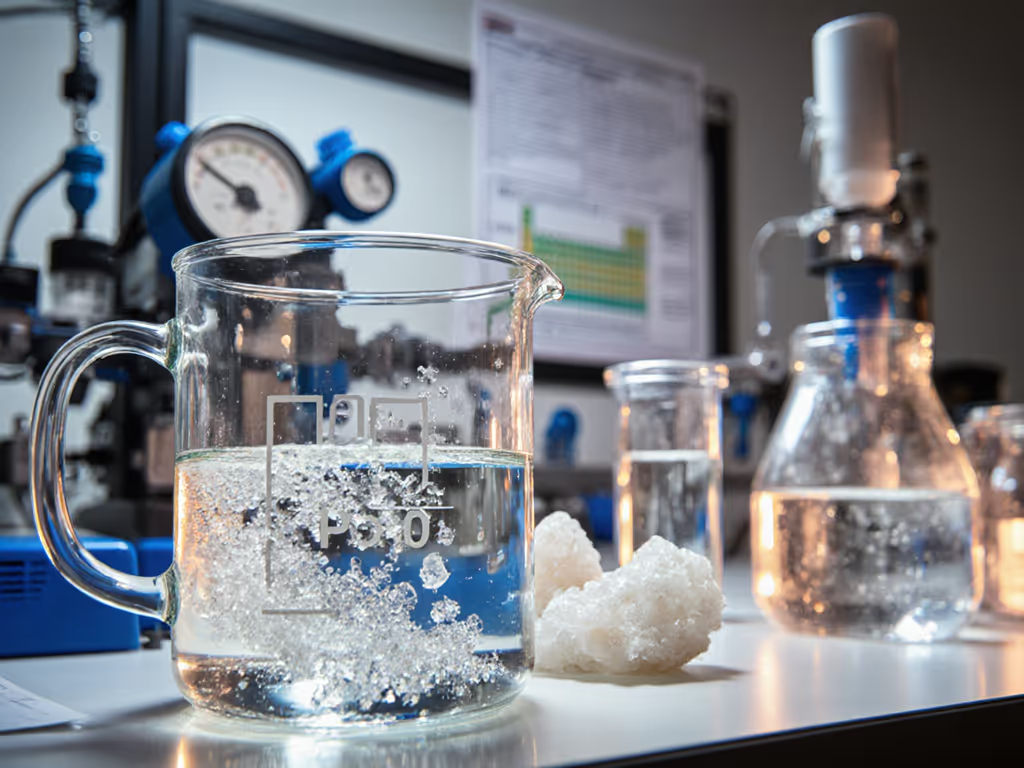
The mineral restoration chemistry in RO systems relies on one brilliantly simple reaction. Calcite (calcium carbonate, CaCO₃) dissolves when water containing dissolved carbon dioxide flows through it:
CaCO₃ + H₂O + CO₂ → Ca²⁺ + 2HCO₃⁻
This equation tells the whole story: calcite reacts with carbon dioxide in water to release calcium ions (Ca²⁺) and bicarbonate ions (HCO₃⁻). These bicarbonate ions act as natural pH buffers, neutralizing acidity while restoring essential minerals. It is not magic (it is predictable chemistry that follows carbonate equilibrium principles).
Four Factors That Control Remineralization Effectiveness
- CO₂ concentration: Natural dissolved CO₂ in RO water (which passes through the membrane) drives the reaction. No added chemicals needed.
- Contact time: Water should spend 3-5 minutes in contact with calcite media for optimal dissolution.
- Temperature: Warmer water (above 60°F) increases dissolution rate by ~4% per degree Fahrenheit.
- Media surface area: Finer calcite media (0.5-1.5mm granules) works faster but requires more frequent replacement.
This taste improvement science isn't subjective (it is measurable). Restoring 30-50 mg/L of calcium and raising pH to 7.0-7.5 creates water that satisfies both your tongue and your plumbing. The electrolyte balance may be subtle from a nutritional standpoint, but the corrosion prevention is critical for household infrastructure.
Running the Numbers: Sustainable Maintenance Planning
Let's run the numbers on what this means for your wallet and maintenance schedule. Most RO remineralization filters use 1-2 lbs of calcite media that dissolves at approximately 0.5-1.0 lbs per 1,500 gallons of treated water.
Simple math with assumptions:
- Household using 3 gallons RO water daily
- Calcite media weight: 1.5 lbs
- Dissolution rate: 0.75 lbs per 1,500 gallons
That's 3,000 gallons of remineralized water per filter change. At $15 per replacement cartridge, your cost is 0.5 cents per gallon just for remineralization. Compare this to the $0.30-$1.00 per gallon for bottled mineral water, and the payback period becomes obvious. See our bottled vs filtered water analysis for the full environmental and cost tradeoffs.
Spend on media that works, not on pretty housings. Modular systems with standard 10-inch housings let you source generic calcite media for $10-$15 per refill versus proprietary cartridges at $25-$40. The difference? $120-$240 in savings over five years. For long-term budgeting, review our filter replacement cost breakdown to compare brands and media types.
Your Actionable Implementation Plan
Don't get overwhelmed by remineralization options. Here's what actually matters for sustainable performance:
- Verify your starting point: Test your RO permeate's pH and TDS (should be 4-6 and <50 ppm initially)
- Choose modular media: Standard calcite (not expensive "alkaline" blends) works for 95% of households
- Track usage: Install a simple gallon counter ($15) to know exactly when to replace media
- Set realistic expectations: Remineralization adds back calcium/magnesium but won't match spring water mineral profiles
Maintenance intervals spelled out: Change calcite media every 6-12 months (or 2,000-3,000 gallons), whichever comes first. Mark your calendar based on actual usage (not arbitrary timeframes).
The Sustainable Bottom Line
The true value of mineral retention technology isn't in hype about "supercharged" alkaline water. It is in predictable, affordable maintenance that keeps your system running without hidden costs. When remineralization is framed as a simple chemical process with transparent costs, the anxiety melts away. You're not buying a product; you're implementing a maintenance plan you can sustain for years.
Your next step: Grab your RO system's manual and check what type of remineralization media it uses. If it's proprietary, calculate the 5-year cost versus a modular system. Then, find a generic calcite refill compatible with your housing size. That simple comparison (not marketing claims) will show you which system truly fits your budget. In water treatment, the most sustainable solution is always the one you can maintain without financial strain.
Related Articles